
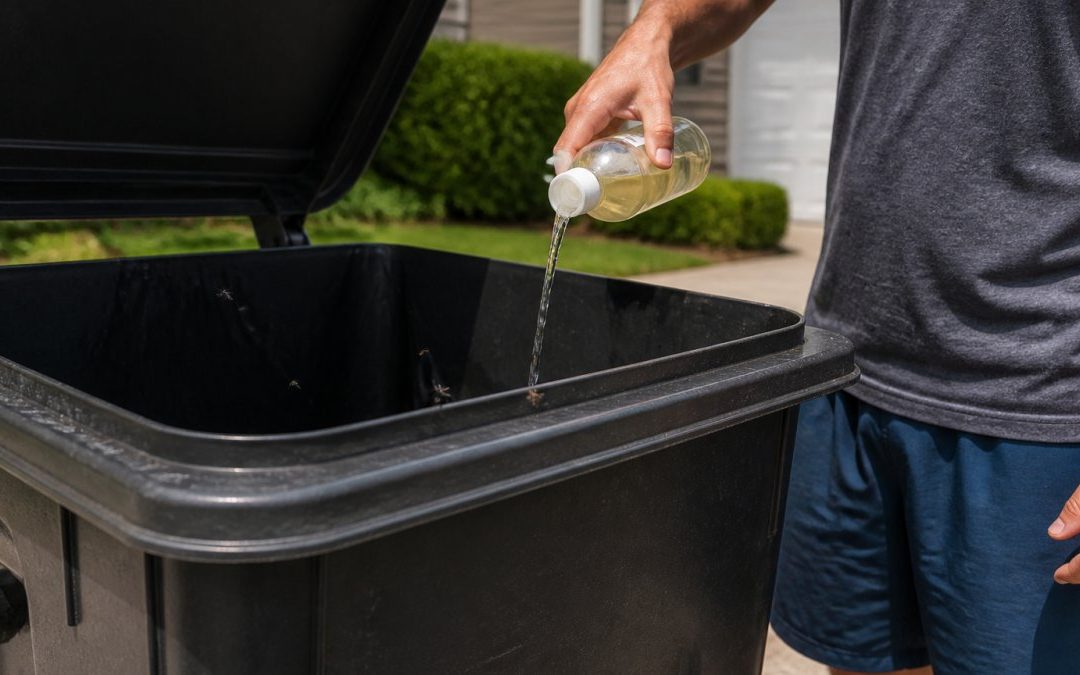
Table of Contents
- Does Vinegar Keep Bugs Away From Trash?
- What Vinegar Actually Does to Flies and Maggots
- Vinegar Concentration Ratios That Matter
- How to Get Rid of Maggots in Trash Can
- How Often Should You Clean Your Trash Can?
- Vinegar vs. Other Household Acids for Bin Cleaning
- Natural Repellents and Aromatic Herbs That Help
- Preventative Maintenance for Outdoor Bins
- When to Call Professional Trash Can Cleaning Services
- Frequently Asked Questions
Last Updated: October 2, 2026
Does Vinegar Keep Bugs Away From Trash?
Vinegar does not keep bugs away from trash, and this is where most advice online gets it wrong. Vinegar kills maggots and cleans the bin, but it also attracts fruit flies. That distinction matters if your goal is a bin that stays pest-free.
At Chester County Clean Cans, we clean thousands of bins, and the pattern is always the same. A homeowner pours vinegar in, the maggots die, and two weeks later the flies are back. Why? Because vinegar treats the symptom, not the source.
So does vinegar keep bugs away from trash? Not on its own. Used right, it’s one tool in a system. Skip the system, and you’re just feeding the next generation of flies.
EPA guidance on managing household pests
What Vinegar Actually Does to Flies and Maggots
Vinegar is an acidic solution, and acid breaks down the soft bodies of larvae. Pour it on maggots and they die fast.
But here’s the catch most people miss. Vinegar is a repellent for some insects and an attractant for others. Fruit flies love the smell of fermenting apple cider vinegar. That’s exactly why it works in a fly trap and fails as a bin spray.
So what does vinegar actually do?
- Kills maggots and larvae on contact
- Cuts grease and residue that feed fly eggs
- Neutralizes some odors but not all
- Attracts fruit flies when left uncovered
Spraying vinegar around the rim of an open bin can pull more flies toward it. If you use it, pour it directly onto larvae, then rinse and close the lid.
Vinegar Concentration Ratios That Matter
Full-strength white vinegar works best for killing larvae. Diluted vinegar loses potency fast.
A common approach is a 1:1 mix of white vinegar and water for surface cleaning. For maggots, use it undiluted. Let it sit for a few minutes, then scrub.
Apple cider vinegar is different. It’s weaker as a cleaner but better in a fly trap because the sugars attract adults. Don’t swap the two.
| Vinegar Type | Best Use | Strength |
|---|---|---|
| White vinegar | Killing larvae, cleaning | Full strength |
| Apple cider vinegar | Fly traps | Full strength |
| Diluted white vinegar | Light surface wipe-down | 1:1 with water |
How to Get Rid of Maggots in Trash Can
The fastest way to get rid of maggots in a trash can is boiling water. It kills larvae and eggs in seconds, no chemicals needed.
Follow up with vinegar to clean residue, then dry the bin completely. Moisture is what keeps the cycle going.
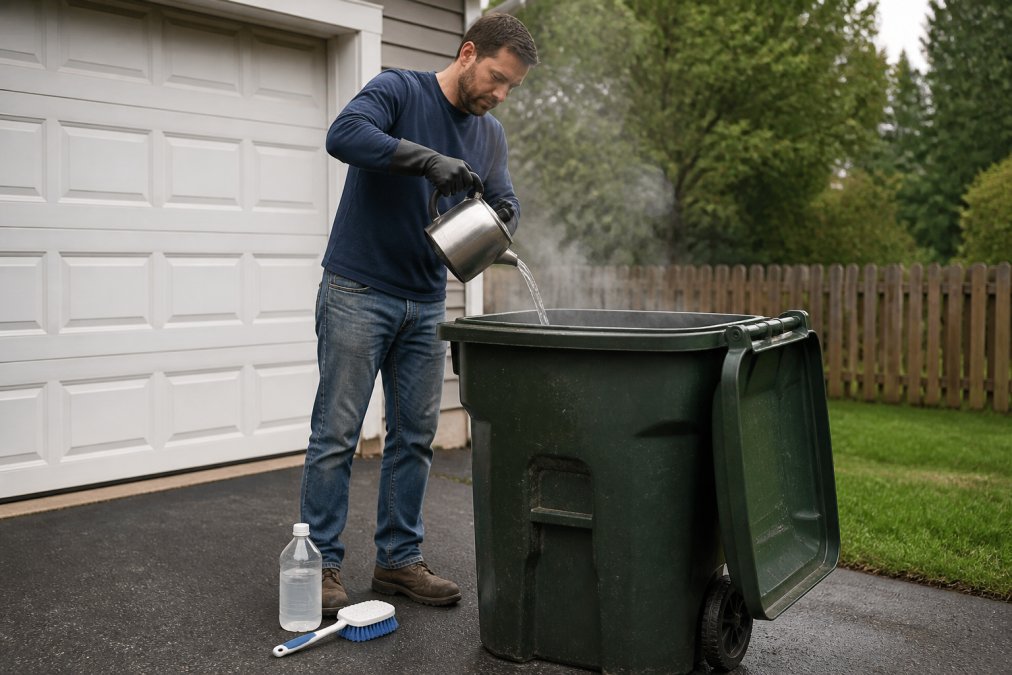
Step-by-Step Cleaning With Boiling Water and Vinegar
- Put on gloves and move the bin outside.
- Pour boiling water over the maggots. Let it sit 5 minutes.
- Dump the water and scrape out stuck waste.
- Spray full-strength white vinegar inside the bin.
- Scrub the walls, rim, and lid with a stiff brush.
- Rinse with a hose and tip the bin to drain.
- Dry it in the sun before the lid goes back on.
Expected result: No live larvae, no lingering smell, and a dry surface that resists new fly eggs.
How Often Should You Clean Your Trash Can?
Most households should clean their trash can every two to four weeks in warm months. Weekly cleaning is better if you’ve had maggots.
Summer speeds up larval development. Fly eggs can hatch in under a day when it’s hot.
A simple schedule:
- Weekly: Rinse and check for larvae in summer
- Every 2 weeks: Full scrub with vinegar
- Monthly: Deep clean in cooler months
- After any maggot sighting: Clean immediately
Vinegar vs. Other Household Acids for Bin Cleaning
Vinegar isn’t the only acid in your kitchen, but it’s the safest default for a trash bin. The reason comes down to concentration and what each acid does to the plastic.
Here’s the trade-off table most articles skip:
| Option | Relative acidity | Kills larvae | Effect on plastic bins over time | Watch-outs |
|---|---|---|---|---|
| White vinegar (5% acetic acid) | Mild | Yes, on contact | Minimal, safe for repeated use | Attracts fruit flies if left uncovered |
| Lemon juice / citric acid | Mild to moderate | Slow | Minimal | Higher cost per cleaning |
| Bleach (sodium hypochlorite) | Strong oxidizer | Yes | Dulls and cracks plastic with repeated use | Never mix with ammonia-based waste |
| Hot water alone | Neutral | Yes (thermal) | None | No residual cleaning power |
For routine bin cleaning, white vinegar is the best balance of cost, safety, and larvae kill. Save bleach for hard non-porous surfaces, never for a bin that may contain ammonia, and never as a routine plastic cleaner.
EPA guidance on safe household cleaning product use
Natural Repellents and Aromatic Herbs That Help
Certain herbs and oils do push flies away. They won’t kill larvae, but they make your bin less inviting.
- Cloves: Strong scent flies avoid
- Essential oils: Peppermint, eucalyptus, and lavender
- Aromatic herbs: Basil, mint, and bay leaves
- Cedar: Works in and around outdoor bins
Soak cotton balls in peppermint oil and tuck them under the lid rim. It won’t kill maggots, but it cuts the fly traffic that starts the problem.
Preventative Maintenance for Outdoor Bins
Prevention beats cleaning every time. A dry, sealed, rinsed bin rarely grows maggots, and the habits below are what separate a bin that stays clean from one that restarts the fly cycle every two weeks.
- Bag all food waste before it hits the bin, and double-bag anything wet
- Keep the lid closed, even on cool days, flies lay eggs on the rim, not just the trash
- Line the bottom with newspaper or a cardboard layer to soak up garbage juice
- Never leave liquids sitting in the can; pour them out before they pool
- Rinse after every pickup, even a quick hose-down
- Store the bin in shade if you can, direct sun speeds up larval development
What Vinegar Does to Your Bin Over Time
One gap most guides skip: repeated vinegar use and bin materials. White vinegar at 5% acetic acid is gentle on polypropylene and polyethylene, which is what most residential carts are made of. You can spray and rinse weekly for years without visible damage. Metal bins are a different story. Acetic acid will slowly etch galvanized steel and accelerate rust at scratches and seams, especially if the bin isn’t dried after each cleaning.
Vinegar, Pets, and Wildlife
Another thing competitors gloss over: what vinegar-soaked residue in an outdoor bin does to animals. Diluted white vinegar is not considered toxic to dogs or cats at the concentrations used for cleaning, but the smell and taste are aversive, most pets will avoid a bin that reeks of it. That’s usually a plus. The real risk is the food waste itself, not the vinegar.
Don’t soak cotton balls or rags in essential oils and leave them where pets or wildlife can reach them. Many concentrated oils, including peppermint, eucalyptus, and tea tree, are toxic to cats and dogs if ingested. Keep scent-based repellents inside the lid rim, out of reach.
A Realistic Maintenance Cadence
- After every pickup: Quick hose rinse, tip to drain, lid open to dry
- Weekly in warm months: Check the rim and bottom for larvae; spot-clean with diluted vinegar
- Every 2-4 weeks: Full scrub with full-strength white vinegar and a stiff brush
- Monthly in cool months: Deep clean and inspect for cracks where juice collects
- After any maggot sighting: Clean immediately and dry completely before the lid goes back on
The single biggest predictor of a pest-free bin isn’t which cleaner you use. It’s whether the bin is dry when the lid closes.
When to Call Professional Trash Can Cleaning Services
Some infestations are too far gone for a kettle of boiling water. If maggots keep returning after you clean, the problem is deeper than the surface.
Frequently Asked Questions
Does vinegar keep bugs away from trash?
Vinegar is not a true repellent. Its strong scent can briefly mask odors that attract flies, and its acidity kills fly eggs and young larvae on contact. But once it dries, it does nothing to stop new flies from arriving. Use vinegar as a cleaning and larvicide step, then rely on sealed lids, regular rinsing, and odor control to keep bugs away long term.
What is the best homemade bug killer for trash cans?
A mix of equal parts white vinegar and water, plus a few drops of dish soap, works well for wiping down bin walls. The soap breaks surface tension so the liquid coats fly eggs and larvae instead of beading up. For a heavier infestation, pour boiling water into the empty bin first, let it sit, then scrub with the vinegar solution and rinse.
How do I stop maggots from appearing in my trash can?
Maggots show up when flies lay eggs on food waste and the bin stays warm and moist. Bag all food scraps, keep the lid closed, empty the bin weekly, and rinse it every two to four weeks. In summer, clean more often. If you already see larvae, kill them with boiling water, then sanitize the bin to remove the residue that keeps attracting flies.
Are vinegar and other cleaning methods safe for pets and wildlife around my bins?
Diluted white vinegar is generally low risk for pets once it dries, but avoid leaving puddles where dogs or cats lick the ground. Never mix vinegar with bleach, since that creates dangerous fumes. Rinse bins thoroughly after cleaning, and store them where raccoons and other wildlife cannot tip them over, since spilled food waste undoes your work fast.
Maggots, odors, and flies all trace back to one thing: a bin that never gets a real deep clean. Hand-scrubbing with vinegar helps, but it can’t reach the seams where larvae hide. Chester County Clean Cans uses 200° hot water, eco-friendly methods, and flexible monthly, quarterly, or one-time plans to keep your bins sanitized year-round. Get a quote today and stop fighting the same infestation every summer.