Table of Contents
- What Eco Friendly Trash Bin Cleaning Services Actually Do
- Benefits of Professional Trash Can Cleaning
- How to Find Residential Trash Bin Cleaning Services Near Me
- Trash Bin Cleaning Service Frequency: Monthly vs. Quarterly
- DIY vs. Professional Bin Cleaning: What You Need to Know
- The Environmental Impact of Eco-Friendly Cleaning
- Pricing and Service Packages
- Frequently Asked Questions
Last Updated: September 28, 2026
What Eco Friendly Trash Bin Cleaning Services Actually Do
Eco friendly trash bin cleaning services are curbside sanitation programs that use high-pressure hot water and biodegradable sanitizers to clean, disinfect, and deodorize your trash and recycling bins without sending chemical runoff into your yard. At Chester County Clean Cans, you leave your bins out after pickup and a technician cleans them at the curb within 24 hours, no hauling bins to the backyard hose, no scrubbing by hand.
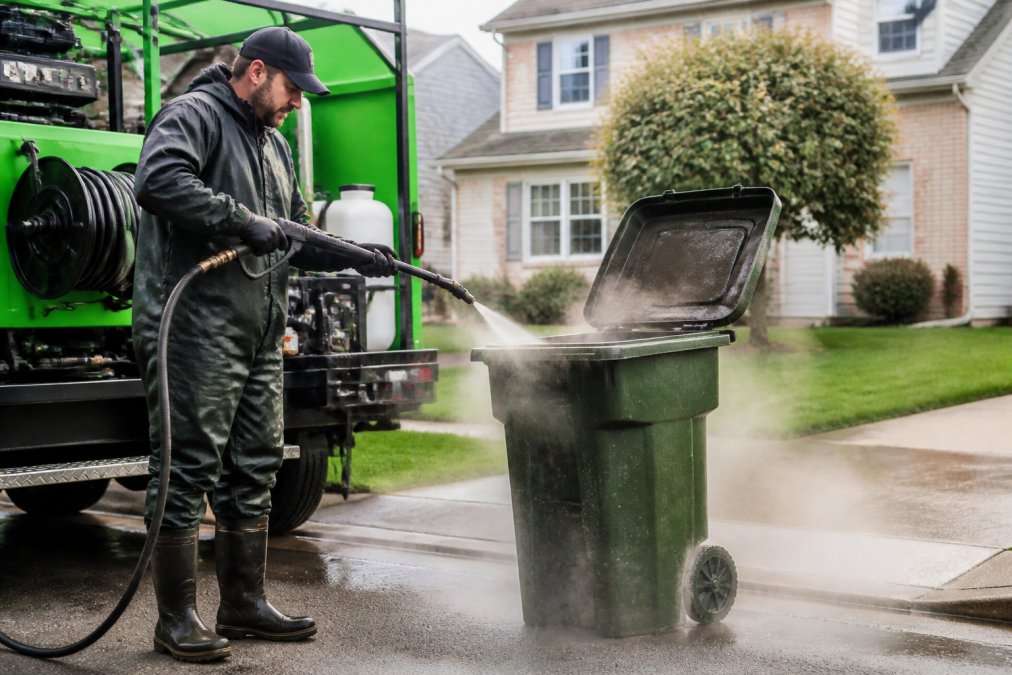
- Lift and inspect the bin, checking for cracks, compacted waste, and fly larvae around the rim.
- High-pressure cleaning with hot water to break down stuck-on grime and waste residue.
- Sanitization with biodegradable sanitizers that eliminate bacteria and pathogens rather than just masking them.
- Deodorizing and air-drying so the bin goes back to the curb odor-free.
The 200° Hot Water Difference
Hot water extraction at 200° does what a garden hose never will: it melts the film of rotting organic matter clinging to the inside walls of a bin, the layer where bacteria and fly larvae actually live. Cold water knocks off what you can see; hot water removes what you can’t.
Benefits of Professional Trash Can Cleaning
The benefits of professional trash can cleaning go beyond a fresher smell: regular sanitation removes the conditions that attract pests, protects your family from pathogen exposure, and extends bin life.
Health and Sanitation Benefits
Trash bins collect food waste, diapers, pet waste, and liquids, making them a breeding ground for bacteria and pathogens that breaks down fast in the sun. Professional sanitation targets the contamination directly rather than just hosing the surface.
- Bacteria elimination on interior walls and lids
- Pathogen removal from handles and rims, the surfaces you actually touch
- Reduced cross-contamination between kitchen and outdoor bins
- Surface disinfection that holds between service visits
Odor Elimination and Pest Prevention
Foul odors and fly larvae prevention come down to the same fix: remove the organic residue that feeds both. A hose rinse leaves a food source behind, so the smell returns within days and flies find it again; hot water extraction and deodorizing break that cycle.
If your bin already has maggots, don’t try to rinse them out first. The larvae cling to the rim and lid hinge, and a hose just spreads them. Leave the bin out and let the technician hit those spots with hot water and sanitizer.
How to Find Residential Trash Bin Cleaning Services Near Me
Finding residential trash bin cleaning services near me starts with three checks: does the provider clean at the curb, does it use hot water rather than cold pressure washing, and does it serve your street.
Ask these questions before you book:
- Where does the water go? A responsible provider captures and reclaims runoff instead of letting it run into your yard or the storm drain.
- What’s the water temperature? Anything short of hot water extraction leaves residue behind.
- Do you clean recycling bins too? Recycling bins get sticky from rinsed containers and need the same treatment.
- What’s the service window? Fast turnaround, ideally within 24 hours of pickup, keeps bins from sitting dirty.
- Is there a contract? Flexible plans, including one-time cleanings, let you test the service first.
Trash Bin Cleaning Service Frequency: Monthly vs. Quarterly
Trash bin cleaning frequency isn’t a fixed rule, it depends on how much organic waste your household produces, how many bins you put out, and the weather. Treating it as a year-round constant is why so many people feel their service “isn’t working.”
Matching Frequency to Your Household
Start with your baseline, then adjust for season.
| Household Type | Baseline Frequency | Why |
|---|---|---|
| Family with young children | Monthly | Diapers and food waste break down fast |
| Pet owners | Monthly to bi-monthly | Pet waste drives odor and pests |
| Average two-person home | Bi-monthly | Balances cost and hygiene |
| Small household, low waste | Quarterly | Maintenance-level cleaning |
| Commercial bins | Monthly | Higher volume, heavier residue |
Why Frequency Should Change With the Season
Bacterial growth and fly activity are temperature-driven: a bin that stays tolerable for eight weeks in January can turn into a maggot nursery in three weeks in July. A seasonal calendar outperforms a flat plan.
Skipping winter cleanings entirely is the most common mistake. Residue that freezes and cures on the bin wall doesn’t disappear, it just waits for warmer weather to announce itself. A quarterly winter visit costs far less than the deep clean you’ll need in April if you skip it.
A Simple Seasonal Schedule to Follow
If you want one rule of thumb instead of a spreadsheet:
- May-September: monthly for families and pet owners, bi-monthly for average households.
- October-November: one transition cleaning before the first freeze.
- December-February: quarterly maintenance, even for low-waste homes.
- March-April: one reset cleaning at the first thaw.
If you’re not sure where to start, book a single cleaning and note how the bin smells two weeks later. That tells you more about your real frequency needs than any generic recommendation.
DIY vs. Professional Bin Cleaning: What You Need to Know
DIY bin cleaning is cheaper per attempt but rarely matches professional results, because a garden hose can’t reach the temperature or pressure needed to strip residue.
| Factor | DIY | Professional |
|---|---|---|
| Water temperature | Cold to warm | 200° hot water |
| Runoff handling | Runs into yard or street | Water reclamation |
| Time per bin | 20-40 minutes | A few minutes |
| Pest and larvae removal | Partial | Full |
| Deodorizing | Temporary | Lasting |
| Physical effort | High | None |
The Environmental Impact of Eco-Friendly Cleaning
The environmental case for professional bin cleaning comes down to two things most providers never explain: what’s in the cleaning solution, and where the dirty water goes. Those two factors separate a real eco-conscious service from a pressure washer with a green logo.
What “Biodegradable Sanitizer” Actually Means
A biodegradable sanitizer breaks down through microbial action into harmless byproducts (water, carbon dioxide, simple minerals) rather than persisting in soil or waterways. Two categories matter:
- Surfactant-based cleaners lift and suspend grease, food residue, and biofilm so hot water can carry them away. Plant-derived surfactants (often coconut- or corn-based) biodegrade far faster than petroleum-derived ones.
- Quaternary ammonium or oxidizing sanitizers do the pathogen-killing work. Some quats persist in the environment; oxidizing agents like hydrogen-peroxide-based formulas break down into water and oxygen.
Water Reclamation: Where the Dirty Water Actually Goes
This is the piece competitors skip. When you clean a bin in your driveway with a hose, everything you rinse out, food residue, bacteria, any cleaner you used, flows across the concrete, into the gutter, and toward the storm drain. In most municipalities, storm drains empty directly into local creeks and rivers with no treatment at all. That’s the mechanism behind the EPA’s information on stormwater runoff: residential runoff is a leading pathway for pollutants reaching waterways, and it’s why washing a bin in the street is a different act than washing it in a contained system.
- Captured at the curb in the service vehicle’s holding tank.
- Screened to remove solids and large debris.
- Settled or filtered to separate fats, oils, and grease from the water.
- Disposed of at a permitted wastewater treatment facility or recycling point, not a storm drain.
The Water Math Most People Never Run
“Eco-friendly” is only meaningful when you can name the sanitizer chemistry and trace where the wastewater goes. If a provider can’t answer both, the label is decoration.
Pricing and Service Packages
Plans fall into three shapes:
- One-time cleaning for a deep clean before a party, after a move, or when you’ve inherited dirty bins from previous tenants.
- Recurring service on a monthly, bi-monthly, or quarterly schedule, which is where most households land.
- Commercial packages for business owners with larger trash receptacles and higher volumes.
The right plan isn’t the cheapest one. It’s the frequency that matches your household’s waste volume, because a bin cleaned too rarely just resets the odor-and-pest cycle you’re paying to break.
Worth noting: Chester County Clean Cans donates 20% of sales to the West Chester Henderson Men’s Soccer Team when customers select WC Mens Soccer at checkout under “how did you hear about us.” It’s the company’s first local sports sponsorship, and it keeps the spend inside the community.
Frequently Asked Questions
How much does a trash bin cleaning service cost?
Pricing for trash bin cleaning services depends on several factors including the number of bins, your location, and the frequency of service you choose. Chester County Clean Cans provides transparent pricing on their website, so you can see exactly what you’ll pay before committing.
How often should you have your trash bins professionally cleaned?
Most households benefit from monthly or bi-monthly service during warmer months when bacteria and odors develop quickly. Quarterly maintenance works well in cooler seasons or for households that generate less organic waste. If you have pets, young children, or compost regularly, more frequent cleanings help maintain a hygienic environment. Families dealing with recurring maggot issues or persistent odors often find that monthly service prevents problems before they start rather than reacting after infestation.
Are eco-friendly cleaning agents safe for pets and plants?
Biodegradable sanitizers used by professional bin cleaning services are designed to break down safely without leaving toxic residue. The combination of 200° hot water and eco-conscious cleaning solutions eliminates bacteria and pathogens without harsh chemicals that could harm your yard or garden. Water reclamation systems capture runoff during the cleaning process, preventing contaminated water from entering storm drains. If you have specific concerns about sensitive plants or pets, ask your service provider about the exact products they use.
Does professional bin cleaning actually help with pest control?
Yes. Trash bins accumulate food residue, liquids, and organic matter that attract flies, maggots, roaches, and rodents. Professional cleaning removes this food source entirely, making your bins far less appealing to pests. The high-temperature water used in professional cleaning kills fly larvae and bacteria that DIY rinsing misses. Regular service creates an ongoing barrier against pest problems, especially during summer months when fly larvae prevention becomes critical for keeping your outdoor spaces comfortable and sanitary.
What happens if I’m not home when the cleaning service arrives?
Reputable curbside service providers clean your bins without requiring you to be present. You simply leave your bins at the curb after your regular trash pickup, and the cleaning team handles everything within 24 hours. They clean, sanitize, deodorize, and return the bins to your designated spot. This hassle-free approach means you don’t need to schedule your day around the service or coordinate access to your property. Most customers find this convenience is one of the main reasons they choose professional cleaning over DIY methods.
Can professional cleaning handle bins with severe maggot infestations?
Professional equipment handles even heavily soiled bins with maggot issues. The 200° hot water and high-pressure cleaning process eliminates fly larvae, eggs, and the bacteria that cause foul odors. Unlike a garden hose rinse that spreads contamination, professional equipment contains and properly disposes of waste residue. After the first deep cleaning, most customers see immediate improvement. Setting up recurring bi-monthly or monthly service prevents future infestations by eliminating the organic buildup that attracts flies in the first place.