Table of Contents
- What You’ll Need to Clean a Household Bin
- Step-by-Step Guide to Cleaning Your Household Bin
- Best Disinfectant for Trash Cans
- How Often to Clean Outdoor Bins
- How to Keep Flies Away From Outdoor Trash Cans
- Common Mistakes to Avoid
- Seasonal Cleaning Schedules and Preventative Maintenance
- Frequently Asked Questions
Last Updated: September 27, 2026
What You’ll Need to Clean a Household Bin
Gather a pressure washer or garden hose, long-handled scrubbing brush, rubber gloves, and safety glasses. For cleaning solutions, use hot water with household detergent, diluted bleach, vinegar, or baking soda. Have a bucket ready if not using a pressure washer.
Start with what you have at home. Most people already own a hose, bucket, and cleaning supplies. You don’t need expensive equipment to get results.
Step-by-Step Guide to Cleaning Your Household Bin
Follow these steps to learn how to clean a household bin? and remove odors, bacteria, and grime in 30-45 minutes.
Step 1: Empty and Inspect
Empty the bin completely and inspect for damage, cracks, and grime buildup. Check wheels and hinges, which trap dirt and bacteria.
Step 2: Remove Debris and Residue
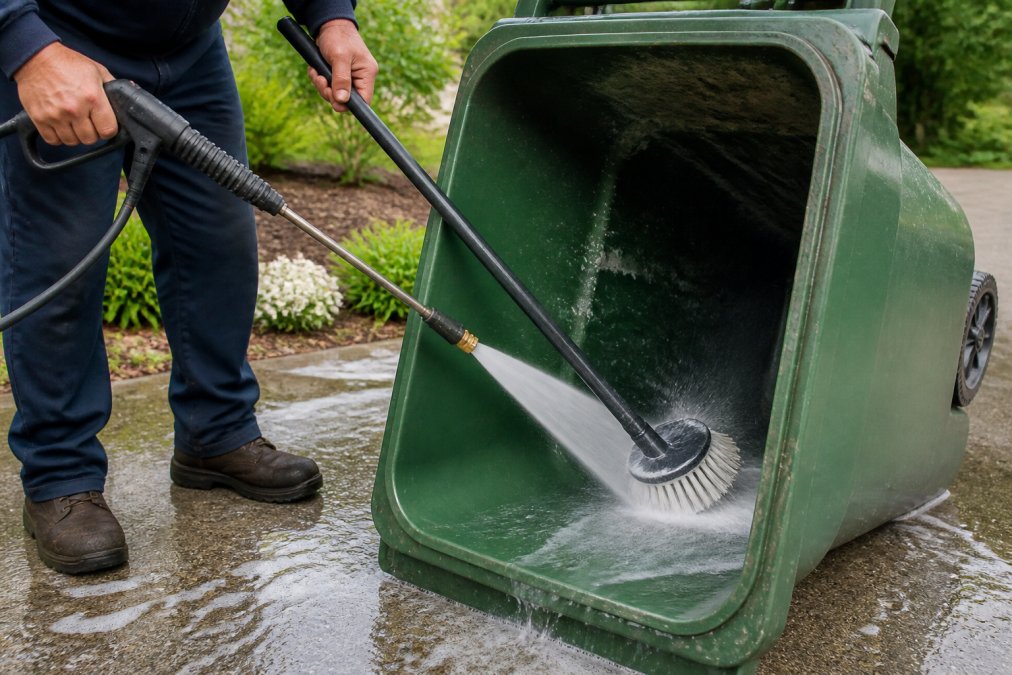
Sweep out loose material from corners with a long-handled brush. Rinse with water on low pressure to loosen stuck-on residue and prep the surface.
Step 3: Apply Your Cleaning Solution
Mix hot water with your chosen cleaner (vinegar, bleach diluted per package directions, or detergent). Pour into the bin and let sit 5-10 minutes to break down grime and kill bacteria.
Never mix bleach with vinegar or ammonia (the CDC). This creates toxic fumes that are dangerous to breathe. Stick with one cleaning agent at a time.
Step 4: Scrub Thoroughly
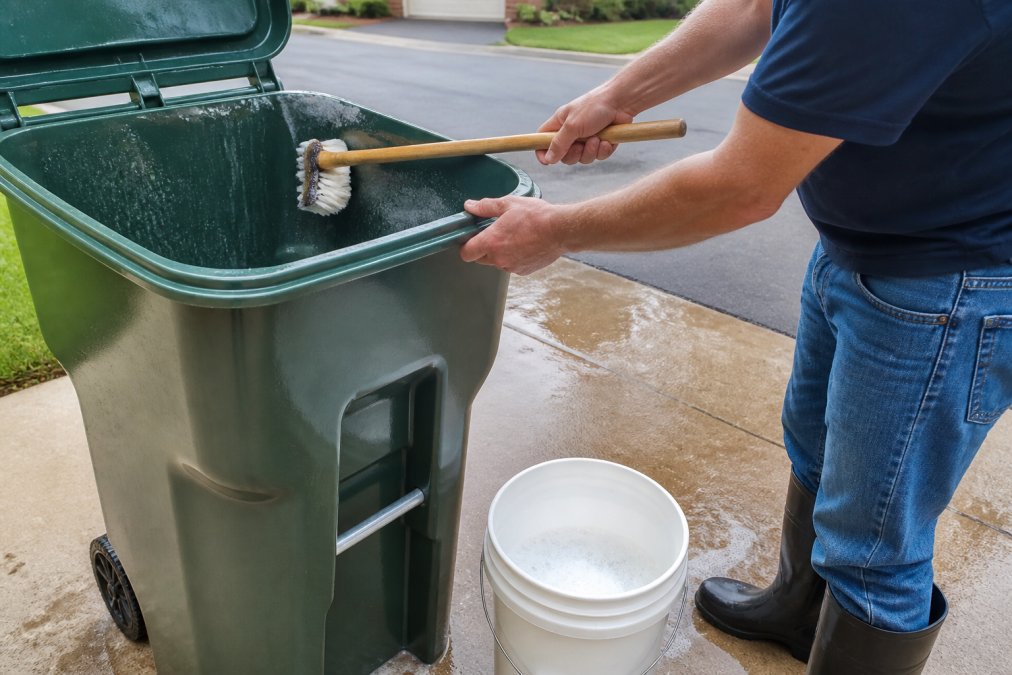
Scrub all interior surfaces, bottom, sides, lid, corners, and seams, with firm pressure. Also scrub the exterior, wheels, and hinges where bacteria accumulate.
Step 5: Rinse and Drain
Rinse thoroughly with clean water to remove all soap residue. Tip the bin to drain excess water and prevent standing water that attracts insects.
Step 6: Sanitize and Deodorize
Spray the interior with a commercial disinfectant or tea tree oil solution. Sprinkle baking soda inside and let sit 15 minutes to neutralize odors, then rinse.
Step 7: Air Dry Completely
Stand the bin upright in sunlight for at least 30 minutes to kill bacteria and ensure complete drying. Moisture trapped inside causes mold and odors.
Best Disinfectant for Trash Cans
The best disinfectant depends on bin material and contamination level. Wrong solutions can corrode metal, degrade plastic, or harm soil.
For plastic bins: Use vinegar and hot water, bleach weakens plastic over time. Avoid ammonia-based cleaners, which make plastic porous and trap odors.
For metal and galvanized steel bins: Bleach solution (1:10) works effectively; rinse thoroughly to prevent rust. Avoid ammonia-based cleaners, which strip protective coatings.
For stainless steel bins: Use vinegar, hot water, or mild dish soap. Avoid bleach, which causes pitting. Wipe dry immediately to prevent water spots.
Disinfectant options:
- Bleach solution (1:10): Most effective for maggots and heavy contamination. Use only on metal bins; rinse completely.
- Vinegar and hot water: Eco-friendly, works on all materials, good for regular maintenance.
- Baking soda: Neutralizes odors and mild bacteria; combine with vinegar for both disinfection and deodorizing.
- Commercial disinfectant sprays: Check label for material compatibility.
- Tea tree oil: Natural and antimicrobial; use 10 drops per spray bottle. Safe for all materials but less effective against heavy loads.
Safe disposal of cleaning water:
The rinse water from bin cleaning contains bacteria, food residue, and chemical residue. Never pour it down storm drains or into areas where children or pets play.
- For bleach-based rinse water: Allow it to sit in the bin for 10 minutes after the final rinse so the bleach can neutralize remaining bacteria. Then pour slowly into a floor drain connected to your home’s septic or municipal sewer system (not a storm drain). Never pour bleach water onto soil, grass, or into storm drains.
- For vinegar or baking soda rinse water: This is safe to pour onto soil away from vegetable gardens, or into a floor drain. It will not harm beneficial soil bacteria.
- For commercial disinfectant rinse water: Check the product label for disposal instructions. Most should go down a floor drain, not a storm drain.
If you don’t have a floor drain, collect rinse water in a bucket and let it sit for 24 hours before disposal. Bacterial activity will reduce over time, making it safer to pour down a toilet or into a municipal drain.
How Often to Clean Outdoor Bins
Weekly cleaning is best for maggots, flies, or strong odors. Bi-weekly cleaning works for most households. Monthly cleaning is minimum for regular maintenance. Clean more often in warm months when bacteria and flies reproduce faster.
The warmer the weather, the more often you should clean. Summer heat speeds up decomposition and attracts more insects. Plan for weekly or bi-weekly cleaning during warm months.
How to Keep Flies Away From Outdoor Trash Cans
Prevent fly infestations by sealing the lid tightly, cleaning regularly, using bin liners, draining liquids before disposal, sprinkling baking soda, storing in shade, emptying frequently, and keeping the area clean.
Chester County Clean Cans helps eliminate these problems with professional bin cleaning. Regular sanitization removes the organic material flies need to breed, keeping your outdoor bins fly-free.
Common Mistakes to Avoid
Many people make cleaning mistakes that reduce effectiveness or create problems.
Skipping the rinse step. Soap residue left behind causes odors to return. Always rinse thoroughly with clean water.
Using cold water. Cold water doesn’t break down grease and grime as well as hot water. Use hot water for better results.
Mixing cleaning chemicals. Combining bleach with vinegar, ammonia, or other cleaners creates toxic fumes. Use one cleaner at a time.
Not letting the bin dry. Moisture trapped inside causes mold and odors. Always air dry completely before use.
Cleaning only the interior. Bacteria and grime accumulate on the outside too. Clean both sides for complete sanitation.
Ignoring the lid and wheels. These areas harbor bacteria and attract flies. Don’t skip them.
Using too much bleach. Strong bleach solutions can damage bin material over time. Follow dilution instructions.
Cleaning in cold weather. Cold temperatures slow drying. Schedule cleaning for warm, sunny days when possible.
Seasonal Cleaning Schedules and Preventative Maintenance
Different seasons require different approaches to bin care.
Spring: Deep clean and damage assessment
Summer: Weekly cleaning and pest prevention
Fall: Transition cleaning and drain maintenance
Winter: Monthly maintenance and corrosion prevention
Salt and road treatment residue: If your bin is near a driveway or street, road salt and de-icing chemicals accumulate on the exterior and can corrode metal bins or damage plastic. Rinse salt residue promptly after winter storms. Pay special attention to the base and wheels where salt concentrates.
Year-round preventative maintenance:
- Keep a cleaning schedule and stick to it. Mark your calendar for weekly (summer) or bi-weekly (spring/fall) or monthly (winter) cleaning. Consistency prevents odor and pest problems from developing.
- Inspect your bin monthly for cracks, rust, or damage. Early detection prevents small problems from becoming expensive replacements.
- Replace damaged bins promptly. Cracks and holes allow bacteria to colonize the bin structure itself, making it impossible to fully sanitize.
- Store bins away from food prep areas and pet feeding zones. This reduces cross-contamination risk.
- Use bin liners to reduce mess and odors. Heavy-duty liners (3-mil thickness or greater) prevent leaks and make cleanup easier. Biodegradable liners are available but may tear more easily; reserve them for dry waste only.
- Keep the area around bins clean and dry. Sweep spilled trash promptly. Debris around bins attracts flies and rodents.
- Position bins on level ground with good drainage. Bins on slopes or in low spots collect standing water, which breeds insects and causes odors.
- Ensure adequate airflow around bins. Bins in enclosed spaces or against walls trap moisture and odors. Leave at least 6 inches of clearance on all sides.
Material-specific maintenance:
- Plastic bins: Replace every 5-7 years or when cracks appear. UV exposure and temperature fluctuations degrade plastic over time. Inspect wheels and hinges annually; replace if cracked or corroded.
- Metal bins: Treat rust spots immediately with a wire brush and rust-preventative coating. Inspect seams and welds for corrosion. Metal bins last 10+ years with proper maintenance.
- Stainless steel bins: Wipe dry after every cleaning to prevent water spots. Polish quarterly with a stainless steel cleaner to maintain appearance and protective coating. These bins last 15+ years.
Frequently Asked Questions
What is the best way to clean a household bin?
Start by emptying the bin completely, then rinse out loose debris. Apply a disinfectant solution (bleach, vinegar, or tea tree oil), scrub with a long-handled brush, rinse thoroughly with hot water, and air dry completely. For stubborn odors or maggots, use hot water above 150°F and let the solution sit for 10-15 minutes before scrubbing. This removes surface bacteria, germs, and eliminates odor-causing residue.
How often should you wash your trash cans?
Most households benefit from cleaning bins monthly during cooler months and every 2-3 weeks during warm weather when bacteria and flies multiply faster. If you notice odors, visible residue, or pest activity, clean immediately. Families with young children or those disposing of food waste regularly should clean more frequently to maintain hygiene and prevent maggots.
What household products kill bacteria in trash bins?
Effective natural options include white vinegar (kills surface bacteria), bicarbonate of soda (neutralizes odours), salt (dehydrates bacteria), and tea tree oil (antibacterial properties). Bleach is a strong chemical disinfectant that eliminates germs quickly. Hot water above 150°F enhances any solution’s effectiveness. For best results, combine methods: vinegar soak followed by scrubbing with bicarbonate of soda, then rinse and sanitize with hot water.
Can I use eco-friendly methods for bin cleaning?
Yes. Vinegar and bicarbonate of soda are effective, non-toxic alternatives to harsh chemicals. Hot water alone removes most residue and bacteria. When disposing of greywater, direct it away from storm drains and let it filter through soil. These methods sanitize and deodorize your bin while protecting your yard and local water systems. For heavy contamination or maggot infestations, professional cleaning with 200° hot water ensures thorough sanitization.
Cleaning a household bin regularly keeps your home fresh and prevents odors, bacteria, and pest problems. But if you’d rather skip this unpleasant chore, Chester County Clean Cans handles it for you. We use 200° hot water and eco-friendly methods to sanitize and deodorize your bins within 24 hours. Choose monthly, quarterly, or one-time cleaning to fit your needs. Get a quote today and discover how easy it is to have fresh, hygienic bins year-round.