
Table of Contents
- Why Flies Target Your Trash Can (and How to Stop the Cycle)
- Step 1: Remove Food Waste Immediately
- Step 2: Clean and Sanitize Trash Bins Weekly
- Step 3: How to Get Rid of Maggots in Trash Can
- Step 4: Best Natural Fly Repellent for Trash Cans
- Step 5: Secure Lids and Use Airflow
- Step 6: Manage Indoor vs. Outdoor Trash
- Step 7: Consider Professional Trash Bin Cleaning Services
- Frequently Asked Questions
Last Updated: September 28, 2026
Why Flies Target Your Trash Can (and How to Stop the Cycle)
Flies don’t find your trash can by accident. Rotting food scraps, warmth, and moisture create a perfect breeding ground, and a single female fly can lay hundreds of eggs that hatch into maggots within a day. That’s why learning how to prevent flies in trash cans comes down to breaking the life cycle early, before larvae ever get a chance to feed.
Flies need three things to breed: food, moisture, and warmth. Remove any one of those and the cycle stalls within days.
Step 1: Remove Food Waste Immediately
The fastest way to prevent flies is to stop them from finding a meal. Flies can smell decomposing matter from a distance, and organic waste left sitting for even a day gives them a place to lay eggs.
So keep these habits:
- Bag all food scraps before they hit the bin
- Take kitchen trash out every evening, not every few days
- Rinse containers that held meat, dairy, or sugary drinks
- Never toss loose fruit peels or coffee grounds straight into the can
- Keep a small lidded bin in the kitchen for quick daily disposal
Step 2: Clean and Sanitize Trash Bins Weekly
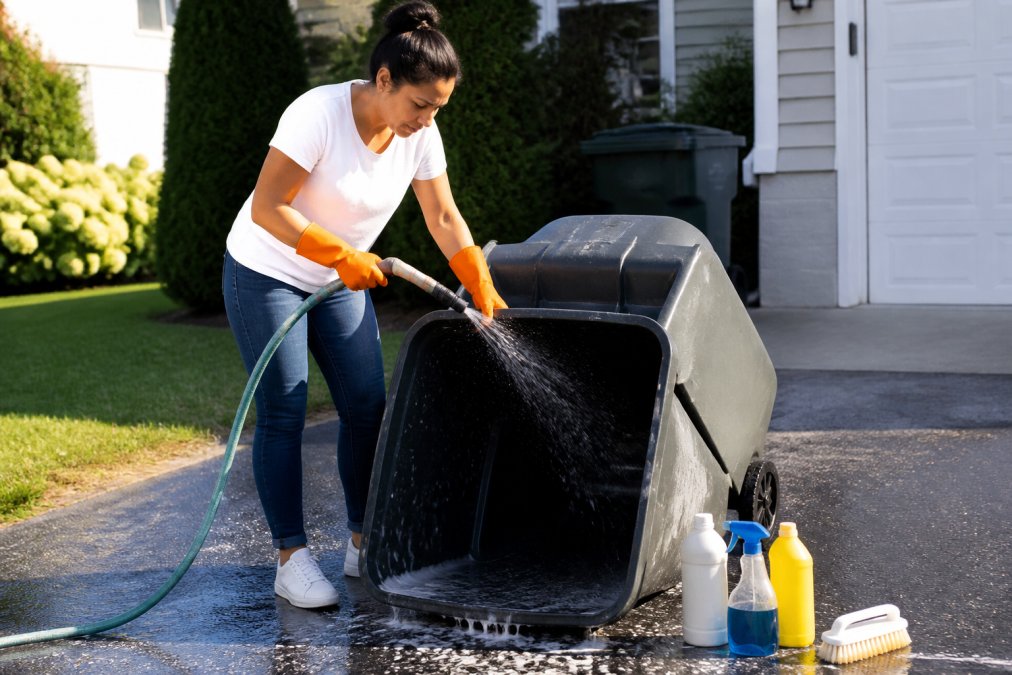
Even with careful disposal, residue builds up. A weekly wash keeps bin hygiene under control and removes the film that flies love.
DIY Cleaning Methods That Work
You don’t need fancy products. A few basics handle most jobs:
- Vinegar solution: Mix equal parts white vinegar and water. Spray, let sit, then rinse.
- Bleach dilution: A small amount of bleach in a bucket of water kills germs and odor. Rinse well.
- Dish soap and hot water: Good for greasy residue from food containers.
- Baking soda: Sprinkle in the bottom to absorb smells between washes.
When to Pressure Wash Your Bins
Some messes need more than a hose. If your bin has caked-on residue, dried liquids, or a persistent smell after washing, it’s time for a pressure wash. High-pressure water blasts out the corners and seams a sponge can’t reach.
Turn the bin upside down to drain after washing. Standing water in the bottom is a magnet for flies and a source of odor.
Step 3: How to Get Rid of Maggots in Trash Can
Maggots mean flies already found your bin. The good news: you can clear them fast and stop them from returning.
Immediate Removal and Disposal
Act the same day you spot them. Here’s the drill:
- Put on gloves and move the bin away from the house
- Bag the waste and any visible larvae, then seal it tight
- Take the bag straight to the outdoor bin or a dumpster
- Scrub the bin with hot, soapy water
- Rinse and let it dry fully in the sun
Killing Larvae with Vinegar or Bleach Solutions
After removing the source, treat the bin itself. A vinegar solution poured into cracks and seams kills remaining larvae and neutralizes odor. A diluted bleach mix works too, but rinse thoroughly so residue doesn’t linger.
Step 4: Best Natural Fly Repellent for Trash Cans
Once the bin is clean, the goal shifts from killing flies to making the bin unappealing. Natural repellents work on two fronts: masking the odors flies navigate by, and introducing plant compounds that irritate their sensory receptors. Understanding which is which helps you pick the right tool instead of layering scents that do nothing.
How Natural Repellents Actually Work
Flies locate trash primarily by smell, following ammonia and sulfur compounds released by decomposing organic matter. A repellent succeeds when it either overwhelms those cues or coats the surface so the cues never escape. That is why a sealed lid plus airflow often outperforms any spray, the mechanism is physical exclusion, not chemistry.
Scents Flies Avoid
These are the plant-based options most commonly used around waste containers:
- Eucalyptus and peppermint: Strong menthol and cineole notes mask food odors. Dab a few drops on a cotton ball and tuck it under the lid, away from direct contact with waste.
- Lavender and citronella: Mix with water in a spray bottle and mist the bin’s interior and rim. Reapply after each wash.
- Clove and basil: Plant near your trash enclosure or hang dried bundles to create a scent barrier.
- Cedar: Cedar chips or blocks placed at the bin base release oils that deter flies and absorb some moisture.
Pet-Safe Alternatives
This is where most guides stop short. Many popular fly repellents, including some essential oils, are toxic to cats and dogs, and the ASPCA warns that oils like tea tree, citrus, pennyroyal, and wintergreen can cause serious reactions in pets even at low exposure. If your bin sits where pets roam, build your routine around these instead:
- Cedar chips scattered around the bin base, generally considered low-risk for pets and effective at masking odor.
- Diatomaceous earth along the rim and floor, a mechanical, non-toxic powder that dries out insects on contact. Use food-grade only, and keep it out of reach so pets don’t inhale it.
- Physical fly traps placed well away from pet areas, so curious noses can’t reach them.
- Tight lids and airflow, the single most reliable pet-safe deterrent, because it removes access rather than adding a toxin.
Never leave open containers of essential oils where pets can lick them, and never apply oils directly to a bin surface a pet might brush against. Even “natural” products can cause illness in the wrong dose or the wrong species.
If you use diatomaceous earth, reapply after every wash, water neutralizes its drying action.
Step 5: Secure Lids and Use Airflow
A loose lid is an open invitation. Flies slip through gaps smaller than you’d think, and an airtight seal shuts them out.
Checklist for a fly-proof bin:
- Lid closes flush with no warping
- No cracks in the body or handles
- Bag fits without overflowing the rim
- Bin sits in shade, not direct sun
- Air circulates around the bin, not against a wall
Step 6: Manage Indoor vs. Outdoor Trash
Indoor and outdoor bins fail for different reasons, and treating them the same is one of the most common reasons infestations keep returning. The fix is not just a cleaning schedule, it is how you separate waste before it ever reaches the can.
Waste Segregation: The Step Most Guides Skip
Flies are drawn to wet, putrefying organic matter, not to dry cardboard or clean plastic. When food scraps, liquids, and greasy containers sit mixed with dry recyclables, the entire bin becomes a breeding site. Separating waste streams at the source removes the moisture and odor flies depend on.
A practical segregation routine:
- Wet organics (food scraps, coffee grounds, dairy, meat trimmings): collect in a small lidded countertop bin and empty daily.
- Dry recyclables (paper, cardboard, rinsed plastic and glass): keep in a separate bin. Rinse anything that held food so no residue remains.
- Yard and pet waste: bag separately and keep out of kitchen and recycling streams entirely.
- Grease and oils: never pour into any bin. Let them solidify in a sealed container first.
Indoor vs. Outdoor Routines
| Setting | Key Move | Frequency |
|---|---|---|
| Indoor kitchen bin | Bag scraps, keep lidded, empty nightly | Daily |
| Indoor garage bin | Keep sealed, wash interior, check for moisture | Monthly |
| Outdoor bin | Rinse, sanitize, keep lid shut, allow airflow | Weekly |
| Recycling bin | Rinse all containers, no food residue, keep dry | Weekly |
Why Moisture Control Matters More Than Frequency
A bin emptied daily but left damp will still attract flies. Standing water in the bottom, condensation under the lid, and soggy bags all recreate the warm, wet environment larvae need. After every wash, turn the bin upside down to drain and let it dry fully in the sun before the next bag goes in.
Seasonal Adjustments
Fly pressure is not constant. In warmer months, when breeding cycles shorten, increase wash frequency and check the bin every few days for early signs of larvae. In cooler months, you can stretch the schedule, but do not skip it entirely, a single overlooked bag of food waste can overwinter and restart the problem when temperatures rise.
Separate wet waste from dry, keep every bin dry between uses, and adjust your cleaning frequency with the seasons. That combination addresses the source rather than the symptom.
Step 7: Consider Professional Trash Bin Cleaning Services
Sometimes the mess is beyond a garden hose. Caked grime, maggot issues, and stubborn odor call for equipment most homeowners don’t have.
What to Expect from a Professional Service
A typical visit covers:
- High-pressure washing of the interior and lid
- Hot-water sanitization that kills bacteria and larvae
- Deodorizing to remove lingering smells
- Eco-friendly runoff handled responsibly
For busy families, HOAs, and business owners, this removes the worst chore on the list. You get a sanitized bin without touching a scrub brush.
Homeowners and HOAs dealing with maggots, odor, or bins inherited from previous tenants who want the job handled without lifting a finger.
Frequently Asked Questions
What can I put in my trash can to repel flies?
You can place natural deterrents like cedar chips, lavender sachets, or a small bowl of vinegar inside the bin. These scents mask odors that attract flies. For a stronger option, mix a few drops of eucalyptus or peppermint essential oil with water and spray the inside of the can. Always ensure the lid is closed tightly and avoid leaving food scraps exposed.
Why do I keep getting flies in my trash can?
Flies are drawn to trash cans because of decomposing organic waste, food scraps, and moisture. Even a small amount of residue can attract them. If your bin has cracks or a loose lid, flies can easily enter. Regular cleaning and proper sealing are key to breaking the cycle. Also, check for maggots, as they indicate an active breeding ground.
What smell do flies hate the most?
Flies dislike strong scents like peppermint, eucalyptus, lavender, and citronella. These essential oils can be used in sprays or sachets. Vinegar is another common repellent. However, the most effective approach is to eliminate odors that attract flies in the first place. Keeping bins clean and dry reduces their interest.
How often should trash cans be professionally cleaned to prevent pests?
For most households, a monthly or quarterly professional cleaning is sufficient to prevent flies and maggots. If you live in a warm climate or have had a severe infestation, monthly service is better. Professional services use high-temperature water and sanitizing agents to kill eggs and larvae, which regular hose cleaning may miss.