

Table of Contents
- Why Flies Target Your Trash Can and How to Stop Them
- How to Clean an Outdoor Trash Can the Right Way
- How to Get Rid of Maggots in a Trash Can
- Best Trash Can Fly Repellent Options for Your Bin
- How Often to Clean Outdoor Trash Cans to Prevent Flies
- Common Mistakes That Keep Flies Coming Back
- When to Call a Professional Bin Cleaning Service
- Frequently Asked Questions
Last Updated: October 15, 2026
Why Flies Target Your Trash Can and How to Stop Them
If you want to know how to stop flies around trash cans, the answer starts with one fact: your bin is a perfect nursery. A trash can sitting in the sun delivers all three.
Flies are not just annoying. They land on garbage, then land on your patio table. That is how bacteria travels. At Chester County Clean Cans, we see this every summer on our curbside routes.
The good news? Breaking the cycle takes less work than you think.
The Fly Life Cycle: Why One Dirty Bin Becomes a Breeding Site
A female housefly can lay more than a hundred eggs at once, and those eggs hatch in under a day when the weather is warm.
That is the part most people miss. You are not fighting the flies you see. You are fighting the eggs and maggots you do not see.
Flies lay eggs in cracks, under the rim, and in the thin film of food residue at the bottom of the can. The University of Florida entomology research on filth flies explains that these species breed in garbage, manure, and decaying matter.
So the fix is not just killing adult flies. It is removing the breeding site entirely.
If you only spray the adults, you will see flies again in a week. Remove the eggs and food source, and the cycle stops.
How to Clean an Outdoor Trash Can the Right Way
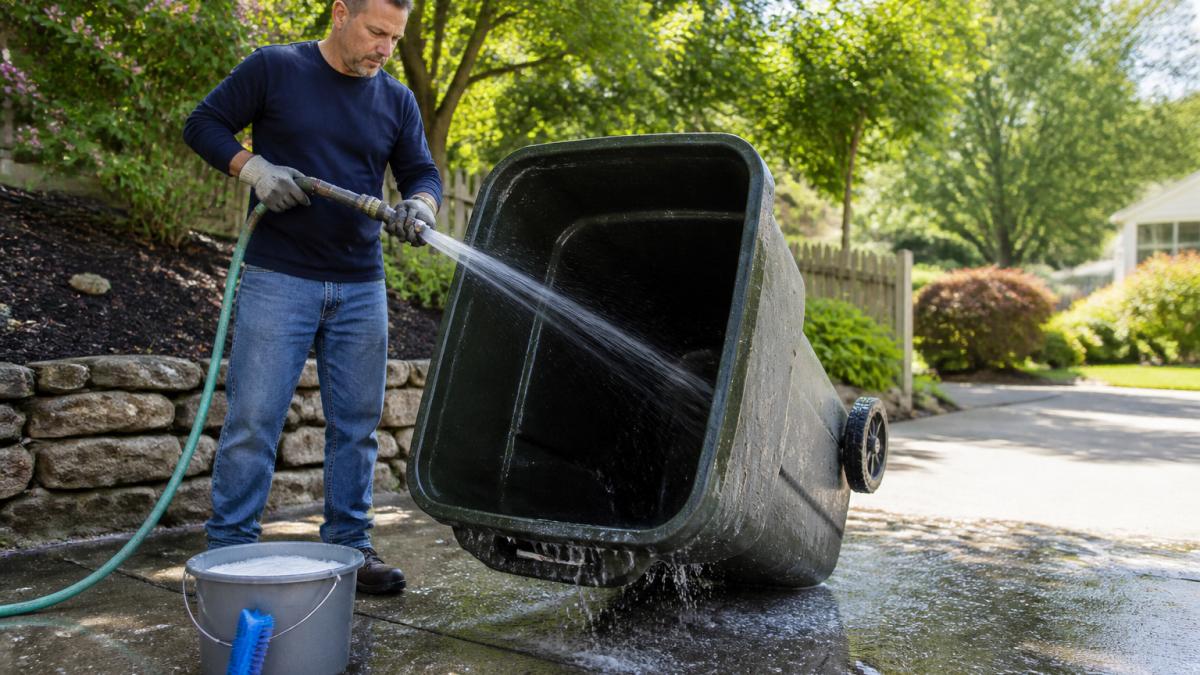
Cleaning an outdoor trash can is simple, but the order matters: empty it, scrub it, rinse it, then sanitize and dry it. The details below are the ones most guides skip, and they are the ones that decide whether flies come back.
Here is how to clean an outdoor trash can step by step:
- Put on gloves, eye protection, and old clothes. If you are sensitive to odors or dust, wear a basic mask.
- Empty all trash and scrape out stuck food residue with a putty knife or stiff brush.
- Mix warm water with a few drops of dish soap. A common ratio is about one teaspoon of mild dish soap per gallon of warm water. More soap is not better; excess soap leaves a film that traps odor.
- Scrub the inside walls, the bottom, under the rim, and under the lid. The rim and the bottom corners are where eggs and residue collect.
- Rinse with a garden hose until the water runs clear. If you used a disinfectant, rinse again unless the label says no-rinse.
- Spray the inside with a disinfectant. Follow the label’s dwell time, usually a few minutes, before wiping or rinsing.
- Let the bin dry fully in the sun, lid open. If the weather is damp, dry it with a towel or leave it in a garage with airflow.
Skip the drying step and you have just refilled the fly nursery. Moisture is what they want.
Safe Dilution, Rinsing, and Drying Rules
Most cleaning mistakes come from mixing products or skipping the rinse. Keep these rules in mind:
- Never mix bleach with ammonia, vinegar, or other acids. The fumes can be dangerous. If you use bleach, use it alone, diluted according to the label, usually about one tablespoon per gallon of water for general disinfection.
- Never mix bleach with hydrogen peroxide or with toilet bowl cleaners. If you are unsure, use one product at a time and rinse thoroughly between products.
- Rinse after any disinfectant unless the label says it is no-rinse. Residue can attract flies and can harm pets that lick the bin.
Never mix bleach with vinegar, ammonia, or other cleaners. The fumes can be harmful. Use one product at a time, dilute according to the label, and rinse well.
Rinsing, Sanitizing, and Drying Your Bin Between Pickups
A quick rinse between pickups keeps odors down and flies away. You do not need a full scrub every time.
After each garbage pickup, do this:
- Rinse the can with a hose
- Spray the inside with a mild disinfectant
- Leave the lid open to dry for an hour
Drying matters more than people think. A wet bin grows bacteria fast, and bacteria means odor, and odor means flies.
How to Get Rid of Maggots in a Trash Can
To get rid of maggots in a trash can, you have to remove them, kill what is left, and clean the bin completely. Maggots mean flies already laid eggs, so act fast.
Here is how to get rid of maggots in a trash can:
- Take the bag out and seal it tight.
- Pour boiling water over the maggots inside the bin.
- Scrub the bin with soap and hot water.
- Spray the inside with a disinfectant.
- Dry the bin fully before using it again.
Do not just hose the maggots into your yard. They will crawl back, or they will become flies somewhere else on your property.
Pouring bleach straight into a bin full of organic waste creates fumes and can splash back. Use hot water and soap first, then disinfect.
Best Trash Can Fly Repellent Options for Your Bin
The best trash can fly repellent is the one that removes the reason flies come in the first place, but repellents help between cleanings. Here are the options that work.
- Natural repellents: peppermint oil, eucalyptus oil, and lavender oil on cotton balls
- Citrus peels and dried herbs: cheap, mild, and safe around kids and pets
- Ginger spray: a homemade mix of ginger, water, and a drop of dish soap
For the EPA guidance on pesticide safety and non-target impacts, always read the label before spraying anything near pets, plants, or storm drains.
Natural Repellents vs. Insect Spray: What Works and What to Watch For
Natural repellents handle light fly pressure. Insect spray handles a full invasion.
Essential oils like peppermint and eucalyptus can keep flies from settling on a clean lid.
Insect spray kills adults fast, but it does nothing for the source.
A common mistake is spraying the bin and calling it done. Clean first, then treat. That order is what actually works.
Spray your repellent on the lid and rim, not the inside walls. That is where flies land first, and you avoid soaking it into every bag you toss.
How Often to Clean Outdoor Trash Cans to Prevent Flies
Most outdoor trash cans need a full cleaning at least once a month, with a quick rinse after every pickup.
How often to clean outdoor trash cans depends on three things: the weather, what you throw away, and how often your trash is collected.
| Situation | Cleaning Frequency | Why |
|---|---|---|
| Cool weather, light trash | Once a month | Slow fly activity |
| Warm weather, food waste | Every two weeks | Fast egg hatching |
| Maggots or heavy odor | Immediately, then weekly | Active breeding site |
| Recycling only, rinsed | Every 4-6 weeks | Low organic waste |
| Pet waste or meat scraps | Weekly in warm months | High-protein waste attracts flies fast |
If you live somewhere with hot summers and weekly garbage pickup, the two-week schedule is your safest bet.
A Daily, Weekly, and Pickup-Day Routine
Turning scattered tips into a routine is the easiest way to stay ahead of flies. Here is a simple plan.
Daily
- Bag food waste before it goes in the bin. Use a sealed bag, not a loose liner.
- Check the lid. If it does not close tight, fix it or replace the bin.
- Wipe the rim if you see residue.
Weekly
- Rinse the bin with a hose and a small amount of soap.
- Check for leaks, cracks, or damaged lids. Flies lay eggs in cracks.
- Look under the rim and in the bottom corners for maggots or residue.
Pickup Day
- After the truck empties the bin, rinse it out.
- Spray the inside with a mild disinfectant.
- Leave the lid open to dry for at least an hour.
Tailoring the Routine to Waste Type and Climate
Not all trash is the same. Meat scraps, pet waste, and diapers attract flies faster than paper or rinsed recycling.
In cooler weather, fly activity slows, but it does not stop. A bin that sits in a warm garage can still breed flies in winter.
If your collection schedule is every other week, consider a smaller bin for food waste and a larger one for dry trash.
Set a phone reminder for the day after pickup. A one-minute rinse on that day prevents most of the buildup that leads to maggots.
Common Mistakes That Keep Flies Coming Back
The biggest mistake is cleaning the bin but leaving the bag open. Flies walk right in.
Other mistakes we see:
- Leaving food residue stuck to the bottom
- Skipping the dry step after rinsing
- Using a lid that does not seal
Each one leaves a food source or a breeding spot behind. Fix the whole chain, not just one link.
When to Call a Professional Bin Cleaning Service
Call a professional bin cleaning service when the smell, maggots, or flies keep coming back no matter what you do.
Some bins are just too far gone for a garden hose. Caked-on grime, deep stains, and odor trapped in plastic need more than soap.
That is where we come in. Chester County Clean Cans uses 200° hot water to sanitize, deodorize, and remove grime from residential and commercial bins.
We offer monthly, quarterly, or one-time cleanings.
Homeowners with maggots, stubborn odors, or bins inherited from a previous tenant who never cleaned them.
We are also proud to support local sports. If you would like to sponsor the West Chester Henderson Men’s Soccer Team, we donate 20% of sales to the team. Just select WC Mens Soccer at checkout under “How did you hear about us.” This is our first team sponsorship, and we want to keep backing local athletics.
Frequently Asked Questions
Why are there so many flies around my trash can?
Flies are drawn to trash cans because of food residue, organic waste, and the odors those produce as they break down. Rotting food gives off smells that attract houseflies, gnats, and other filth flies looking for a place to feed and lay eggs. A bin that is rarely rinsed builds up a layer of grime that keeps the smell going even after the garbage is collected, so the flies keep returning between pickups. Cleaning and sealing the bin removes the attractant.
How do I clean a trash can to keep flies away?
Empty the bin completely, then rinse it with a hose to loosen food residue and organic waste. Scrub the inside walls and bottom with dish soap and warm water, paying attention to corners where liquid collects. Rinse again, then spray the inside with a disinfectant or a mix of water and vinegar. Let the can dry fully in the sun before putting a new sealed garbage bag in. Drying matters because standing moisture and odors are what pull flies back to a breeding site.
What smell do flies hate the most?
Flies tend to avoid strong scents like peppermint oil, eucalyptus oil, lavender oil, and citrus peels. Some homeowners soak cotton balls in essential oils and place them in the bottom of the bin, or hang dried herbs nearby. Apple cider vinegar with a few drops of dish soap works as a trap rather than a repellent because the flies are drawn in and drowned. These options help, but they work best alongside regular cleaning, not instead of it.
How often should I clean an outdoor trash can to prevent flies?
Most households should rinse the can after every garbage pickup and do a full scrub with soap and water at least once a month, more often in summer when heat speeds up rotting food and fly eggs hatch faster. If you see maggots or notice a strong odor, clean immediately rather than waiting for the next scheduled wash. Homes with pet waste, diapers, or lots of food scraps may need weekly attention during warm months.
Flies around your trash can are a symptom, not the problem. The real issue is a dirty, damp bin that keeps inviting them back. Chester County Clean Cans handles that chore for you with 200° hot water, eco-friendly curbside service, and a fast 24-hour turnaround. Flexible monthly, quarterly, or one-time plans mean you can start small. Get a quote today and take back your driveway.