Table of Contents
- Why My Trash Cans Smell Bad (and Why It Matters for Pets)
- What Makes Bin Sanitization Safe for Pets
- How Often Should You Sanitize Trash Bins?
- Harmful Chemicals to Avoid Around Pets
- Signs Your Pet May Be Reacting to a Dirty Bin
- DIY Bin Cleaning vs. Professional Bin Sanitization
- Frequently Asked Questions
Last Updated: September 25, 2026
Why My Trash Cans Smell Bad (and Why It Matters for Pets)
That sour smell means organic waste, moisture, and bacteria have settled into the plastic, turning your bin into a daily health hazard for pets. This guide covers what’s living in your bin, what makes bin sanitization safe for pets, and how to clean it without toxic residue.
The Bacteria and Pathogens Living in Your Bin
A trash can is warm, dark, moist, and stocked with food, ideal for microbial growth. Common contaminants include E. coli, salmonella, listeria, mold, and fecal matter from pet waste bags. These pathogens transfer to paws, then floors, then faces.
What Makes Bin Sanitization Safe for Pets
Bin sanitization is safe for pets when the method relies on heat and biodegradable solutions rather than chemical residue left on the plastic. The key question: does it remove contaminants or just mask them with fragrance?
Safe sanitization has three components:
- Hot water extraction at high temperature to kill bacteria on contact
- Non-toxic, pet-friendly cleaning agents that break down grease and grime
- A deep clean that reaches the bottom and corners where residue collects
Pet-Safe Trash Bin Cleaning: Hot Water vs. Harsh Chemicals
Hot water sanitization kills bacteria through temperature alone, then drains away with the wastewater. Harsh chemicals kill bacteria too, but leave a film pets absorb through paws and ingest while grooming.
How Often Should You Sanitize Trash Bins?
Most households should sanitize trash bins monthly, with quarterly deep cleans for lower-use bins. Frequency depends on what you throw away and how many pets you have.
| Household Situation | Recommended Frequency | Why |
|---|---|---|
| Standard household, one bin | Monthly | Prevents odor buildup and pest attraction |
| Multiple pets or pet waste in bin | Monthly to biweekly | Higher bacterial load from organic waste |
| Hot summer months | Biweekly | Heat accelerates bacterial growth |
| Recycling only, rinsed items | Quarterly | Less organic residue accumulates |
Harmful Chemicals to Avoid Around Pets
The biggest mistake is reaching for bleach or a heavy-duty disinfectant spray because the smell is bad. Those products kill bacteria but leave residue on the exact surface your pet noses, licks, and brushes against, toxic exposure that keeps working long after the bin looks clean.
The Bin-Cleaning Ingredient Blacklist
| Ingredient | Where You Find It | Why It’s a Problem for Pets |
|---|---|---|
| Bleach (sodium hypochlorite) | General disinfectants, “bin bomb” sprays | Corrosive to paws and nose leather; ingestion causes drooling, vomiting, and mouth burns |
| Ammonia and ammonium compounds | Glass cleaners, some degreasers | Fumes irritate the respiratory tract; cats are especially sensitive because of how they metabolize ammonia |
| Phenols | Pine-scented cleaners, some disinfecting sprays | Cats lack the liver enzyme (glucuronyl transferase) to process phenols efficiently, so exposure that would be minor for a dog can be serious for a cat |
| Quaternary ammonium compounds (quats) | Disinfecting wipes, many “sanitizing” sprays | Common cause of skin irritation and oral ulcers; residue lingers on plastic |
| Glycol ethers | Some heavy-duty degreasers | Absorbed through skin and paws; linked to gastrointestinal upset |
| Synthetic fragrance and “odor neutralizers” | Scented bin sprays, deodorizing powders | Mask odor without removing bacteria; pets absorb fragrance through paws and grooming |
| Ethylene glycol (antifreeze-type compounds) | Rare, but sometimes in industrial degreasers | Extremely toxic to dogs and cats even in tiny amounts |
Species-Specific Sensitivity
Not every pet reacts the same way to the same residue, and the difference matters when you choose a cleaning method.
- Cats are the most vulnerable to chemical residue because their liver clears phenols and several other compounds slowly. A bin wiped with a pine-scented disinfectant can be a real hazard for a cat that rubs against it.
- Dogs are more likely to ingest residue directly by licking the rim or the bottom of the bin, so the risk is dose-based rather than metabolic.
- Small animals, rabbits, guinea pigs, hamsters, birds, have small body mass and sensitive respiratory systems. Fumes that a dog shrugs off can be dangerous for a bird in the same room.
- Puppies, seniors, and pets with allergies or respiratory conditions react to lower exposures than a healthy adult animal.
A Quick Safety Checklist Before You Clean
Run through this list before any bin-cleaning product touches the plastic:
- Read the ingredient panel, not just the front label. “Natural” and “eco” are marketing terms, not safety certifications.
- Cross-check every ingredient against the blacklist above.
- If the product says “keep pets and children away until dry,” treat that as a hard rule, not a suggestion.
- Never mix products. Bleach plus ammonia creates chloramine gas, which is dangerous to pets and people.
- Store cleaning products in a closed cabinet your pet cannot open, the bin is not the only exposure route.
- If you are unsure about an ingredient, call your veterinarian or a pet poison helpline before using it.
Never clean a pet-accessible bin with bleach and return it to service the same day. Residual bleach on the rim can burn a dog’s nose or paws, and a pet that licks the surface can ingest enough to cause vomiting and drooling. If a chemical disinfectant was used, rinse thoroughly and let the bin dry completely in direct sun before it goes back into rotation.
What to Use Instead
The safest routine avoids the blacklist entirely. Hot water, mild unscented dish soap, and a scrub brush handle most household grime; baking soda absorbs odor rather than masking it. For disinfection without residue, heat does the work chemicals would otherwise do, the core reason hot-water sanitization is most often recommended for households with pets.
Signs Your Pet May Be Reacting to a Dirty Bin
Pets often show subtle signs before obvious illness appears. If your bin hasn’t been cleaned in months, watch for these behaviors:
- Repeated sniffing or licking at the bin or the area around it
- Scratching at the muzzle or pawing at the face
- Vomiting or loose stool after investigating the bin
- Sneezing, watery eyes, or coughing near the bin’s location
- Sudden reluctance to go near the bin or the garage where it’s stored
DIY Bin Cleaning vs. Professional Bin Sanitization
Most bin-cleaning content is written by companies selling subscriptions, which leaves out the question pet owners actually have: can I do this myself without exposing my dog or cat to anything harmful? Yes, with caveats. Here’s an honest breakdown of both paths.
The Safe DIY Method, Step by Step
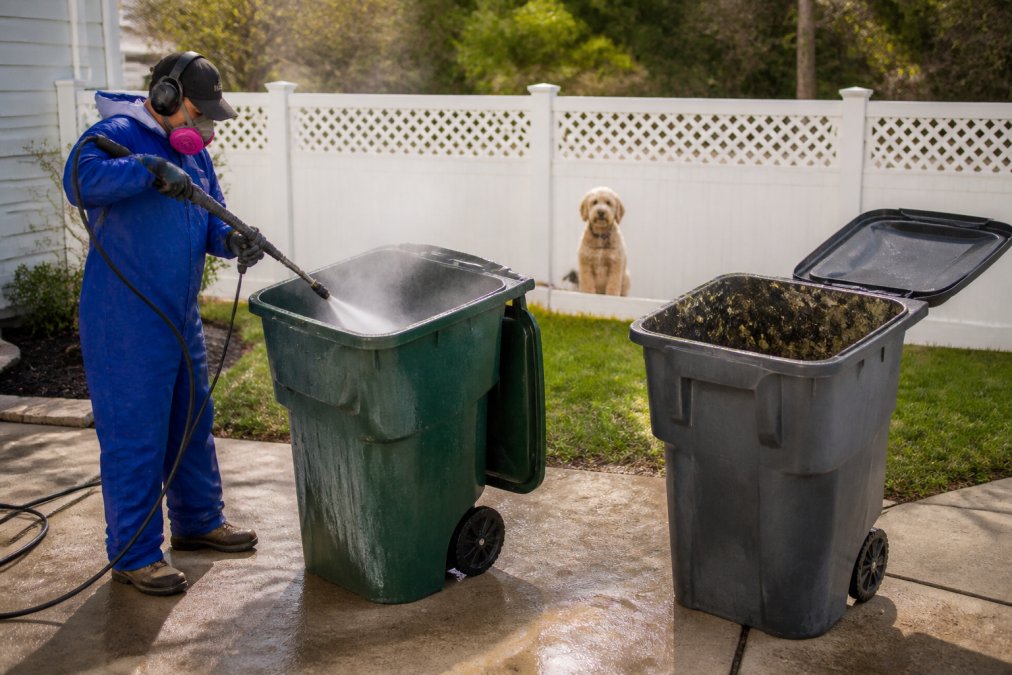
This routine works for standard residential bins and requires no special equipment.
- Empty the bin completely and remove any stuck bags or debris from the bottom.
- Rinse loose grime with a hose. Do this away from storm drains and away from areas your pet uses.
- Scrub the interior with a stiff brush and a mild, unscented dish soap. Pay attention to the rim, the lid hinge, and the bottom corners, that is where the bacteria film lives.
- Rinse thoroughly until no soap residue remains. Soap film is a residue too, and pets can react to it.
- Disinfect with heat, not chemicals. Pour a kettle of near-boiling water into the bin and let it sit for a few minutes, then tip it out. This is the DIY version of what professional hot-water equipment does.
- Dry completely in direct sun. UV light and airflow do real work here. A damp bin regrows bacteria within days.
- Return the bin to service only when it is fully dry and has no lingering smell of soap or cleaner.
If you do clean your own bins, dump the wastewater down a utility sink or toilet, not onto the lawn or driveway. Runoff carries bacteria and fecal matter straight into the soil your pet walks on, and it can reach storm drains that lead to local waterways.
Where DIY Hits Its Limits
DIY is genuinely effective for routine maintenance. It runs into three real limits:
- Water temperature. Household hot water typically tops out well below the temperature needed to kill bacteria on contact. A kettle pour helps, but it is not the same as a sustained high-temperature wash.
- Wastewater containment. A driveway rinse sends contaminated water into your yard, your pet’s walking surface, and potentially the storm drain system. A contained wash captures that runoff instead.
- Consistency. DIY works when you actually do it. Most households start strong and then skip months, which is exactly when odor, maggots, and bacterial load return.
What Professional Sanitization Actually Adds
Professional bin sanitization isn’t just a more convenient DIY, it solves the three limits above directly:
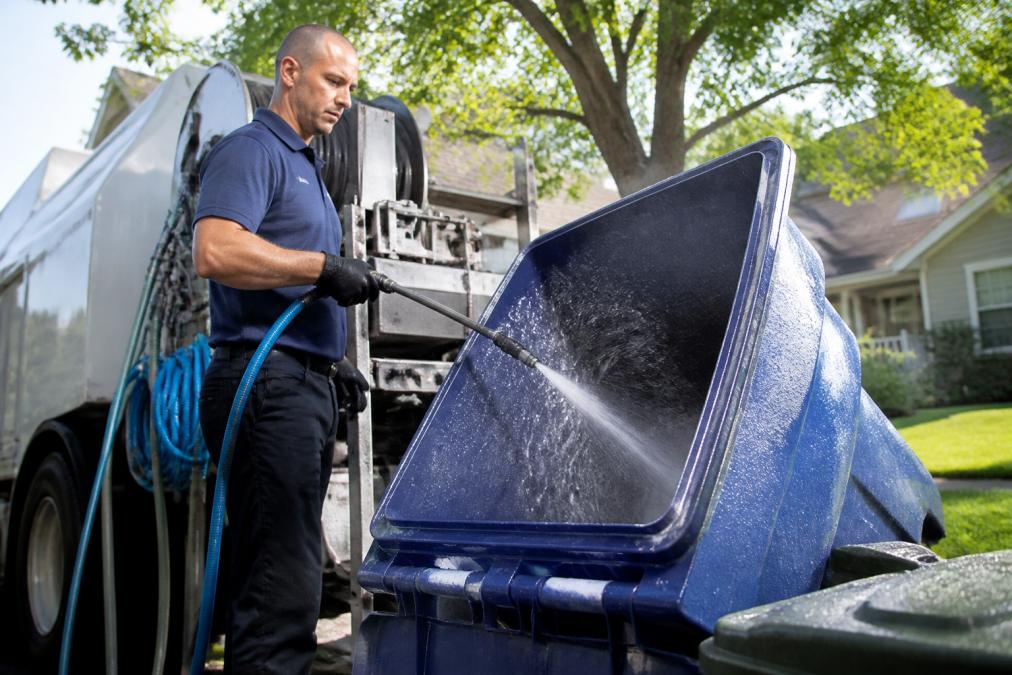
- Sustained high-temperature water delivered through specialized equipment, which sanitizes through heat rather than chemical residue.
- On-board wastewater capture, so contaminated runoff does not end up on your lawn, your driveway, or in the storm drain.
- A fixed schedule, which is the single biggest factor in whether a bin ever reaches the maggot or deep-odor stage.
Which Path Is Right for You?
| Situation | DIY Is Usually Enough | Professional Is Usually Worth It |
|---|---|---|
| One bin, no pet waste inside | Yes | Optional |
| Pet waste bags in the bin | Sometimes | Yes |
| Multiple pets or a multi-bin household | Rarely | Yes |
| Hot summer months | Only with weekly effort | Yes |
| You have skipped cleaning for months | No, start with a professional reset | Yes |
| You have a puppy, senior pet, or pet with allergies | Possible with strict rinsing | Yes |
A reasonable middle path: DIY monthly, and bring in a professional for a quarterly deep clean or any time the bin has gone too long without attention. That keeps the bin in the safe zone without equipment you’d use twice a year.
Frequently Asked Questions
What is the safest disinfectant to use around dogs when cleaning a trash bin?
Hot water at 200°F is the safest option because it kills bacteria and pathogens without leaving chemical residue. If you use a disinfectant, choose one labeled non-toxic and biodegradable, and rinse the bin thoroughly before letting pets near it. Avoid bleach, ammonia, and pine-based cleaners, which can cause toxic exposure through fumes or residue. Professional bin sanitization services typically rely on high-temperature water rather than chemicals, making them a pet-safe choice for households with dogs or cats.
How long after cleaning a bin is it safe for pets to be near it?
If the bin was cleaned with hot water only, it is safe once it is dry, usually within an hour. If you used a chemical disinfectant, wait until the bin is completely dry and odor-free, which can take several hours, and rinse it with plain water first. Chemical residue and fumes linger longer in warm, humid conditions. When in doubt, keep pets away for 24 hours and store the bin with the lid open in a ventilated area to let any remaining fumes escape.
Is professional bin sanitization better than DIY cleaning for pet owners?
Professional bin sanitization reaches temperatures and pressure levels that a garden hose cannot match, which removes fecal matter, maggot eggs, and biofilm that cause cross-contamination. DIY cleaning often leaves behind bacteria in cracks and corners. For pet owners, professional service reduces the risk of toxic exposure from harsh chemicals and saves the hassle of handling runoff. Chester County Clean Cans uses 200° hot water and eco-friendly methods, completing the service curbside within 24 hours of pickup.
How often should you sanitize trash bins in a home with pets?
Most pet owners should sanitize bins monthly to control odor, bacteria, and pests. If your pet gets into the trash often, or if you live in a warm climate where maggots are common, a quarterly deep clean may not be enough. Watch for signs like persistent odor, visible grime, or flies around the bin. Preventative maintenance on a monthly or quarterly schedule keeps sanitary conditions year-round and reduces allergen reduction challenges indoors.