Table of Contents
- Why Monthly Trash Bin Cleaning Plans Beat DIY Cleaning
- What Monthly Trash Bin Cleaning Plans Include
- Trash Can Cleaning Service Cost: What Drives the Price
- Benefits of Professional Bin Cleaning for Your Home
- How Often to Clean Garbage Bins: Monthly vs Quarterly
- Monthly vs Quarterly vs One-Time: Which Plan Fits Your Home
- How to Choose a Monthly Bin Cleaning Provider
- Frequently Asked Questions
Last Updated: September 19, 2026
Why Monthly Trash Bin Cleaning Plans Beat DIY Cleaning
Monthly trash bin cleaning plans are scheduled curbside services that sanitize, deodorize, and disinfect your trash and recycling bins on a recurring basis, usually with high-temperature water and specialized equipment. At Chester County Clean Cans, we built our service around a simple observation: the hose-and-bleach routine most homeowners rely on doesn’t fix the problem.
Here’s why. A garden hose tops out well below the water temperature needed to kill the bacteria and insect eggs that cause odors and maggot problems. Scrubbing the visible grime leaves the residue behind. Within a week or two, the smell is back.
A recurring professional plan solves that with consistency. You leave your bins at the curb after pickup, and the service handles the rest. No scrubbing, no standing water in the driveway, no chemical runoff into your yard.
What Monthly Trash Bin Cleaning Plans Include
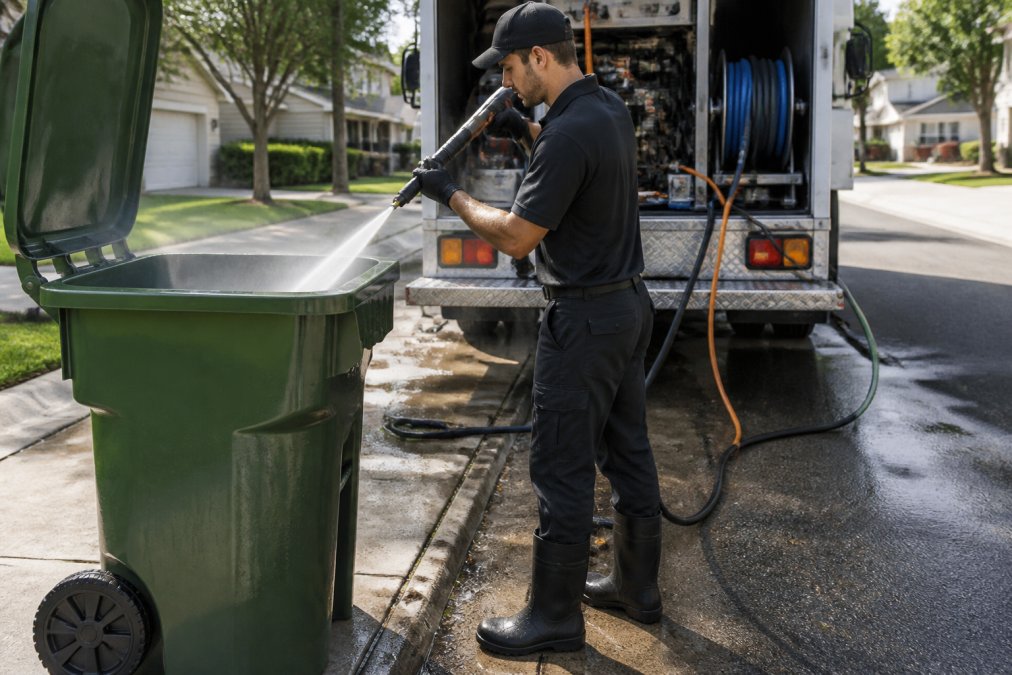
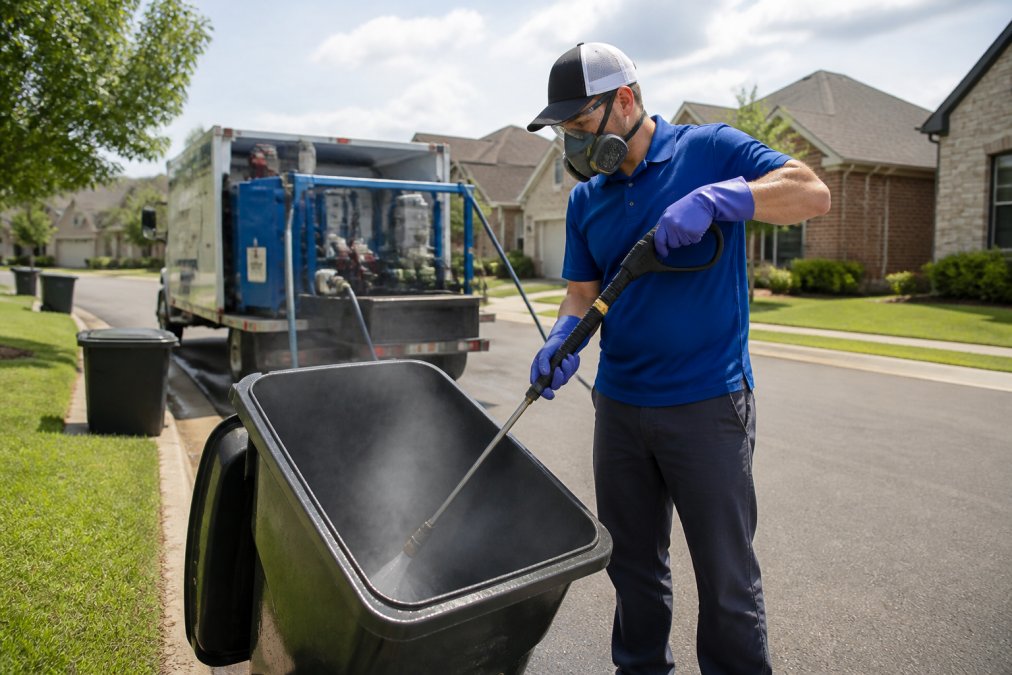
A typical monthly plan covers full interior and exterior cleaning of each bin, sanitizing with hot water, deodorizing, and returning the bin to the curb. Most providers also handle recycling bins at the same visit.
That’s the baseline. What separates a good plan from a basic one comes down to a few details:
- Water temperature. Hot water is what actually sanitizes. Ask what temperature the equipment reaches.
- Wastewater handling. A responsible provider captures runoff rather than letting it drain into your yard or the storm drain.
- Frequency options. Monthly, quarterly, and one-time cleanings should all be available, so you can match the plan to your household.
- Turnaround time. The best services complete the work within a day of your regular pickup.
- Add-ons. Some plans include bin deodorizing, pest treatment, or commercial bin service.
At Chester County Clean Cans, we use 200° hot water and an eco-friendly curbside process, and we complete each visit within 24 hours of your pickup.
Trash Can Cleaning Service Cost: What Drives the Price
Trash can cleaning service cost depends on four things: how many bins you have, how often you want them cleaned, whether you need residential or commercial service, and how far the provider travels to reach you.
That’s the honest answer. There is no single number, because a one-bin quarterly plan and a six-bin monthly commercial plan are different jobs. Anyone quoting you a flat national figure is guessing.
Here’s how the variables stack up:
|
Factor |
Lower Cost |
Higher Cost |
|---|---|---|
|
Number of bins |
1-2 bins |
4+ bins or commercial |
|
Frequency |
One-time or quarterly |
Monthly |
|
Bin type |
Standard residential |
Large commercial containers |
|
Add-ons |
Cleaning only |
Deodorizing, pest treatment |
The most useful thing you can do is get a quote based on your actual bin count and preferred frequency. Chester County Clean Cans publishes plan pricing on its website, so you can see real numbers before you commit.
Benefits of Professional Bin Cleaning for Your Home
The benefits of professional bin cleaning go beyond smell. Regular hot-water sanitizing removes the bacteria, insects, and grime that build up between pickups, which keeps your garage, driveway, and outdoor space cleaner.
Think about what actually lives in a bin after a week of summer heat. Food residue, liquids, and organic waste create a breeding ground. That’s where the maggots and the flies come from, and it’s why the smell lingers even after you rinse the bin out.
A monthly plan interrupts that cycle. Instead of letting buildup return every few weeks, you’re resetting the bin on a schedule. For families, that means fewer pests near the house and less time spent on a chore most people dread.
There’s a practical side too. Professional cleaning protects the bin itself.
How Often to Clean Garbage Bins: Monthly vs Quarterly
How often to clean garbage bins comes down to what you put in them and where you live. Most households do well with monthly cleaning during warm months and quarterly the rest of the year.
The reasoning is straightforward. Odor, bacteria, and insects all accelerate with heat. A bin that stays fresh for three weeks in January might turn foul in five days in July.
Use this as a starting point:
- Monthly: households with young children, pets, or frequent food waste; anyone who has dealt with maggots or pests.
- Quarterly: smaller households, low food waste, or bins stored far from living space.
- One-time: new homeowners inheriting dirty bins, or a reset before selling or hosting.
If you’re unsure, start monthly through the summer and step down to quarterly once the weather cools. You can always adjust, ask your can cleaner if there is a penalty to change or cancel recurring service plans.
Monthly vs Quarterly vs One-Time: Which Plan Fits Your Home
Monthly plans fit households that generate steady food waste or have dealt with pests. Quarterly plans suit lighter use and cooler seasons. One-time cleanings work best as a reset, not a long-term solution.
Here’s the trade-off in plain terms. Monthly service costs more per year but keeps bins consistently fresh and prevents recurring problems. Quarterly service costs less but leaves longer gaps where buildup can return. One-time service is the cheapest single visit but solves nothing permanently.
|
Plan |
Best For |
Frequency |
Trade-off |
|---|---|---|---|
|
Monthly |
Families, pets, pest history |
Every month |
Higher annual cost |
|
Quarterly |
Small households, cool seasons |
Every 3 months |
Longer gaps between cleanings |
|
One-time |
New homeowners, resets |
Single visit |
No ongoing prevention |
For most homes dealing with odor or pests, monthly is the plan that actually solves the problem. The others manage it.
How to Choose a Monthly Bin Cleaning Provider
Choosing a provider comes down to five checks: water temperature, wastewater handling, service window, plan flexibility, and local reputation. Ask about each before you sign up.
A short checklist to run through:
- Does the provider use high-temperature water, and can they tell you the temperature?
- How is wastewater captured and disposed of?
- Do they complete service within a set window after pickup?
- Can you choose monthly, quarterly, or one-time without a long contract?
- Do they have references or reviews from local customers?
That last point matters more than people expect. You’re trusting someone to show up at your curb and do the work while you’re not watching. Local reviews and references tell you whether they actually do.
Chester County Clean Cans offers flexible monthly, quarterly, and one-time plans with no long-term commitment, so you can try a single cleaning before deciding. The company also sponsors local youth soccer.
Trash bins are one of those problems that quietly get worse until the smell or the pests force you to deal with them. A recurring plan removes the chore and the guesswork at the same time.
Chester County Clean Cans handles the whole process for you: eco-friendly curbside service, 200° hot water sanitizing, and completion within 24 hours of your pickup. You leave the bins out; we take care of the rest. Flexible monthly, quarterly, and one-time plans mean you can start with whatever fits your home. Get a quote today and see what your bins look like when the job is done right.
Frequently Asked Questions
Is professional trash bin cleaning worth the cost?
For many homeowners, yes. Monthly trash bin cleaning plans eliminate odors, bacteria, and pests that DIY rinsing often leaves behind. Professional services use 200° hot water and specialized equipment that reaches corners a garden hose cannot. If your bins attract maggots, flies, or lingering smells, the hygiene and convenience usually justify the expense. Pricing depends on bin quantity and service frequency, so check the Chester County Clean Cans pricing page for current rates.
How often should you have your trash bins professionally cleaned?
Most households do well with monthly trash bin cleaning, especially during warmer months when bacteria and odors build faster. If your bins are only lightly used or you live in a cooler climate, quarterly cleaning may be sufficient. Homes with young children, pets, or frequent organic waste should stick to a monthly plan. You can also start with a one-time cleaning to assess how dirty your bins get before committing to a recurring schedule.
What is the difference between monthly and quarterly bin cleaning plans?
Monthly plans include a cleaning every four weeks, which keeps odor, bacteria, and pests under control year-round. Quarterly plans clean every three months, which works for smaller households or cooler seasons. Monthly is better for families with heavy trash output, while quarterly suits lighter use. Both plans sanitize, deodorize, and remove grime, but monthly provides more consistent hygiene. You can switch frequencies as your needs change.
Does professional bin cleaning remove odors and bacteria?
Yes. Professional bin cleaning uses high-temperature water, typically around 200°, to kill bacteria and neutralize odor-causing residue. The process also removes stuck-on grime that traps smells. After cleaning, bins are deodorized and left fresh. This level of sanitation is difficult to achieve with a garden hose and household cleaner. The benefits of professional bin cleaning include fewer flies, no maggot issues, and a cleaner garage or outdoor space.