
Table of Contents
- The Hidden Dangers of Dirty Trash Cans
- Why My Trash Cans Smell Bad (and What’s Actually Causing It)
- How Often to Clean Wheelie Bins: A Seasonal Guide
- The Difference Between Cleaning and Sanitizing
- DIY Bin Cleaning: What Works and What Doesn’t
- When to Call a Professional Bin Cleaning Service
- Conclusion: Protecting Your Home Starts with Your Bins
- Frequently Asked Questions
Last Updated: October 4, 2026
The Hidden Dangers of Dirty Trash Cans
If you never clean bins, the consequences go well beyond a bad smell. What happens if you never clean bins is simple: organic waste breaks down, bacteria multiply, pests move in, and your bin becomes a health hazard sitting a few steps from your kitchen door.
Health Risks You Can’t See
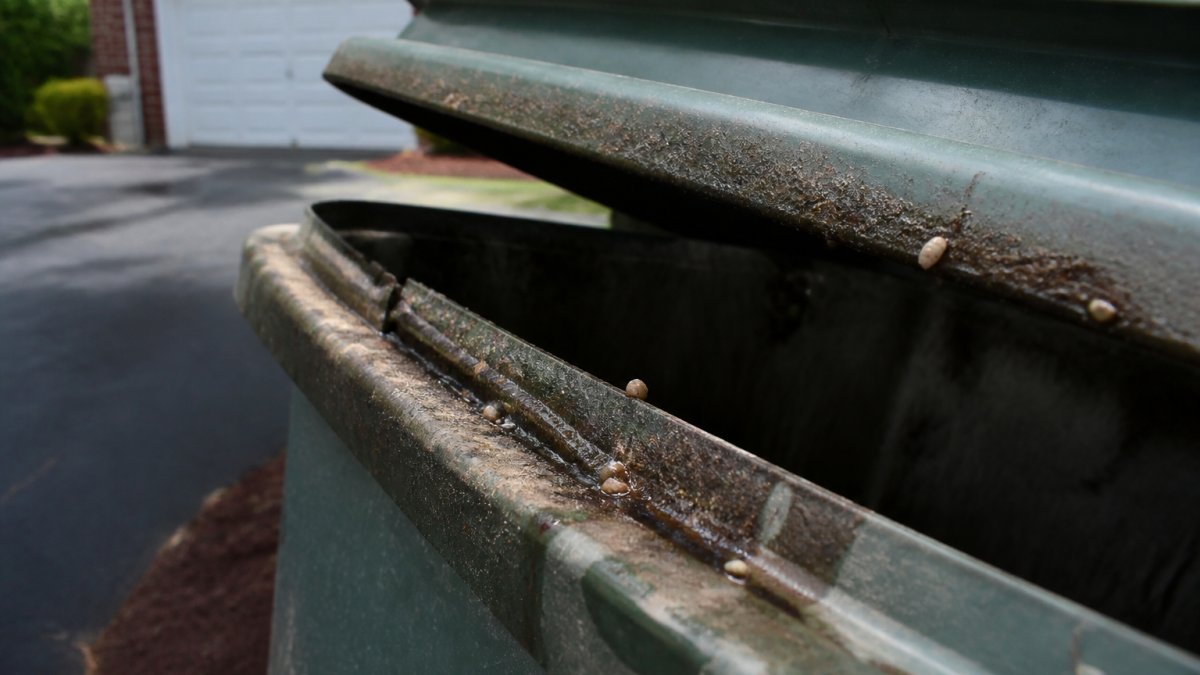
A dirty bin is a bacterial incubator. Food scraps, pet waste, and liquids create the ideal environment for pathogens that cause real illness.
Cross-contamination is the quiet danger here. You touch the lid, then touch a doorknob. A child drops a ball near the bin and picks it up.
A bin that never gets cleaned works against efforts to prevent the spread of foodborne illness every single day.
Pests, Maggots, and Rodents
Warm weather turns a neglected bin into a nursery. Flies lay eggs in organic waste, and those eggs become maggots within days. The smell of rotting food attracts rodents, raccoons, and ants, all of which find their way toward your home.
Once maggots appear, hosing the bin out won’t solve the problem. The larvae burrow into cracks and residue along the bottom and rim. You need a real deep clean to break the cycle.
Ignoring maggots for even a week lets flies complete a full breeding cycle. That means the next generation is already hatching in the residue you can’t see.
Why My Trash Cans Smell Bad (and What’s Actually Causing It)
If you’re wondering why my trash cans smell bad, the answer is bacterial growth. Odor is a byproduct of bacteria breaking down organic waste, and it gets worse with heat, moisture, and time.
The Science of Foul Odors
Every time you toss a bag of kitchen scraps, some liquid escapes. That liquid, sometimes called leachate or greywater, settles at the bottom of the bin. Bacteria feed on it, and the compounds they release create that sharp, sour smell you notice on a warm afternoon.
The rim, the lid hinge, and the bottom corners hold the most residue. Those are the spots people miss, and they’re the spots that keep the smell alive.
Why Hosing Out Your Bin Doesn’t Work
A quick rinse with a garden hose moves the surface grime around but leaves the biofilm intact. Biofilm is the sticky layer of bacteria that clings to plastic.
Boiling water helps more than cold water, but it’s a burn risk and rarely reaches the corners. Pressure washing can strip the residue, though it splashes contaminated water onto your driveway and yard.
The smell usually comes back because the biofilm at the bottom was never removed. Cleaning the visible surfaces isn’t the same as sanitizing the whole bin.
How Often to Clean Wheelie Bins: A Seasonal Guide
How often to clean wheelie bins depends on three variables: temperature, moisture, and what you throw away. Most households can follow a simple seasonal rhythm, but the schedule should shift based on what’s actually inside the bin.
The Seasonal Calendar
| Season | Recommended Frequency | What Drives It |
|---|---|---|
| Spring | Every 3-4 weeks | Rainwater pools in the bottom, warming temperatures wake dormant bacteria, and yard waste adds damp organic load |
| Summer | Every 10-14 days | Heat above 80°F roughly doubles bacterial reproduction speed, flies complete a life cycle in 7-10 days, and leachate turns rancid fast |
| Fall | Every 3-4 weeks | Damp leaves and yard debris create moisture pockets, but cooler nights slow bacterial growth |
| Winter | Every 6-8 weeks | Cold slows bacterial activity and odor, but freeze-thaw cycles can crack residue loose and trap moisture under the lid |
Adjusting for What’s in the Bin
A calendar alone isn’t enough. The contents change the math:
- Pet waste and cat litter: Clean every 7-10 days year-round. Ammonia compounds in urine are corrosive to plastic and produce odor that lingers even after rinsing.
- Diapers: Every 10-14 days. Diapers hold moisture for days and create a warm, sealed microclimate inside the bin.
- Food scraps with no bagging: Every 7-10 days in summer. Loose organics contact the plastic directly and seed biofilm faster than bagged waste.
Why “Monthly” Isn’t a Real Answer
A flat monthly schedule fails in two directions. In summer, a month is long enough for flies to complete two or three breeding cycles and for biofilm to establish along the bottom seam. In winter, monthly cleaning wastes water and effort because bacterial activity has already slowed. Matching frequency to season and contents is the difference between a bin that stays neutral and one that becomes a recurring problem.
Mark your calendar for the first weekend of each month and do a quick sniff-and-look check at the rim and bottom corners. If either smells sour or shows dark residue, move up the next deep clean by a week.
A Simple Maintenance Rhythm
Between deep cleans, a few habits extend the interval:
- Line the bin with a heavy-duty bag sized to the bin, not a smaller bag that leaves exposed plastic.
- Rinse liquid containers before recycling to cut the sugar and protein residue that feeds bacteria.
- Keep the lid closed to deny flies and rodents access.
- Store the bin in shade during summer if possible, direct sun raises internal temperature and accelerates odor.
A maintenance schedule beats emergency cleaning every time. The goal isn’t a spotless bin; it’s a bin that never reaches the point where maggots or a permanent sour smell take hold.
The Difference Between Cleaning and Sanitizing
Cleaning and sanitizing are two separate steps, and conflating them is the single most common reason a bin still smells after a wash. Cleaning removes visible dirt, grime, and organic residue. Sanitizing reduces the pathogen load on the surface to a level considered safe. You can clean a bin perfectly and still leave listeria, salmonella, or e. coli behind on the plastic.
Why the Distinction Matters on Plastic
Plastic bin walls are not smooth at the microscopic level. Scratches, scuffs, and the seam where the wall meets the bottom create tiny reservoirs where bacteria settle and form biofilm, a sticky, self-produced matrix that shields the colony from a simple rinse. Biofilm is why a bin can look clean and still smell sour within a day or two.
What Actually Kills Pathogens
Sanitization depends on three factors working together: temperature, contact time, and the surface being treated.
- Heat: Water at or near 200°F kills most vegetative bacteria and many viruses on contact. The catch is that the water has to reach the surface, a quick pass over the rim doesn’t sanitize the bottom corner where leachate pools.
- Chemical disinfectants: Products labeled as disinfectants carry a dwell time on the label, typically several minutes of visible wet contact. Wiping a surface and immediately drying it does not meet that dwell time and does not sanitize.
- Contact time: Even hot water needs a few seconds of direct contact across the entire interior surface, including the lid, hinge, and bottom seam.
Why a Hose and Bleach Fall Short
A garden hose rinse moves surface grime but leaves biofilm intact. Bleach poured in and left to sit can damage plastic over time and, if not diluted correctly, may not achieve the contact time needed to sanitize. Pressure washing strips residue but splashes contaminated water onto the driveway and surrounding yard, spreading the problem rather than solving it.
What a Real Sanitization Looks Like
A complete sanitization cycle has four stages:
- Empty and scrape, remove all loose waste and stuck residue.
- Wash, scrub the walls, rim, lid, and bottom with a detergent to break up biofilm and organic film.
- Sanitize, apply heat or an approved disinfectant across every interior surface and hold it for the required contact time.
- Dry, let the bin dry fully, ideally in sunlight, before the lid goes back on. Standing moisture restarts bacterial growth within hours.
Skipping any stage leaves a gap. Skipping stage three is the most common, and it’s the one that determines whether the bin stays neutral or reverts to a sour smell within days.
Cleaning removes what you can see. Sanitizing reduces what makes you sick. A bin needs both, in that order, with full contact time on every surface.
How to Tell If a Bin Is Actually Sanitized
You can’t see pathogens, but you can check the process. If the bin was rinsed and dried in under a minute, it was cleaned at best. If the interior was wet with hot water or disinfectant for the full dwell time and then allowed to dry, it was sanitized. If you’re not sure, the smell test is a rough proxy: a bin that still smells sour after drying was not fully sanitized.
DIY Bin Cleaning: What Works and What Doesn’t
You can clean bins yourself, and a few methods actually work. Here’s what to try and what to skip.
What works:
- Empty the bin completely and scrape out stuck residue
- Spray the interior with a hose to loosen grime
- Scrub the walls, rim, and bottom with a stiff brush and dish soap
- Rinse thoroughly, then apply a disinfectant
What doesn’t:
- A quick rinse with no scrubbing
- Bleach poured in and left to sit, which can damage plastic
- Skipping the bottom and rim, where bacteria hide
- Leaving standing water, which invites mosquitoes
Safety precautions matter here. Wear gloves and eye protection, and consider a respirator if you’re dealing with mold spores or heavy residue. Never mix bleach with other cleaners, and direct runoff away from storm drains to protect local waterways.
Cleaning removes what you can see. Sanitizing removes what makes you sick. Do both, or the smell and the bacteria come back.
When to Call a Professional Bin Cleaning Service
Some bins are past the point where a DIY scrub helps. If maggots have taken over, if the odor lingers after multiple cleanings, or if you simply don’t have the time, a professional service solves the problem in one visit.
At Chester County Clean Cans, we handle the mess you’d rather not touch.
For busy families and homeowners who want a hygienic outdoor space without the chore, this is the practical answer.
The environmental angle matters too. Our process relies on hot water rather than harsh chemicals, which keeps runoff safer for your yard and reduces the chemical load reaching local waterways.
Conclusion: Protecting Your Home Starts with Your Bins
A neglected bin is more than an eyesore. The dangers of dirty trash cans are easy to ignore until maggots show up or the smell won’t leave.
If you’d rather skip the scrubbing, the respirator, and the recurring odor, Chester County Clean Cans can help. Our eco-friendly curbside service uses 200° hot water, flexible monthly or quarterly plans, and a fast 24-hour turnaround.
Frequently Asked Questions
How often should you clean bins?
Most households should clean their bins every 4 to 6 weeks, but that frequency changes with the season. In summer, when heat accelerates bacterial growth and maggot activity, cleaning every 2 to 3 weeks is better. If you compost or toss raw meat scraps, clean more often. A quarterly deep clean with sanitizing is the minimum for any household that wants to avoid foul odors and pest problems.
Can dirty trash cans attract pests and rodents?
Yes. Trash residue, organic waste, and moisture create an ideal environment for flies, maggots, cockroaches, ants, and rodents. Flies lay eggs in rotting material and can produce maggots within 24 hours. Rodents are drawn to the scent of food waste and can chew through plastic bins to reach it. Once pests establish themselves in or around your bins, they often move toward your home, garage, or patio.
Does washing out a bin with a hose actually sanitize it?
No. A garden hose rinse removes loose debris but does not kill bacteria, mold spores, or pathogens like salmonella and e. coli. Cold water and household sprayers leave behind the biofilm where bacteria thrive. True sanitization requires hot water at temperatures around 200 degrees Fahrenheit or an EPA-registered disinfectant. Without that step, odors return within days because the bacteria were never eliminated.
What are the health risks of bacteria buildup in garbage bins?
Dirty bins harbor salmonella, listeria, e. coli, staphylococcus, and streptococcus. When you touch the lid or handle and then touch your face or food, you risk cross-contamination that can cause gastrointestinal illness, skin infections, and respiratory issues from mold spores. People with weakened immune systems, young children, and the elderly face higher risk. Regular sanitization breaks that chain of transmission.