
Table of Contents
- Why Do My Trash Cans Smell So Bad? The Biofilm Problem
- Moisture, Humidity, and Bacterial Growth: The Conditions Behind Foul Odor
- How to Get Rid of Maggots in Trash Bin in Four Steps
- The Best Trash Can Deodorizer Options (and What Actually Works)
- How Often to Wash Trash Cans (and How to Do It Right)
- Chemical Safety: What Never to Mix When Cleaning Your Bin
- Preventative Habits That Keep Bins Fresh Between Cleanings
- Frequently Asked Questions
Last Updated: September 21, 2026
Why Do My Trash Cans Smell So Bad? The Biofilm Problem
If you’ve ever wheeled an empty bin to the curb and caught a whiff of something rotten, you’ve met biofilm. This is the real answer to why do my trash cans smell so bad: it isn’t the trash, it’s the invisible layer the trash leaves behind. Rinsing with a hose rarely fixes the problem for good.
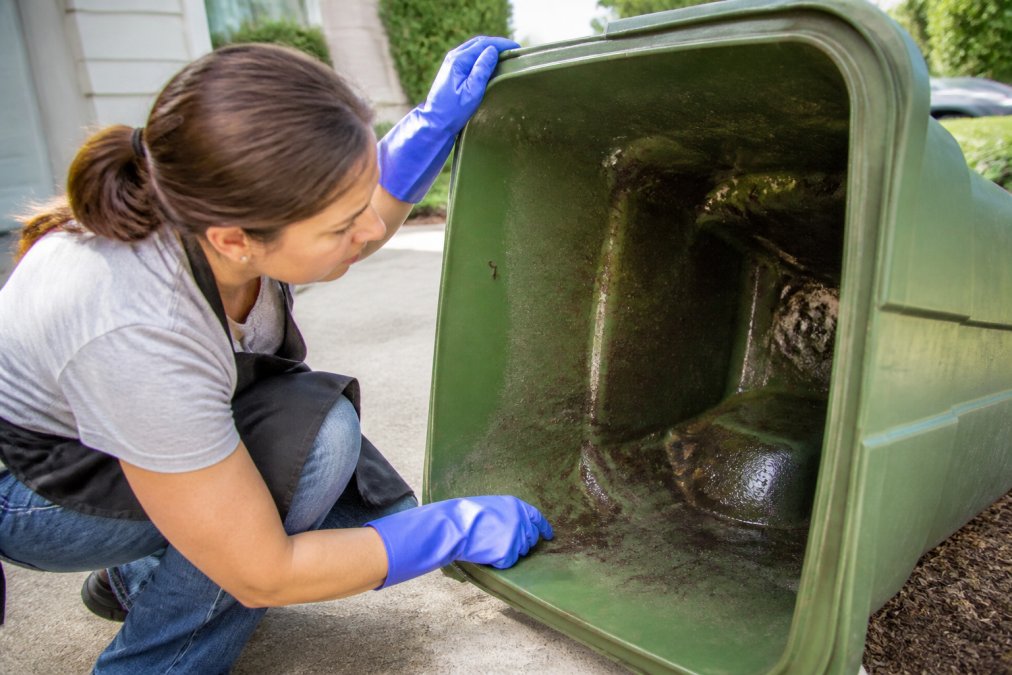
Biofilm is a thin, sticky community of bacteria that anchors itself to the plastic and feeds on the organic residue your bags leave behind. Once it forms, it keeps producing odor even after the bin is empty, because the bacteria are still alive and still eating.
Why the Smell Stays Even When the Bin Is Empty
Plastic is porous at a microscopic level. Juice, meat drippings, and food scraps seep into those tiny scratches and crevices, and a quick rinse only reaches the surface. The Environmental Protection Agency’s guidance on managing household waste notes that organic waste left in warm, moist conditions breaks down quickly and attracts pests.
That’s the trap most homeowners fall into. The bin looks clean. The smell says otherwise.
Moisture, Humidity, and Bacterial Growth: The Conditions Behind Foul Odor
Three conditions drive bacterial growth in a bin: moisture, warmth, and food. Remove any one of them and odor production slows dramatically. The problem is that a closed bin in summer creates all three at once, and the mechanism is more specific than most people realize.
Bacteria that cause bin odor, primarily Pseudomonas, Lactobacillus, and Clostridium species, reproduce fastest between 70°F and 100°F. In that range, a single cell can divide every 20 to 30 minutes. That means one bacterium on a food smear at 8 a.m. can become more than 16 million by mid-afternoon. Odor compounds like hydrogen sulfide (rotten egg), putrescine and cadaverine (the smell of spoiled meat), and butyric acid (rancid dairy) are byproducts of that reproduction, not the food itself.
Moisture is the lever you can actually control.
Drill a few 1/4-inch drainage holes in the bottom of an older plastic bin, then set it on a brick so air moves underneath. It won’t replace cleaning, but it cuts down on the standing liquid that feeds odor between washes. Pair it with a lid cracked open on dry days to let humidity escape.
If you want to know whether your bin is actually dry enough, press a paper towel against the inside bottom after cleaning. If the towel picks up any moisture at all, the bin isn’t ready to be closed up, leave it upside down in the sun for another hour.
How to Get Rid of Maggots in Trash Bin in Four Steps
Getting rid of maggots in a trash bin takes about 20 minutes and one critical step most people skip: killing the larvae before you scrub, not after. Here’s the sequence that works.
- Suit up and move the bin. Pull on gloves and a mask, then wheel the bin to a driveway or lawn away from doors and play areas. Maggots drop as you move it, so you don’t want them landing on a patio.
- Empty and bag the waste. Double-bag the contents and seal the bag tightly. Check the lid rim and the underside of the lid, since flies lay eggs in those hidden edges.
- Kill the larvae with hot water. Pour a pot of near-boiling water along the bottom and walls. This kills maggots and loosens the residue they’re feeding on. Never mix it with bleach at this stage.
- Scrub, rinse, and dry completely. Use a stiff brush with dish soap and hot water, rinse thoroughly, then tip the bin upside down in the sun until it’s bone dry. Any leftover moisture invites the next round.
The Best Trash Can Deodorizer Options (and What Actually Works)
The best trash can deodorizer is one that neutralizes odor molecules rather than masking them, and in practice that means an absorbent or an enzymatic product, not a scented liner. Scented bags are the most common mistake we see. They cover the smell of a dirty bin for a day or two, then blend with it into something worse.
Natural Odor Absorbers: Baking Soda, Charcoal, and Beyond
Baking soda and activated charcoal are the two most reliable natural odor absorbers for bins between cleanings. Both pull odor compounds out of the air instead of covering them up.
- Baking soda: Sprinkle a thin layer, about 1/4 cup, in the dry bottom of the bin. It absorbs moisture and neutralizes acid-based odors. Replace it weekly, or whenever it clumps.
- Activated charcoal: Set a small open container or mesh bag on the bottom. Charcoal has a huge surface area, a single gram can have over 1,000 square meters, and keeps working for about a month. Recharge it by leaving it in direct sun for a few hours.
- Coffee grounds: Dried, used grounds work as a short-term absorbent and add a neutral scent. Swap them out every few days to avoid mold.
- White vinegar: Wipe down the interior with a 1:1 dilution of white vinegar and water to cut residue and kill surface bacteria. Let it dry fully before use, residual vinegar can react with bleach later.
DIY Odor-Neutralizing Sprays That Go Beyond Baking Soda
Never pour bleach into a bin that still holds vinegar or any ammonia-based cleaner. Mixing bleach with ammonia or acid produces toxic gas. Rinse and dry the bin completely between different cleaning products.
One more option worth knowing: a small bowl of plain white rice or dry oats in the bottom of the bin works as a cheap desiccant between cleanings. It won’t neutralize odor compounds the way charcoal does, but it pulls moisture out of the air and slows bacterial growth. Replace it weekly.
How Often to Wash Trash Cans (and How to Do It Right)
Washing your trash cans every two to four weeks keeps odor and pests under control for most households. Wash weekly in summer or if you compost, and monthly in cooler months when waste breaks down more slowly.
- Empty the bin completely and check for leaks or cracks.
- Spray the interior with a degreaser or dish soap solution and let it sit for a few minutes.
- Scrub the walls, bottom, and lid with a stiff brush, paying attention to the corners.
- Rinse with hot water until the runoff is clear.
- Disinfect with a diluted bleach solution, then rinse again.
- Dry the bin upside down in direct sun before putting it back.
| Task | Frequency | Why It Matters |
|---|---|---|
| Rinse and spot-clean | Weekly | Removes fresh residue before it sets |
| Full scrub and disinfect | Every 2-4 weeks | Breaks down biofilm and bacteria |
| Deep clean (plastic or metal) | Seasonally | Reaches scratches and porous surfaces |
| Replace deodorizer | Weekly to monthly | Keeps absorption working |
Deep Cleaning Plastic vs. Metal Bins
Plastic and metal bins need different care, and using the wrong approach damages both. Plastic scratches easily, and every scratch becomes a home for bacteria. Use a soft-to-medium brush and avoid abrasive powders that gouge the surface.
The single biggest factor in how often you need to deep clean is drying. A bin that dries completely after every wash stays fresh far longer than one that’s put away damp.
Chemical Safety: What Never to Mix When Cleaning Your Bin
Cleaning chemicals can turn a chore into a hazard, and trash bins are a common place for it to happen. The two combinations to avoid are bleach with ammonia and bleach with any acid, including vinegar.
- Never mix bleach with ammonia-based cleaners.
- Never mix bleach with vinegar, lemon juice, or other acids.
- Never mix hydrogen peroxide with vinegar.
- Rinse and dry thoroughly between different products.
- Work outdoors or with the garage door open, and wear gloves.
Preventative Habits That Keep Bins Fresh Between Cleanings
Small habits between deep cleans do most of the work of keeping a bin fresh. None of them take more than a minute, and together they cut odor dramatically.
Frequently Asked Questions
How do I get my trash can to stop smelling?
Start by emptying the bin completely, then scrub the interior with hot water and dish soap to break up the biofilm layer where bacteria live. Rinse thoroughly and let the bin dry upside down in direct sun. For ongoing control, sprinkle baking soda in the bottom before adding a new liner, keep organic waste bagged, and wash the bin at least once a month. If the trash cans smell even after cleaning, the residue has likely soaked into porous plastic and needs a deeper treatment.
What is the best trash can deodorizer?
The most effective options combine odor absorption with bacteria control. Baking soda and activated charcoal are strong natural absorbers for everyday use. For heavier odors, an enzymatic cleaner breaks down the organic residue that feeds smell-causing bacteria. Scented bags and carbon filters help between washes but do not replace cleaning. If you want a hands-off solution, professional curbside cleaning with 200° water sanitizes the bin.
How often should you deep clean your outdoor trash bins?
Most households should deep clean outdoor bins once a month, or every two weeks during summer when heat speeds up bacterial growth and maggot activity. If you compost, toss raw meat scraps, or live in a humid climate, weekly rinses help. Bins that only hold dry recycling can go longer, about every six to eight weeks. A consistent schedule prevents biofilm from building up to the point where odors become hard to remove.
Why does my trash can smell even when it is empty?
The smell comes from biofilm, a thin layer of bacteria and organic residue that clings to the plastic even after you remove the bag. Liquids from food waste leak through small liner tears and pool in the bottom, feeding microbial activity. Plastic is porous, so odor molecules soak into the surface over time. Rinsing with water alone will not remove it. You need scrubbing with a disinfectant or hot water to break the film down.