
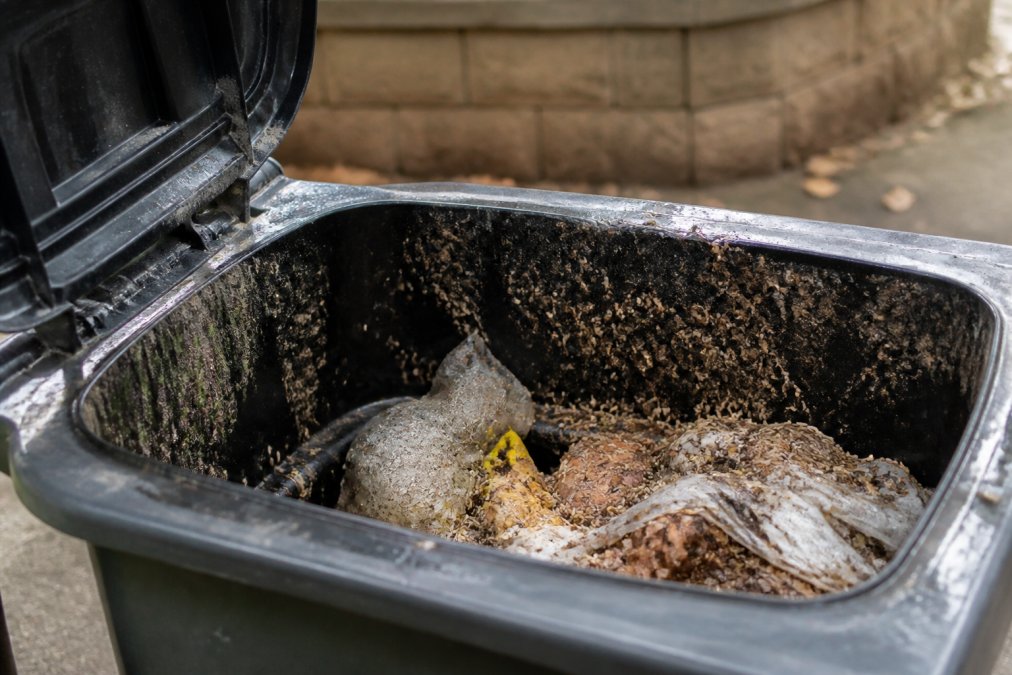
Table of Contents
- What You’ll Need Before You Start
- Step 1: Empty the Bin and Remove Maggots in Trash Can Safely
- Step 2: Kill Maggots With Boiling Water, Bleach, or Ammonia
- Natural Ways to Kill Maggots Without Harsh Chemicals
- Step 3: Scrub, Disinfect, and Deodorize the Bin
- How to Prevent Maggots in Trash Can for Good
- When to Call a Professional Trash Bin Cleaning Service
- Frequently Asked Questions
Last Updated: September 20, 2026
What You’ll Need Before You Start
Getting rid of maggots in a trash can starts with the right tools and a few safety steps. Maggots are fly larvae, and they show up fast when food scraps sit too long in warm weather. This guide from Chester County Clean Cans walks you through killing them, cleaning the bin, and stopping them from coming back.
Gather these items before you touch the bin:
- Rubber gloves and old clothes
- A face mask for fumes and odors
- Boiling water or a bleach solution
- A stiff scrub brush
- Dish soap and white vinegar
- Trash bags and a tight-fitting lid
Work outside, away from doors and windows. Keep children and pets back.
Never seal a bin full of maggots and leave it in the sun. The heat speeds up the fly life cycle, and you’ll open a worse infestation a day later.
Step 1: Empty the Bin and Remove Maggots in Trash Can Safely
Empty the bin completely before you treat it. Bag all organic waste, tie it tight, and move it to your main outdoor container or a pickup point. This cuts off the food source the larvae are feeding on.
Next, scrape the sides and bottom with a stiff brush or a putty knife. Maggots hide in the corners and along the rim where moisture collects. Knock them loose onto a sheet of cardboard or into a bag.
- Wear gloves the whole time
- Double-bag waste to stop leaks
- Check the lid, handles, and rim
- Work in daylight so you can see them
Once the bin is empty, you can treat what’s left. This is the step most people rush, and it’s why maggots come back.
Step 2: Kill Maggots With Boiling Water, Bleach, or Ammonia
Maggots are the larval stage of flies, and they die fast when you hit them with heat or the right dilution. The trick is matching the method to your bin’s material so you kill the larvae without wrecking the can. Here is how each option actually works, and when to use it.
Boiling Water Treatment
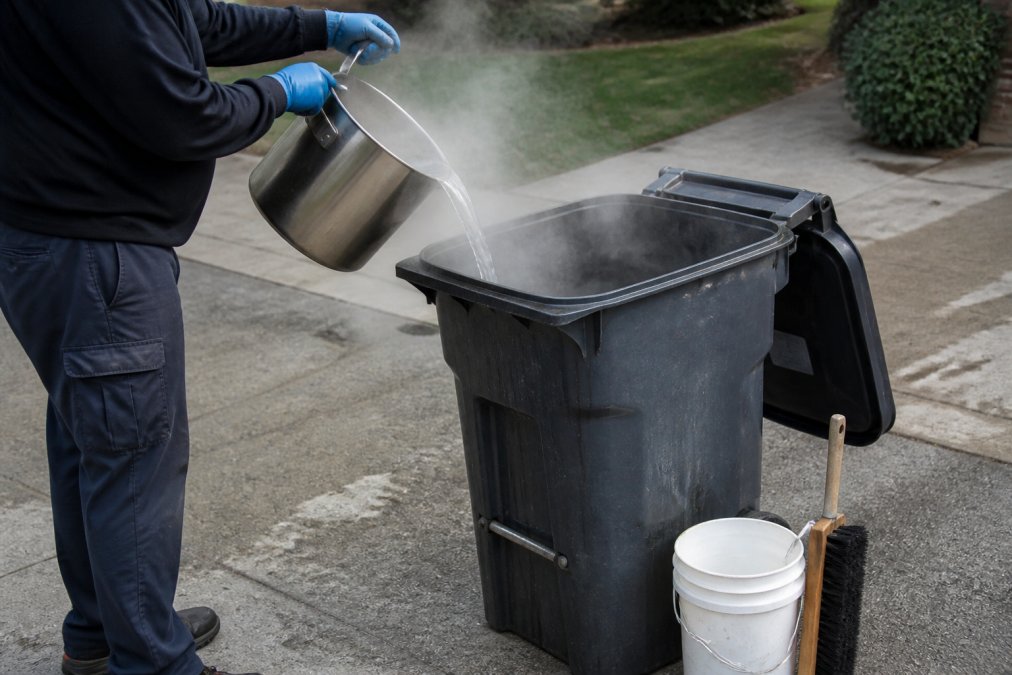
Boiling water kills maggots on contact by scalding their soft bodies, there is no chemical residue and no waiting period. Heat several gallons to a rolling boil, then pour slowly along the walls, the rim, and the bottom so the water reaches larvae tucked in corners. Let it sit for a few minutes, tip the bin to drain, and repeat if you still see movement.
- Plastic bins: Safe. Most residential carts are high-density polyethylene (HDPE), which handles near-boiling water without deforming. Pour in a steady stream rather than a single shock dump to reduce stress on the plastic.
- Metal bins: Use caution. Sudden heat can warp thin-gauge metal and crack powder-coat finishes, which then rust. Let the water cool for a minute off the boil before pouring, or switch to a chemical method.
- Wheeled carts with cracks: Skip boiling water. It seeps into cracks and voids where it never dries, feeding the next infestation.
Bleach and Ammonia Solutions (Never Mix Them)
A diluted bleach solution kills maggots and disinfects the bin in one pass. The standard household ratio is 1 part bleach to 10 parts water, roughly 1.5 cups of bleach per gallon of water. Pour it over the larvae, let it sit 5-10 minutes, then scrub and rinse thoroughly. Bleach loses potency fast in sunlight and in the presence of heavy organic matter, so pre-scrape the bin first.
Never mix bleach and ammonia. The reaction produces chloramine vapors that can cause serious breathing problems, chest tightness, and chemical burns to the airway. Use one or the other, never both, and never in the same bin on the same day.
Which Method to Pick
| Bin material | Best first choice | Avoid |
|---|---|---|
| HDPE plastic cart | Boiling water | , |
| Thin metal can | Diluted bleach | Boiling water |
| Cracked or lined bin | Diluted bleach | Boiling water |
| Indoors / enclosed area | Boiling water | Ammonia |
Whichever you choose, work outside, wear gloves and eye protection, and keep the bin tipped so runoff does not pool at the bottom. Killing the larvae is only half the job, the next step is scrubbing out what they left behind, because residual grime and moisture are what pull the next fly in.
Natural Ways to Kill Maggots Without Harsh Chemicals
Natural ways to kill maggots work well for families who want to skip bleach and ammonia. Diatomaceous earth is a fine powder that dries out the larvae and their eggs. Sprinkle it in the bin and along the rim.
- Diatomaceous earth: dries out maggots and eggs
- White vinegar: kills larvae and neutralizes odor
- Boiling water: chemical-free and fast
- Salt: draws out moisture from larvae
Step 3: Scrub, Disinfect, and Deodorize the Bin
Scrubbing and disinfecting the bin removes what maggots leave behind. Fill the bin with warm water and dish soap, then scrub every surface with a brush. Pay attention to the bottom, corners, and inside of the lid.
Leave the lid open while the bin dries. Trapped moisture is the number one reason maggots return within a week.
How to Prevent Maggots in Trash Can for Good
Prevention only works if you understand what you are preventing. A house fly can complete its entire life cycle, egg to egg-laying adult, in as little as 7 to 10 days when temperatures sit between roughly 80°F and 95°F. Eggs hatch in 8 to 24 hours in warm weather. That is why a bin that looked clean on Monday can be crawling by Wednesday.
The Four Levers You Actually Control
- Moisture. Larvae need a wet film to survive. A dry bin is a hostile bin. Keep the bottom dry, and never leave liquid pooling under the bag.
- Food access. Bag all organic waste, food scraps, pet waste, coffee grounds, before it goes in. A tied bag cuts the food source even if a fly gets inside.
- Temperature. Heat accelerates the cycle. Shade and airflow slow it. A bin in direct summer sun can run 15-20°F hotter than ambient air.
- Time. The longer waste sits, the more of the cycle completes inside your bin. Emptying frequency is the single biggest lever.
Seasonal Prevention Calendar
| Season | Main risk | Key action |
|---|---|---|
| Spring | Flies return as temps cross ~65°F | Start weekly vinegar-and-water rinses |
| Summer | Peak breeding; eggs hatch in under a day | Empty every 2-3 days; keep bin shaded |
| Fall | Scraps pile up as flies seek warmth | Deep clean monthly; check lid seals |
| Winter | Odor and grime, low fly activity | Scrub and air dry; prep for spring |
Bin Material and Setup Choices That Matter
- Lid fit. A tight-fitting lid is the cheapest prevention tool you own. A warped or cracked lid is an open door.
- Bin liner. A liner keeps liquid off the plastic and makes weekly rinsing faster. Replace it whenever it tears.
- Drainage. If your cart has drain holes, keep them clear. Trapped water at the bottom is where larvae survive a rinse.
- Placement. Shade and airflow beat sun every time. A bin against a hot south-facing wall runs hotter than one in open shade.
Eco-Friendly Disposal of Dead Larvae
Once the larvae are dead, bag them tightly and send them out with your regular curbside pickup. Do not wash them into a storm drain, storm drains typically discharge untreated into local waterways, and the organic load feeds algae and bacteria. Do not compost maggot-infested material in a home compost pile unless it is a hot pile that reliably reaches 130°F or higher; a cool pile just relocates the problem.
When to Call a Professional Trash Bin Cleaning Service
A professional trash bin cleaning service is worth it when maggots keep coming back or the odor stays after you clean. Most homeowners can handle one bin. A whole household, a business, or an HOA with many bins is a different job.
Frequently Asked Questions
What kills maggots instantly in a trash can?
Boiling water kills maggots on contact and is the fastest household method. Pour it directly over larvae and along the bin walls and bottom. A diluted bleach solution (about 1 part bleach to 10 parts water) also works quickly. Never mix bleach with ammonia or vinegar, because the chemical reaction releases toxic fumes. After treatment, scrub the bin and let it air dry in direct sun.
How long do maggots live in a bin if I do nothing?
Fly larvae typically feed for three to five days, then pupate into a hard brown casing before emerging as adult flies roughly a week later. Leaving them alone means a new generation of flies returns to lay more eggs on food scraps. Removing larvae and cleaning the bin breaks that cycle before it repeats.
What are natural ways to kill maggots in a garbage can?
Diatomaceous earth dries out larvae and can be sprinkled into the bin. White vinegar poured directly on maggots and their hiding spots disrupts them, and boiling water alone kills them without any chemicals. These natural ways to kill maggots work best when paired with frequent emptying, moisture control, and a tight-fitting lid so flies cannot lay new eggs.
How do I prevent maggots from coming back to my trash can?
Bag all food scraps, keep the lid closed, and empty the bin often during warm months. Rinse the bin weekly, allow it to air dry, and use a bin liner. If the smell and larvae keep returning, a professional trash bin cleaning service uses 200° hot water to sanitize, deodorize, and remove grime that home hoses miss.
Maggots in a trash can are a sign of trapped moisture and food waste, not bad luck. Clean the bin, kill the larvae, and keep it dry, and they stay gone. For a hassle-free fix, Chester County Clean Cans delivers sanitized, odor-free bins with 200° hot water, eco-friendly service, and same-day turnaround within 24 hours. Get a quote today and take the nastiest chore off your list.