

Table of Contents
- Understanding Your HOA Trash Can Rules
- Documenting the Trash Problem: Evidence That Matters
- Communicating Your Concern to the HOA Board or Property Manager
- Writing an HOA Complaint Letter Template
- Addressing HOA Trash Can Violation Letters
- Disputing an HOA Fine for Trash Violations
- Preventing Recurring Trash Problems in Your Community
- Frequently Asked Questions
Last Updated: October 14, 2026
Understanding Your HOA Trash Can Rules
When you move into a community with a homeowners association, trash management rules come with the territory.
The challenge is that trash rules often feel arbitrary until something goes wrong. A neighbor’s overflowing bin attracts pests. Suddenly you’re dealing with HOA trash can rules that feel unclear or unevenly enforced.
Understanding what your governing documents actually say is the first step. Pull out your deed, CC&Rs (Covenants, Conditions, and Restrictions), and any community rules handbook.
Common trash placement and storage requirements
Most HOAs require trash cans to stay out of sight from the street except on collection day. This typically means storing them in a garage, shed, or behind a fence or screen.
Collection day rules are equally important.
What counts as improper storage? Leaving bins on the curb between pickups, stacking multiple bins visibly, or storing them in the front yard typically triggers violations.
Shared areas versus individual homeowner violations
The distinction matters when filing a complaint. HOA trash complaints about shared community dumpsters are handled differently than violations involving individual homeowner bins.
Shared area problems include:
- Overflowing community dumpsters
- Trash scattered around collection areas
- Pest infestations near common trash zones
- Broken or damaged shared bins
Individual homeowner violations include:
- Bins left on the curb between pickups
- Trash visible from the street
- Improperly stored or damaged personal bins
- Excessive household waste overflow
If the problem is in a shared area, your complaint targets the property manager or board directly. If it’s an individual homeowner’s bin, you may need to identify the specific resident or report it as a general community concern. This distinction affects how you document the issue and who responds.
Documenting the Trash Problem: Evidence That Matters
Before you file any complaint, build your case with solid documentation. Vague complaints get dismissed. Specific evidence with dates and photos forces action.
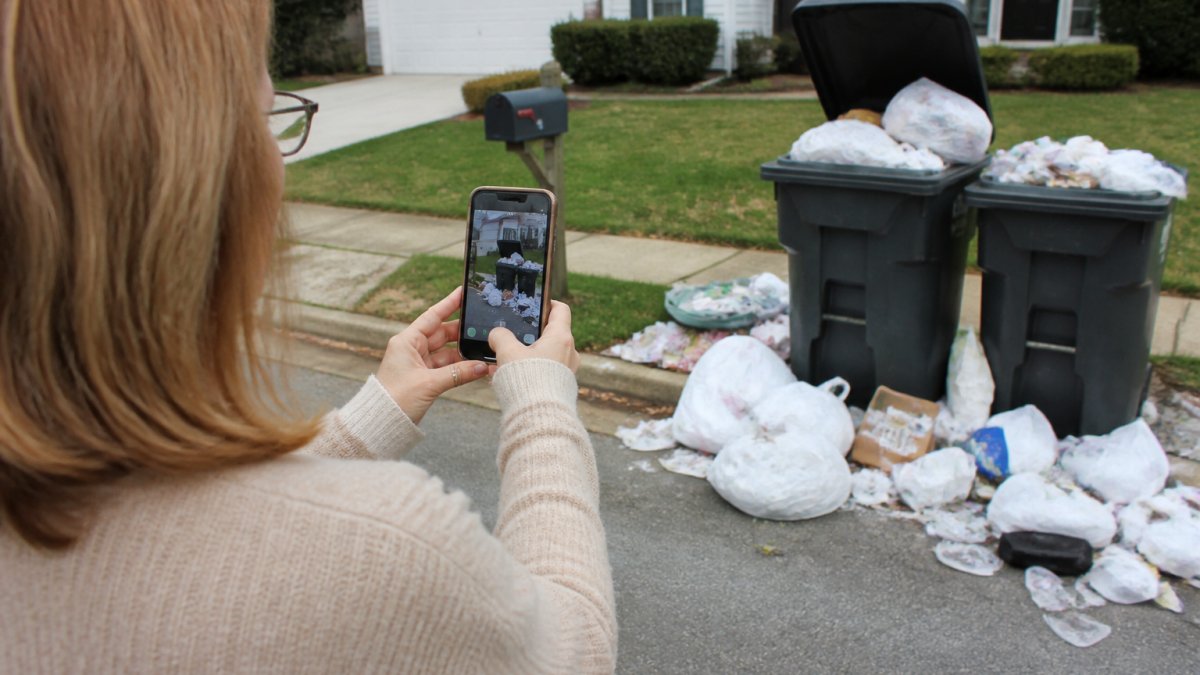
What to photograph and record
Take clear photos from multiple angles. Show the trash bin location, the overflow, any scattered debris, and the surrounding area. If pests are visible, flies, maggots, or rodent droppings, photograph those too. Timestamp every photo with the date and time.
For each photo, note:
- Exact location (address or community area name)
- Date and time taken
- What the photo shows (overflow, placement violation, pest evidence)
- Weather conditions if relevant
- Whether the issue is ongoing or one-time
If you’re documenting a shared area problem, capture the full dumpster enclosure. Show how full the bins are, whether lids close properly, and if trash surrounds the area. If it’s an individual homeowner’s bin, get a clear shot showing the violation and the property address.
Keeping a timeline of dates and incidents
Create a simple log. You don’t need anything fancy, a spreadsheet or notebook works fine. Record:
- Date and time of each observation
- What you saw (overflow, placement, pests, odor)
- Photos taken (file names or links)
- Any communication you sent to the HOA or neighbors
- Responses received
A timeline shows the HOA that this is a pattern, not a one-time issue. If you report on October 5 and the problem recurs on October 12, October 19, and October 26, that pattern matters. It proves the issue is ongoing and the property manager or homeowner isn’t fixing it.
Keep this log for at least 30 days before filing a formal complaint. Most HOAs want to see evidence of a persistent problem before they act.
Communicating Your Concern to the HOA Board or Property Manager
You have two paths: informal and formal. Choose based on the severity and your relationship with the board.
Informal conversation versus formal written notice
An informal approach works best for minor, first-time issues. Call or email the property manager. Keep it friendly and factual: “I’ve noticed the dumpster near Building C has been overflowing on Tuesday mornings.
Informal communication works when:
- The issue just started
- You haven’t complained before
- The violation seems unintentional
- You want to avoid conflict
Formal written notice is necessary when:
- Informal requests don’t work
- The problem is serious or ongoing
- You need a paper trail
- You’re preparing for a hearing or fine dispute
Formal communication means sending a written complaint letter to the property manager and board. This creates a documented record. The HOA must respond within their timeline (usually 10-30 days, depending on your community’s rules).
Writing an HOA Complaint Letter Template
A strong complaint letter is specific, professional, and factual. It avoids emotion and focuses on the violation and its impact.
Essential elements of a strong complaint letter
Your letter should include:
- Your name and property address
- Date of the letter
- Specific description of the problem
- Dates and times you observed it
- Impact on your property or the community
- Photos attached (list them)
- Reference to the governing documents or rules violated
- Clear request for action
- Your contact information
Keep the tone professional. Avoid words like “disgusting,” “negligent,” or “unacceptable.” Instead, describe what you observed and the specific rule violated.
Sample language for common trash scenarios
For an overflowing shared dumpster:
“I am writing to report a persistent issue with the community dumpster located at [specific location]. On [dates], I observed the dumpster to be overflowing, with trash scattered on the ground.
For a homeowner leaving bins on the curb:
“I am reporting a violation of our community trash rules by the resident at [address].
For pest or odor issues:
“I am filing a complaint regarding trash-related pest activity affecting my property. On [date], I observed [specific pest evidence] near the trash collection area at [location]. This appears to be caused by [specific issue: overflowing bins, improper storage, etc.].
Addressing HOA Trash Can Violation Letters
If you receive a violation notice about your own trash bins, don’t panic. You have rights and options.
How to respond to a violation notice
Read the notice carefully. It should specify:
- The exact violation
- The rule or section of the governing documents cited
- The date(s) observed
- The deadline to cure (fix) the violation
- Consequences if you don’t comply
Most violation notices give you 10-30 days to fix the problem. If the violation is legitimate, your bin was left on the curb too long, fix it immediately and send a response acknowledging the violation and confirming compliance.
If the violation is incorrect or unfair, respond in writing within the deadline. Keep your response factual and reference the specific rule you believe was misapplied.
Gathering evidence to dispute false accusations
If you believe the violation is wrong, build your case before responding.
Collect:
- Photos showing your bins were in compliance
- Timestamps or witness statements about when bins were placed and removed
- Your trash collection schedule (showing the date and time pickup occurs)
- Records of any communication with the HOA about your trash practices
- Evidence that other residents violate the same rule without notice
For example, if you’re cited for leaving bins on the curb, but your trash pickup is at 6 AM and you brought bins in by 7 AM, document that timeline.
If the violation letter is dated incorrectly or lacks specifics, point that out. An HOA violation must be clear and provable. Vague accusations are harder to defend, but they’re also weaker evidence if you need to dispute a fine later.
Disputing an HOA Fine for Trash Violations
If the HOA issues a fine for a trash violation, you can challenge it. Most communities have a formal dispute process.
Understanding your right to a hearing
Your governing documents should outline the fine dispute procedure. Typically, you have the right to:
- Written notice of the violation and fine amount
- A reasonable time to respond (usually 10-30 days)
- A hearing before the board or a hearing officer
- The chance to present your case and evidence
Request a hearing in writing within the deadline specified in the fine notice. State that you dispute the violation or believe the fine is unjust. Attach your evidence.
Presenting your case and appeal process
At the hearing, bring all your documentation:
- Photos showing compliance
- Written communication with the HOA
- Witness statements if applicable
- Copies of your CC&Rs or community rules
- Evidence of inconsistent enforcement (other residents violating the same rule)
Present your case clearly. Explain why the violation notice was incorrect or why the fine is unfair. If the violation is legitimate but the fine seems excessive compared to others, mention that.
After the hearing, the board will issue a decision. If you disagree, ask about further appeal options. Some communities have additional levels of review. If all internal remedies are exhausted and you believe the HOA acted unfairly, you may consult an attorney about your legal options.
Preventing Recurring Trash Problems in Your Community
The best complaint is the one you never have to file. Working proactively with your community prevents most trash issues.
Working with the board on community standards
Attend HOA meetings and raise trash issues during open comment time. Ask for clarification of rules, better signage, or enforcement consistency. If multiple residents are confused about trash rules, that’s a sign the rules need clearer communication.
Propose solutions:
- Better-marked trash collection areas
- Clearer signage about placement and timing rules
- More frequent dumpster service during peak seasons
- Designated bulk-item disposal days
- Regular maintenance of shared trash enclosures
When the board sees residents engaged and willing to help, they’re more likely to take action. Frame it as a community improvement, not a complaint.
Addressing persistent garbage collection concerns
If your trash collection service is unreliable, missed pickups, scattered trash, late arrivals, document it and report it to your property manager.
If the issue persists, ask the board to review the contract with the trash service.
For shared dumpster areas, advocate for:
- Weekly dumpster cleanings
- Pest control measures
- Better enclosure design to prevent overflow
- Clear signage about proper disposal
Small, consistent improvements prevent the big complaints down the road. When trash is handled well, HOA trash complaints become rare.
Trash problems in your community don’t solve themselves.
At Chester County Clean Cans, we understand how frustrating trash issues can be.
Frequently Asked Questions
What should I do if my HOA says I violated a trash rule?
First, carefully review the violation notice and your community’s governing documents to understand the specific rule you allegedly broke. Gather documentation including photos, dates, and any written correspondence showing your compliance or explaining the circumstances. If you believe the violation is unfair or incorrect, respond in writing within the timeframe specified in the notice. Request a hearing before the HOA board to present your evidence and dispute the accusation. Stay calm and professional throughout the process.
How can I dispute an HOA fine for trash can placement?
Document when and where your trash cans were placed, and gather evidence showing compliance with community rules. Review your deed and governing documents to confirm the exact placement requirements. Submit a written appeal to your HOA board with photos and a clear explanation of why the fine is unjustified. Request a formal hearing to present your case. Many HOAs are required to provide a fair notice and hearing process before enforcing fines, so understand your community’s specific appeal procedures.
How do I document an HOA complaint about garbage in common areas?
Take dated photos and videos of the problem, including trash scattered in common areas, overflowing bins, or pest activity. Record the exact location, date, and time of each incident in a log. Keep copies of any emails or written correspondence about the issue. Note which trash collection day the problem occurs and whether it’s a recurring pattern. This documentation strengthens your formal complaint to the HOA board and shows the board that the issue is serious and ongoing.
What can I do if my neighbor leaves trash cans out between collection days?
Review your community’s trash rules in the governing documents to confirm that leaving cans out is a violation. Document the behavior with dated photos showing when cans are left visible. Contact your neighbor directly if you feel comfortable doing so, as they may be unaware of the rule. If the problem persists, file a formal complaint with the HOA board or property manager, including your documentation. The HOA is responsible for enforcing community rules fairly and consistently.