
Last Updated: October 30, 2026
Quick Summary
To pressure wash trash can interiors, use a pressure washer with a 25- or 40-degree fan tip to blast dirt, grease, and residue out of corners and seams instead of scrubbing by hand. Work top down at moderate pressure, keep the nozzle 12 to 18 inches away and moving, then sanitize and dry fully.
- Plan on roughly 20 minutes per bin and keep the runoff contained on a hard, sloped surface.
- Apply an eco-friendly detergent and let it sit a few minutes before washing the interior top down.
- Never use a 0-degree pinpoint tip on plastic, since it is the fastest way to crack a bin.
- Most households should clean their bins every one to three months, and monthly during hot summer months.
- Skip pressure washing cracked or brittle bins, since high pressure can split old plastic wide open.
Table of Contents
- What Bin Pressure Washing Actually Does
- How to Pressure Wash a Trash Can: Step by Step
- How to Sanitize Garbage Bins After Washing
- Hot Water vs. Cold Water and the Right Pressure Setting
- Wastewater, Runoff, and Keeping Your Yard Safe
- Trash Bin Cleaning Frequency: How Often Is Enough?
- When Pressure Washing Isn’t the Right Answer
- Professional Trash Bin Cleaning vs. Doing It Yourself
- Frequently Asked Questions
What Bin Pressure Washing Actually Does
To pressure wash trash can interiors, a high-pressure water jet blasts dirt, grease, and residue out instead of scrubbing by hand.
A garden hose rinses the surface and leaves the sticky layer underneath.
- The inside gets clean, not just the outside. The interior is where odors and bacteria live.
- Caked-on debris breaks loose. Dried food, grease, and residue that a brush skips come off fast.
- The bin dries cleaner. Less leftover film means less to feed bacteria later.
That’s the short version. The rest of this guide covers how to pressure wash a trash can safely, what to do after, and when to hand the job off.
Why Water Pressure Beats Scrubbing by Hand
Hand scrubbing works, but it’s slow and misses things.
When you pressure wash trash can seams and corners, the spray reaches those spots, pushing loosened grime out of the gaps and rinsing it away in one pass.
Watch out: pressure alone doesn’t sanitize. It removes the dirt that feeds bacteria, but you still need a proper wash and disinfect step afterward.
How to Pressure Wash a Trash Can: Step by Step
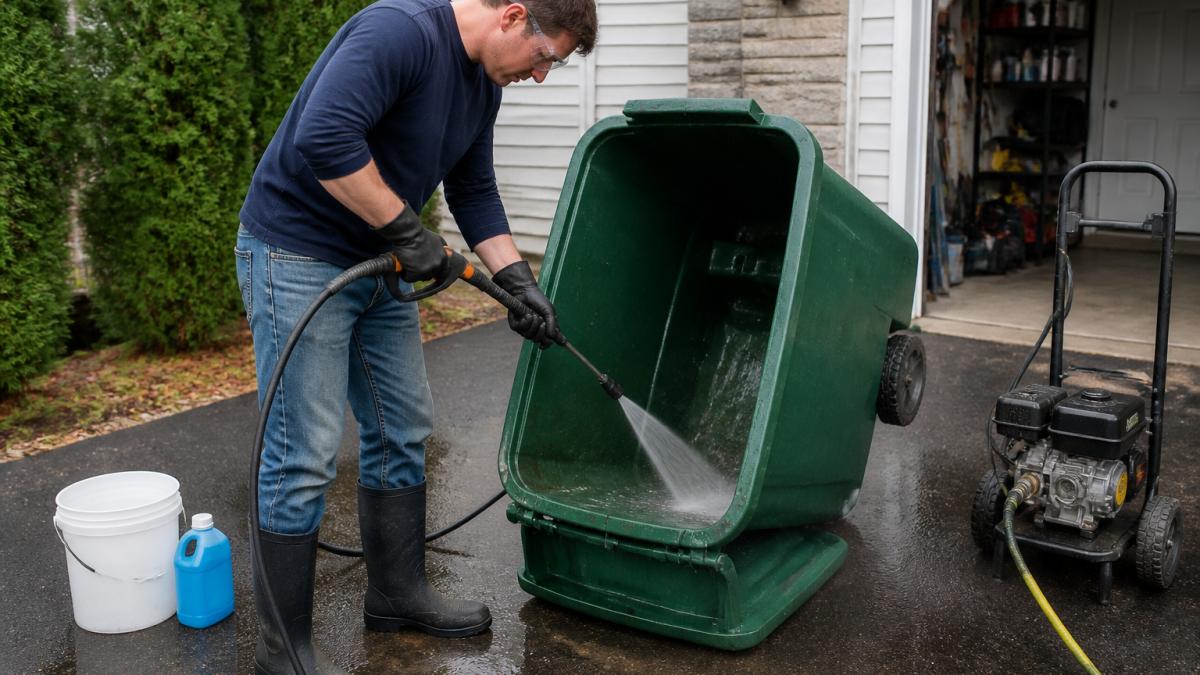
Here’s a safe, practical method for cleaning a bin at home. Plan on roughly 20 minutes per bin, and keep the mess contained.
What You’ll Need Before You Start
Gather these first:
- A pressure washer with an adjustable nozzle
- Work gloves and safety glasses
- An eco-friendly detergent or degreaser
Step 1: Empty and bag the loose debris. Tip out any trash and bag it.
Step 2: Rinse on low pressure. Start with a low-pressure setting to knock off the loose layer.
Step 3: Apply detergent and let it sit. Spray an eco-friendly cleaner inside and out.
Step 4: Wash the interior at a moderate setting. Work from the top down.
Step 6: Rinse everything clean. Flush the soap out of every corner.
Common Mistakes to Avoid
A few errors cause most of the damage:
- Using the highest pressure on plastic. Too much force cracks bins and strips the finish. Keep it moderate.
- Skipping the detergent. Water alone won’t cut grease. The cleaner does half the work.
- Washing on grass or near a storm drain. Runoff carries grime and soap where it shouldn’t go.
How to Sanitize Garbage Bins After Washing
Washing removes the dirt. Sanitizing kills what’s left behind. Skip this step and the smell comes back within days.
Once the bin is clean and dry, apply a disinfectant inside and out, paying attention to the lid, handle, and bottom corners. Let it sit for the time listed on the product, then air dry fully.
A quick routine after each wash:
- Disinfect the interior, lid, and handle
- Let the bin dry completely with the lid open
- Sprinkle a little baking soda in the bottom to absorb moisture
Hot Water vs. Cold Water and the Right Pressure Setting
Heat changes how grease behaves. Cold water hardens fats and oils, so the spray pushes them around instead of dissolving them. Hot water softens that film so detergent and pressure can lift it away, which is why commercial bin-cleaning rigs run heated water rather than relying on pressure alone.
What Pressure Actually Does to a Plastic Bin
Pressure is force per area, and a narrow nozzle concentrates that force into a small stream. Too much concentration on a plastic wall causes stress cracks, gouges, and clouded finish; too little and the water sheets off without cutting residue. The goal is enough force to flush seams and corners, not enough to deform the plastic.
A practical way to set up a home pressure washer:
- Nozzle choice: Use a 25-degree or 40-degree fan tip for the main wash. A 0-degree pinpoint tip concentrates force and is the fastest way to crack a bin.
- Pressure setting: Start low and increase only until the water lifts residue. Most residential electric units run well below the pressure that damages plastic when paired with a fan tip.
- Distance: Hold the nozzle roughly 12 to 18 inches from the surface and keep it moving. Closer increases impact; farther reduces cleaning power.
Never hold a pinpoint nozzle in one spot on a plastic bin. The water heats and stresses the plastic locally, and that is where cracks start.
Matching Water Temperature to the Job
- Cold water: Fine for rinsing loose debris, wetting the bin, and washing the exterior on a mild day. Weak on grease and baked-on food film.
- Hot water: Better for the interior, the bottom corners, and any bin that held food waste. Heat softens residue so detergent works faster and rinsing removes more.
- Warm water from a tap: A reasonable middle ground for a home setup when a hot-water pressure washer is not available. It will not match a 200° commercial unit, but it outperforms a cold garden hose.
Homeowners often blame their pressure washer when the real issue is cold water and a weak detergent. Raising the water temperature and giving the cleaner a few minutes of dwell time can matter more than increasing pressure.
Pressure Settings at a Glance
| Setting | Typical Use | Risk on Plastic |
|---|---|---|
| Low pressure, wide fan tip | Rinsing debris, wetting the bin | Minimal |
| Moderate pressure, 25-40 degree tip | Main interior and exterior wash | Low when the nozzle stays moving |
| High pressure, narrow tip | Not recommended for plastic bins | Cracks, gouges, stripped finish |
Keep the spray gun moving, work top down, and let heat and detergent do the work that raw pressure cannot.
Wastewater, Runoff, and Keeping Your Yard Safe
Where the dirty water goes matters as much as the cleaning. Runoff from a bin wash carries grime, grease, detergent, and bacteria, and in many communities storm drains lead directly to streams, rivers, or lakes with no treatment step in between.
Why Bin Wash Water Is Different From Rain
Rain running off a driveway is mostly water. Bin wash water carries food residue, fats, cleaning chemicals, and the bacteria that caused the smell. Dumping that into a storm drain sends it downstream untreated. Many municipalities treat storm sewer discharges as a regulated concern, and some publish guidance telling residents not to route wash water into drains. Rules vary by jurisdiction, so check with your local public works or environmental office before washing.
A Practical Containment Plan for Homeowners
You do not need a commercial rig to keep runoff contained. A workable home setup looks like this:
- Wash on a hard, sloped surface. A driveway or concrete pad lets you see and control where water flows. Grass and bare soil absorb some runoff but leave residue behind and can carry it into groundwater.
- Block the path to the drain. Use a rolled towel, sandbag, or temporary berm at the low edge of the driveway to keep water from reaching the street.
- Collect what you can. A wet/dry shop vacuum can pull standing water from the bin and the pad after the wash. Empty it into a utility sink or toilet, not a storm drain.
If your driveway slopes toward the street, wash on the uphill side and work downward so runoff pools on the pad where you can contain it rather than running off.
What Professional Setups Do Differently
Commercial bin-cleaning systems can capture wastewater at the source. Some units position the bin over a containment tray or basin and pump the collected water into a holding tank for disposal.
If you wash at home, the minimum standard is simple: keep runoff on a hard surface, block it from storm drains, and dispose of collected water through a sanitary sewer connection or a utility sink.
Trash Bin Cleaning Frequency: How Often Is Enough?
Most households should clean their bins every one to three months, depending on how much food waste goes in and how hot it gets. Summer speeds everything up. Heat plus food scraps equals odor and pests fast.
Use this as a rough guide:
| Situation | Suggested Frequency |
|---|---|
| Small household, little food waste | Every 2-3 months |
| Family with daily food scraps | Monthly |
| Hot summer months | Monthly or more |
| Commercial bins | Monthly at minimum |
| Maggots or heavy odor | Clean now, then monthly |
If you spot maggots or a smell that won’t quit, clean immediately and then set a monthly routine. Consistency beats a deep clean once a year.
When Pressure Washing Isn’t the Right Answer
Pressure washing isn’t always the fix. Sometimes it makes things worse.
Skip the pressure washer when:
- The bin is cracked or brittle. High pressure can split old plastic wide open.
- You have no safe place for runoff. Washing on grass or near a drain creates a mess you can’t control.
- The problem is inside the home. If odors are coming from your kitchen, the bin isn’t the source.
A worn-out bin is often better replaced than cleaned. If the plastic is failing, no amount of washing brings it back.
Professional Trash Bin Cleaning vs. Doing It Yourself
DIY pressure washing works, but it’s a wet, smelly job with real runoff to manage.
Doing it yourself costs less up front and gives you control, but you supply the equipment, the cleaner, the time, and the plan for the dirty water.
If you’re weighing the two, our breakdown of whether professional bin cleaning is worth it covers the cost and effort side by side. See how our process works, or browse the bin cleaning services we offer and book a visit.
A quick comparison:
| Factor | DIY Pressure Washing | Professional Service |
|---|---|---|
| Up-front cost | Equipment and supplies | Service fee |
| Time per bin | About 20 minutes | None on your end |
| Water temperature | Cold, from a hose | Heated, well above tap |
| Runoff control | Up to you | Contained by the service |
| Sanitizing | Your own products | Included in the clean |
For busy families and anyone tired of the chore, the professional route removes the worst part: the mess and the smell.
Cleaning a trash bin by hand is one of those jobs nobody wants, and it’s easy to let slide until the smell wins.
Frequently Asked Questions
Is pressure washing a trash bin enough to sanitize it?
Water pressure alone removes dirt, grime, and residue, but it does not kill all bacteria or eliminate odors on its own. To sanitize garbage bins properly, wash out the loose debris first, then apply an eco-friendly detergent or disinfectant, let it sit, and rinse. Hot water above 200 degrees Fahrenheit does more of the sanitizing work than cold water. For maggots or heavy odor, a second pass with detergent and a full dry in the sun makes a noticeable difference.
How often should trash bins be cleaned?
Trash bin cleaning frequency depends on how much waste your household produces and the season. In summer, when heat speeds up bacteria growth and odor, a monthly cleaning keeps bins manageable. Cooler months often allow quarterly cleaning. Homes with diapers, pet waste, or food scraps usually need more frequent washing. If you notice maggots, a persistent smell, or a sticky film inside the bin, clean it right away rather than waiting for the next scheduled date.
Can pressure washing remove odors from garbage bins?
Pressure washing removes the source of most odors: the layer of grease, residue, and debris where bacteria feed. Blasting that film off the interior walls and floor of the bin can reduce the smell at its source. Finish with a sanitizing solution and let the bin dry completely in the sun before putting the lid back on. Trapping moisture inside a closed bin invites odor back within days, so drying is as important as the wash itself.
What is the difference between pressure washing and professional bin cleaning?
Pressure washing is the method; professional trash bin cleaning is the service built around it. A professional bin-cleaning service typically washes, sanitizes, and deodorizes bins curbside. Doing it yourself with a rented or owned pressure washer works for light upkeep, but professional cleaning handles heavy grime, maggots, and wastewater compliance with far less effort.
