Table of Contents
- What a Residential Bin Cleaning Service Actually Does
- How Often Should Trash Bins Be Cleaned?
- How to Book a Bin Cleaning Service: A Step-by-Step Guide
- Trash Bin Cleaning Service Cost Factors to Know Before You Book
- The Eco-Friendly Trash Can Cleaning Process Explained
- DIY vs. Professional Bin Cleaning: Which Is Right for You?
- What to Expect on Service Day
- Common Mistakes to Avoid When Booking Bin Cleaning
- Frequently Asked Questions
Last Updated: September 23, 2026
What a Residential Bin Cleaning Service Actually Does
Booking residential bin cleaning service is simpler than most homeowners expect. A residential bin cleaning service sends trained technicians to your curb, washes each trash and recycling bin with high-pressure hot water, sanitizes the interior, and leaves the container dry and odor-free before your next pickup. At Chester County Clean Cans, the entire visit happens curbside, so you never have to be home.
Curbside Service, Step by Step
- You leave your empty bins at the curb after your regular waste pickup.
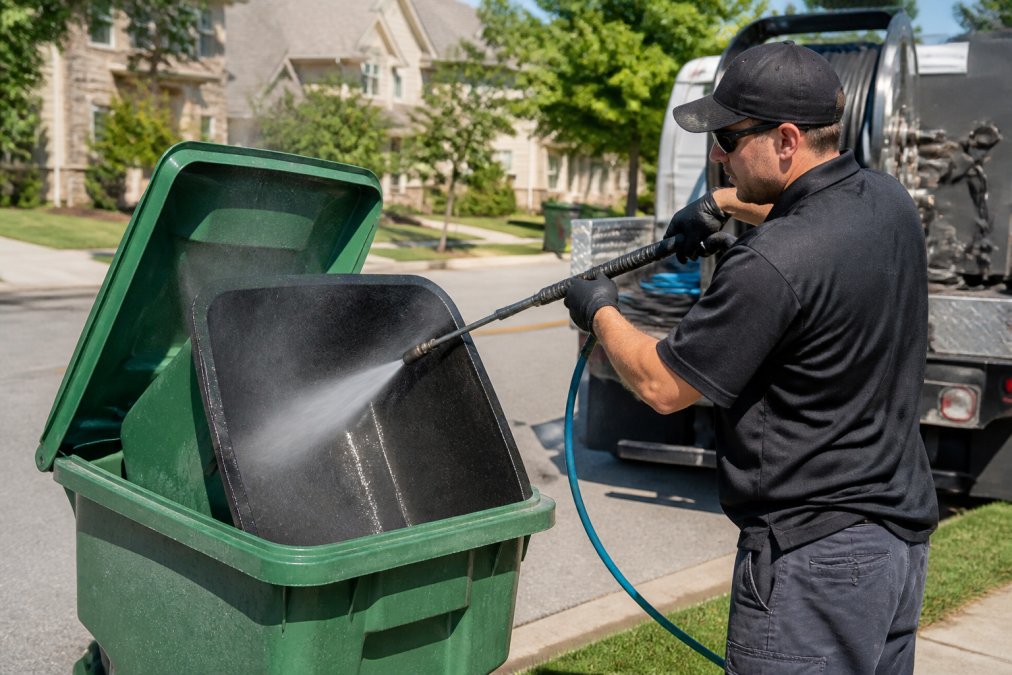
- A cleaning truck arrives, lifts each bin onto a rotating wash station, and blasts the interior with 200° hot water.
- Debris and wastewater drain into a contained holding tank, not your lawn or the storm drain.
- Technicians apply an eco-friendly deodorizer, rinse, and bring the bin back to your house so you don’t have to walk to get your trash cans..
The whole stop takes a few minutes per bin. Most services, including ours, are completed within 24 hours of your pickup day.
How Often Should Trash Bins Be Cleaned?
Most households should clean their trash bins every four to eight weeks, with monthly service during summer and any month you put food waste in the bin. Heat speeds up bacterial growth and odor, so warm-weather months call for the shorter end of that range. Recycling bins can usually stretch to a quarterly deep clean unless liquids leaked inside.
- You have young children, pets, or anyone with a compromised immune system at home
- You compost partially but still toss food scraps
- You live in a neighborhood with an active wildlife or rodent population
- Your bins sit in a garage or against the house, where smells travel indoors
How to Book a Bin Cleaning Service: A Step-by-Step Guide
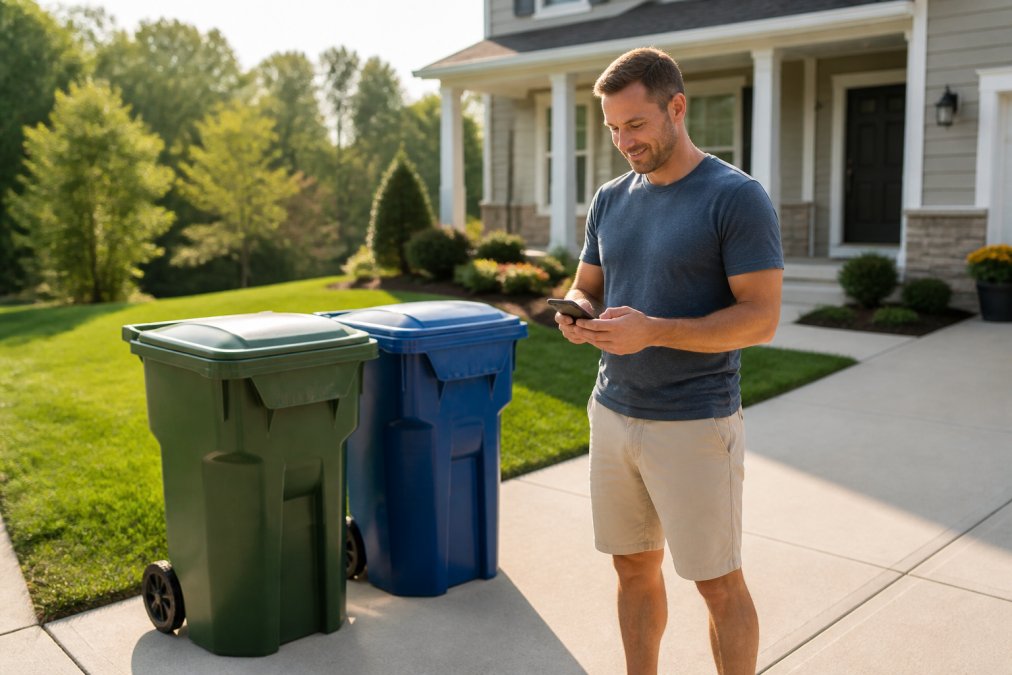
Booking takes about five minutes online, and you do not need to be present on service day.
Step 1: Check Your Service Area and Pick a Plan
Confirm the provider covers your street before you enter any payment details. Local operators publish a service area list, usually following the waste haulers and municipalities they work with. Then choose a frequency: monthly, bi-monthly, quarterly, or a single one-time clean.
Step 2: Match the Plan to Your Household, Not the Price Tag
Before you click book, run a quick self-audit. The right frequency follows how much organic waste hits your bin each week:
- Heavy food waste, kids, or pets: monthly service keeps bacteria from re-establishing between visits.
- Mixed recycling and trash, occasional cooking: bi-monthly or quarterly is usually enough.
- Rarely home, low waste: a one-time clean plus a quarterly refresh covers most households.
Step 3: Schedule Your First Clean and Prep Your Bins
Pick a date after your normal collection day, since the equipment works best on empty bins. On the morning of service, wheel your bins to the curb and leave the lids open or unlatched if your provider asks. Remove anything you want to keep, and skip pre-rinsing, which does nothing for the grime layer anyway.
A few prep details that prevent reschedules:
- Put bins out the night before if your pickup happens early.
- Keep lids accessible, not locked or bungeed shut.
- Move cars, basketball hoops, and other obstacles away from the curb so the truck can reach.
- Confirm the service date in writing, since routes follow your pickup schedule and can shift on holiday weeks.
Step 4: Confirm the Booking and Know What Happens Next
After you book, you should receive a confirmation with your service window. Most providers complete the wash within 24 hours of your pickup day, and you do not need to be home or call to confirm.
Trash Bin Cleaning Service Cost Factors to Know Before You Book
Pricing depends on how many bins you have, how often you want them cleaned, and whether the provider handles commercial containers. A single residential bin on a quarterly plan costs less per visit than the same bin cleaned monthly, because the technician is already routing through your neighborhood. Add-ons like extra recycling bins, HOA bulk pricing, or commercial dumpsters change the total as well.
The cost factors that matter most:
|
Factor |
What It Changes |
Why It Matters |
|---|---|---|
|
Number of bins |
Total per visit |
Most plans price the first bin, then add a smaller fee per extra |
|
Service frequency |
Cost per visit |
Monthly plans lower the per-visit rate versus one-time cleans |
|
Residential vs. commercial |
Equipment and time |
Larger containers need different wash setups |
|
Add-ons |
Optional charges |
Extra bins, deep clean requests, or HOA multi-home routing |
|
Route density |
Per-visit rate |
Neighborhoods with more subscribers cost less to service per home |
How to Compare Plans Without Guessing
Rather than chase the lowest advertised number, compare plans on cost per bin per visit. A quarterly plan with a higher headline rate can beat a monthly plan once you divide by the number of washes. Ask each provider three questions:
- What is the per-visit rate for my bin count and frequency?
- Does the rate change if I add a second bin or a recycling bin?
- Is there a discount for paying annually or for multi-home routing in my HOA?
The DIY Cost-Benefit Nobody Runs
Most homeowners compare the subscription rate against zero, as if DIY is free. It is not. A pressure washer rental, a disinfectant that actually kills bacteria, a brush, and 30 to 60 minutes of your time add up, and the runoff still carries food waste and bacteria toward your lawn or the storm drain. For bins with maggot activity or caked liquid at the bottom, DIY often fails outright and you pay twice.
What Changes the Total After You Book
A few things can move the final charge after your first visit:
- Extra bins added mid-cycle. Most providers prorate the addition rather than charging a full new plan.
- Skipped or rescheduled visits. Some plans roll the visit forward; others count it against your total.
- Deep cleans. Bins that have not been washed in years may need a second pass, which some providers quote separately.
- Commercial containers. Dumpsters and larger containers use different equipment and are priced outside residential plans.
The Eco-Friendly Trash Can Cleaning Process Explained
An eco-friendly trash can cleaning process captures the dirty water instead of letting it run into your yard, and uses biodegradable cleaning agents rather than harsh solvents. That distinction matters, because the runoff from a DIY bin wash carries the same bacteria and food waste that made the bin smell in the first place.
Here is how a contained wash works:
- High-pressure washing loosens caked material from the walls and floor of the bin.
- Hot water extraction at 200° kills bacteria and dissolves grease that cold water leaves behind.
- Containment routes every drop of wastewater into a holding tank for proper disposal.
- Biodegradable deodorizer neutralizes odor rather than masking it with fragrance.
- Drip-dry and reset returns the bin to your curb, dry enough to use the same day.
DIY vs. Professional Bin Cleaning: Which Is Right for You?
DIY bin cleaning works if you have a pressure washer, a slope that drains away from your foundation, and the stomach for what pours out of a summer trash can. For most households, the professional route wins on results, safety, and time.
|
Criteria |
DIY Wash |
Professional Service |
|---|---|---|
|
Time per session |
30-60 minutes |
None, done at the curb |
|
Equipment needed |
Pressure washer, hose, brush, disinfectant |
None |
|
Wastewater handling |
Runs onto your driveway or lawn |
Captured and disposed of |
|
Results on maggots or caked grime |
Partial, often resurfaces |
Full sanitization |
|
Cost |
Equipment and supplies upfront |
Per-visit or subscription rate |
What to Expect on Service Day
You do not need to be home. Leave your bins curbside after pickup, and the crew handles the rest, typically within 24 hours. You will get your bins back in the same spot, clean enough to use immediately.
A few practical notes for the first visit:
- Put bins out the night before if your pickup happens early
- Keep the lids accessible, not locked or bungeed shut
- Move cars or basketball hoops away from the curb so the truck can reach
- Expect a neutral, clean smell rather than a perfumed one
Common Mistakes to Avoid When Booking Bin Cleaning
The biggest mistake homeowners make is booking a one-time clean for a problem that needs a recurring plan. A single wash fixes the current smell, but if you keep putting food waste in the same bin, the bacteria return within weeks.
Other mistakes worth avoiding:
- Not confirming the service area first. Scheduling before you check coverage leads to cancellations and refund requests.
- Leaving bins out on the wrong day. Service follows your pickup schedule, so confirm the date before you set them out.
- Assuming all providers contain their wastewater. Ask directly. Runoff into a storm drain is a real environmental and legal issue.
- Skipping the trial. A one-time clean is the cheapest way to judge whether a provider’s results justify a subscription.
- Ignoring commercial bins. If you run a business, ask whether the provider handles larger containers and dumpsters, since not every residential operator does.
Frequently Asked Questions
How much do people charge to clean bins?
Most residential bin cleaning services price by the number of bins and how often you schedule cleanings. Monthly plans usually cost less per visit than one-time cleans, and bundling trash and recycling bins typically lowers the per-bin rate. Because pricing varies by provider, bin count, and service frequency, check Chester County Clean Cans’ website for current rates or request a quote. Avoid choosing a service on price alone; confirm what each visit includes, such as sanitizing, deodorizing, and debris removal.
Do I need to be home when the bin cleaning service arrives?
No. Curbside bin cleaning is designed so you don’t have to be present. Just leave your bins at the curb after your regular trash pickup, and the cleaning crew handles the rest, usually within 24 hours. You only need to make sure the bins are empty and accessible. If you have a gate code, special instructions, or want to add bins to your plan, note that when you book. This setup is one reason the service works well for busy households.
How often should I schedule residential bin cleaning services?
For most households, monthly or bi-monthly cleaning keeps odors, bacteria, and pests under control. If you live in a warm climate, compost, or have young children or pets, monthly service is a better fit. Quarterly cleaning can work for smaller households with light waste. Many providers offer flexible plans, so you can start monthly and adjust later. If you notice maggots, persistent smells, or pest activity, schedule a deep clean right away rather than waiting for your next visit.
How do I find a reliable residential bin cleaning service?
Look for a provider that is fully insured, uses background-checked technicians, and clearly lists what each visit includes. Check reviews from local customers, ask whether the company uses eco-friendly, biodegradable cleaning solutions, and confirm there are no long-term contracts. A reputable service will explain its process, answer questions about water runoff, and offer flexible scheduling. When you book, ask about service area coverage and whether they handle both trash and recycling bins.