
Last Updated: November 2, 2026
Quick Summary
Trash bin cleaning for businesses means emptying, scrubbing, rinsing, drying, and sanitizing commercial waste containers on a set schedule. Many businesses rinse weekly and do a full wash and sanitize monthly, while restaurants and grocery stores clean after each pickup and fully wash weekly.
- Scrub from the rim down and use hot water so grease breaks down.
- Air-dry bins completely before replacing the lid, since wet bins grow bacteria faster.
- Sanitize after washing, keeping surfaces wet for the full label contact time.
- Shorten the schedule for warm weather, food waste, pests, or standing liquid.
- Capture wash runoff and never dump it down a storm drain.
Table of Contents
- Why Commercial Trash Bins Need a Cleaning Routine
- What You’ll Need Before You Start
- Step-by-Step Commercial Garbage Can Cleaning
- Business Trash Can Sanitizing and Deodorizing
- Trash Bin Cleaning Frequency for Businesses
- Eco-Friendly Commercial Bin Cleaning and Wastewater Disposal
- DIY vs. Professional Bin Cleaning: What to Expect
- Get a Quote for Curbside Bin Cleaning
- Frequently Asked Questions
Why Commercial Trash Bins Need a Cleaning Routine
Trash bin cleaning for businesses is the scheduled removal of food residue, grease, bacteria, and odor from commercial waste containers, and skipping it costs more than most owners realize. The bin you ignore tends to become the bin that smells, attracts pests, and wears out sooner. Residue and moisture can also break down plastic and metal over time, so keeping containers clean helps them last longer.
Health Risks From Bacteria and Germs
A commercial garbage can is a warm, wet, food-rich environment, exactly what bacteria need to multiply. Every leaking bag or food-smeared lid feeds a colony that spreads germs to hands, door handles, and prep surfaces.
The fix is simple but must be consistent: rinse bins after emptying and sanitize container surfaces on a schedule.
Pest Attraction and Odor Problems
Pest attraction and odor problems share one cause: leftover waste. If you’re already seeing pests, our guide on maggots in your trash can explains how to stop the cycle.
Odor works the same way. Deodorizing without removing the grime underneath only masks the smell for a day or two. Real odor control starts with washing the source.
What You’ll Need Before You Start
Gather the right tools before you start. Here’s the practical kit for commercial garbage can cleaning:
- Heavy-duty rubber gloves and eye protection
- A stiff-bristled brush with a long handle
- A pressure washer or garden hose with a nozzle
- A biodegradable cleaner or plain soap
- Hot water, ideally heated above what a tap delivers
Never mix bleach with an acidic cleaner in a closed bin, because the fumes are dangerous.
Step-by-Step Commercial Garbage Can Cleaning
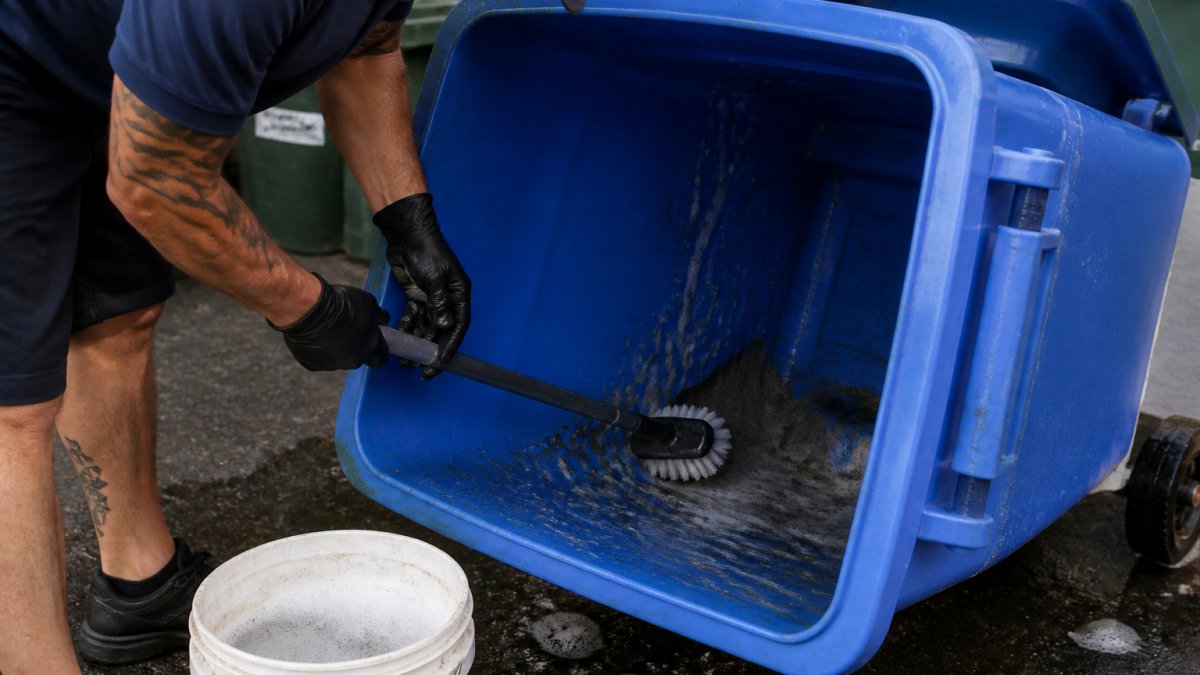
Commercial garbage can cleaning generally follows this order: empty, scrub, rinse, dry, sanitize.
Removing Leftover Waste and Residue
Empty the bin completely and bag any loose waste. Scrape dried food residue from the bottom and corners, then tip the bin to dump what’s left. This matters more than people think: scrubbing over residue just smears it around.
Scrubbing Grime and Grease Buildup
Scrub grime and grease buildup from the rim down so dirty water runs toward the drain end. Focus on inside corners, the lid, and outside surfaces where hands and bags touch. Grease needs hot water and dwell time to break down. For a deeper walkthrough, see our guide on how to pressure wash a trash can safely.
Rinsing and Drying the Bin
Rinse thoroughly inside and out until no soap remains, then air-dry completely before the lid goes back on. A wet bin grows bacteria faster than a dirty one. Tip it upside down on a slope so water drains out.
Business Trash Can Sanitizing and Deodorizing
Business trash can sanitizing and deodorizing comes after washing, not instead of it. Once the bin is clean and dry, apply a disinfectant to container surfaces, let it sit for the label contact time, then wipe or rinse.
Washing removes visible grime; sanitizing reduces the bacteria you can’t see. You need both for a genuinely hygienic bin.
Sanitize vs. Disinfect: Pick the Right Product
Sanitizers and disinfectants are not interchangeable. A sanitizer reduces bacteria to a level considered safe by public health standards, while a disinfectant destroys or inactivates nearly all recognized pathogens on the label.
Check the label for the active ingredient and the contact time, how long the surface must stay wet for the product to work.
A Measured Sanitizing Procedure
A general sanitizing sequence for commercial bins after washing and drying is:
- Pre-clean. Remove all visible residue. Sanitizers do not work through grime.
- Dilute per label. Mix at the label ratio; over-concentration can leave residue and damage plastic.
- Apply to all touch surfaces. Coat inside walls, bottom, rim, lid underside, and handles. A pump sprayer reaches bottom corners better than a rag.
- Respect contact time. Leave the surface visibly wet for the full label contact time. Set a timer.
- Air-dry or wipe. Let the bin air-dry lid-open, or wipe with a clean cloth if the label allows. Do not rinse unless the label says to; rinsing too early cancels the sanitizing step.
Work top-down and inside-out so runoff does not recontaminate surfaces you already treated. Treat the lid last, since it is the surface hands touch most.
Deodorizing That Removes the Source
Odor is a symptom, not the problem. The smell comes from volatile compounds produced by bacteria breaking down food residue and moisture. Correct sanitizing addresses the source of odor. For between-cleaning control, use moisture absorbers rather than fragrance:
- Baking soda: A light dusting in the bottom absorbs moisture and neutralizes some acidic odors. Replace it when it clumps.
- Ventilation: Leaving the lid open to dry after each pickup reduces the damp environment bacteria need.
- Drainage: Tip wheeled carts on a slope so liquid cannot pool in the bottom. Standing liquid can contribute significantly to odor in bins.
Perfumed sprays generally mask odor rather than remove its source. If odor persists after a proper wash and sanitize, the source is usually a crack, seam, or lid gasket holding residue, inspect those before buying another deodorizer.
Surface Compatibility and Safety
Not every sanitizer is safe on every bin. Plastic wheeled carts and dumpsters can be damaged by prolonged exposure to strong solvents or high-concentration bleach, which causes crazing and cracking.
Wear gloves and eye protection while applying any sanitizer, and work in ventilated space. Never mix bleach with an acidic cleaner or ammonia in a closed bin; the fumes are dangerous.
Trash Bin Cleaning Frequency for Businesses
Trash bin cleaning frequency for businesses depends on volume and waste type. Many businesses use a weekly rinse and a monthly full wash and sanitize, while food-service operations often clean more frequently.
| Business Type | Rinse | Full Wash & Sanitize |
|---|---|---|
| Restaurant or grocery | After each pickup | Weekly |
| Office or retail | Weekly | Monthly to quarterly |
| Multi-unit property | Weekly | Monthly |
That table is a starting point, not the whole answer. The useful part is knowing when to shorten the schedule, use the triggers below instead of waiting for a complaint or an inspection.
Condition-Based Triggers That Shorten the Schedule
Move up the full wash and sanitize when any of these are true:
- Warm weather. Heat accelerates bacterial growth and fly activity. In summer, add a rinse after every pickup and consider a full wash every two weeks for food waste.
- Food waste or meat packaging. Raw meat, dairy, and produce trim leave moisture and protein that feed bacteria fast. Treat any bin holding these as food-service frequency regardless of business type.
- Visible residue after a rinse. If a rinse leaves a film, grease sheen, or odor, the bin needs a full wash now, not at the next scheduled date.
- Pest activity. Seeing flies, maggots, or rodent droppings around a bin means the cleaning interval is too long. Clean immediately, then shorten the interval until activity stops.
- Standing liquid. If liquid pools in the bottom of a wheeled cart, the drainage is failing or the bin is being washed without drying. Fix both before the next cycle.
Inspection Cues Between Cleanings
A quick weekly walk-by catches problems before they become a full cleaning job. Check the lid underside for residue, the bottom for pooled liquid, the rim and handles for sticky film, and the area around the bin for flies or droppings. If two or more of those are present, the bin is overdue.
Seasonal Adjustments
Treat summer and winter as different schedules. In hot months, bacteria and odor peak, so shorten the full-wash interval and rinse more often. In cold months, odor and pest pressure drop, but freeze-thaw cycles can crack plastic and trapped moisture still causes problems. Don’t stretch the interval just because the bin smells less in winter; inspect for cracks and residue instead.
Set the baseline from the table, then shorten it for heat, food waste, pests, or standing liquid. Extend it only after two consecutive clean cycles with no residue, odor, or pest signs.
What Changes the Schedule Most
The two biggest variables are moisture and food content. A bin that stays dry and holds only dry waste can go longer between full washes. A bin with wet food waste, even in small volume, needs the food-service schedule. Volume matters less than most owners assume; a small restaurant bin with meat trim is a bigger sanitation risk than a large office bin full of paper.
Eco-Friendly Commercial Bin Cleaning and Wastewater Disposal
Eco-friendly commercial bin cleaning means using biodegradable cleaners, hot water instead of harsh chemicals, and capturing the dirty runoff instead of letting it run into a storm drain.
If you clean on-site, wash over grass or gravel where the ground can filter it, or capture runoff in a bucket and dispose of it through a sanitary sewer connection. For a closer look at whether the eco-friendly route pays off, read is an eco-friendly trash can cleaning worth it.
DIY vs. Professional Bin Cleaning: What to Expect
DIY vs. professional bin cleaning comes down to time, equipment, and how gross the job gets. DIY may cost less up front but requires your time and equipment, plus a plan for runoff.
Here’s how the two compare:
- Equipment: DIY typically needs a pressure washer and hot water; professional service uses specialized equipment.
- Disposal: DIY requires you to manage runoff; professional service handles wastewater.
If you want to see exactly how the professional process works before deciding, our how it works page walks through each step.
Get a Quote for Curbside Bin Cleaning
Getting a quote for curbside bin cleaning is the fastest way to see whether professional service fits your budget. At Chester County Clean Cans, we provide curbside cleaning for commercial bins, completed within 24 hours, with monthly, quarterly, or one-time plans.
You can see the full range of what we offer on our services page. Pricing depends on bin count and frequency, so request a quote for current rates.
Frequently Asked Questions
How often should a business clean its trash bins?
Many businesses use a monthly deep clean for food waste and high-volume bins, and a quarterly clean for lower-volume office waste. In summer, more frequent cleaning may be needed. A professional trash bin cleaning schedule can be set monthly, quarterly, or as a one-time service, so you can match frequency to your waste volume and odor complaints.
What equipment is used to clean commercial garbage cans?
Professional services use specialized equipment and 200° hot water. High-temperature water helps cut grease and reduce bacteria on container surfaces. If you clean in-house, you’ll need a stiff brush, hot water, soap, gloves, and a way to contain runoff before it reaches a storm drain.
Can professional bin cleaning help control odors?
Yes. Odors come from food residue and bacteria left on the inside walls and lid. Sanitizing and deodorizing after each wash removes the source rather than masking it. Our 200° hot-water cleaning helps keep bins fresh between pickups. Regular trash bin cleaning can also help reduce pest attraction.
Can trash and recycling bins be cleaned at the same time?
They can, and most services clean both in one visit. Recycling bins need less scrubbing than garbage bins but still collect sticky residue from bottles and cans, which attracts pests. Ask the provider to sanitize both containers and to rinse them separately so food waste doesn’t contaminate recycling. Cleaning both on the same schedule keeps your entire bin area hygienic and avoids a second service call.
Your bins don’t have to be the worst-smelling part of your property. Chester County Clean Cans uses 200° hot water and eco-friendly methods to sanitize, deodorize, and remove grime, with flexible monthly, quarterly, or one-time plans and service completed within 24 hours. Get started with Chester County Clean Cans and give your business a cleaner, fresher waste setup.
