

Last Updated: November 5, 2026
Quick Summary
To clean smelly trash cans, empty all loose trash and liquid, then scrub the inside walls, bottom, and lid with soapy water and a stiff brush. Disinfect with vinegar, baking soda paste, or diluted bleach, rinse well, and let the bin air-dry in the sun before relining.
- Never mix bleach with vinegar or any acid cleaner, since the combination gives off irritating gas.
- For a baking soda paste, use about half a cup for a standard kitchen can and let it sit 10 to 15 minutes.
- Tip outdoor bins upside down to drain, because standing water in the bottom is the top cause of returning odor.
- In summer, empty the garage bin every two to three days; in cool months, weekly is usually enough.
- The best air freshener for a garbage can is a clean, dry bin, not a spray or scented bag.
Table of Contents
- Why Trash Cans Smell and What Actually Stops It
- What You Need Before You Start Cleaning
- Step 1: Empty the Bin and Scrape Out Loose Trash and Food Scraps
- Step 2: Rinse, Scrub, and Disinfect the Inside and Lid
- How to Clean Smelly Trash Cans With Baking Soda
- How to Remove Smell From an Outdoor Garbage Can
- How to Keep a Garbage Can From Smelling in the Garage
- The Best Air Freshener for a Garbage Can Is Not What You Think
- Frequently Asked Questions
Why Trash Cans Smell and What Actually Stops It
Smelly trash cans are buckets of trapped moisture, food scraps, and bacteria breaking down in the heat. For a deeper explanation of why your trash cans smell so bad, read our full breakdown.
Most people spray air freshener and call it done.
The bins that smell worst are rarely the ones with the most trash. They are the ones that never got a real wash.
So what actually stops it? Three things, in this order:
- Remove the source. Empty everything, including the loose scraps and liquid at the bottom.
- Kill the bacteria. Soap lifts grime; a disinfectant step handles the film that keeps regrowing.
- Dry it fully. A wet bin starts smelling again within days.
Skip any one of those and the smell returns. Below, we walk through each step so you can do it yourself, and explain when it is worth handing off.
What You Need Before You Start Cleaning
Gather your supplies first so you are not running back inside with dirty gloves on. A basic kit covers almost every bin:
- Rubber gloves and eye protection
- Heavy-duty trash bags
- A stiff scrub brush or long-handled brush
Two things matter more than the products: work outside or in a well-ventilated space, and check the bin’s material before reaching for anything harsh. Most plastic bins handle soap, vinegar, and baking soda fine; bleach is a different story, covered below.
Watch out: never mix bleach with vinegar or any acid cleaner. The combination gives off a gas that irritates your lungs and eyes. Pick one or the other, never both.
Step 1: Empty the Bin and Scrape Out Loose Trash and Food Scraps
Start by pulling the bag and getting rid of every bit of loose trash. Tip the bin over and shake out what falls. Then look inside with a flashlight.
You are hunting for three things:
- Food scraps stuck to the walls
- Liquid residue pooled in the bottom
- Anything wedged under the rim or in the lid hinge
If the bin has a removable lid, take it off and set it aside. You will clean it separately, and the gasket or rim underneath is often the smelliest part of the whole can.
Step 2: Rinse, Scrub, and Disinfect the Inside and Lid
Rinse the bin to loosen the top layer of grime, then scrub the inside walls, bottom, and lid with soapy water and a stiff brush.
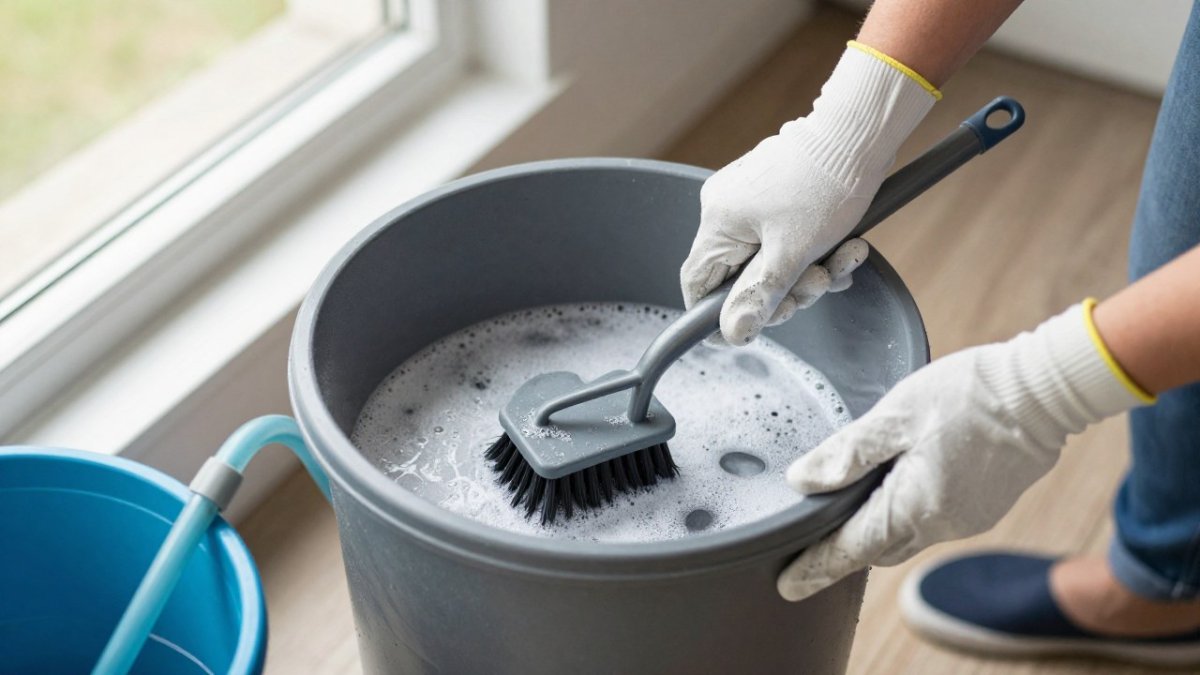
For the disinfecting step, choose one method and stick with it:
- Vinegar spray. A mix of equal parts white vinegar and water, sprayed on and left for a few minutes, then rinsed.
- Baking soda paste. Good for scrubbing stubborn spots and neutralizing odor at the same time.
- A diluted bleach solution. Only for plastic bins, only in a ventilated area, and never combined with vinegar.
Rinse everything well afterward. Soap residue attracts dirt, and bleach residue can damage some plastics over time.
The lid deserves its own pass: wipe the underside, the rim, and around any hinge or gasket. For a full walkthrough of the scrubbing order, see our guide on how to clean smelly garbage bins.
Let the bin air-dry in the sun before you put a new bag in. Sunlight helps kill what is left and dries the corners you cannot reach with a towel.
How to Clean Smelly Trash Cans With Baking Soda
Baking soda (sodium bicarbonate) works on trash can odor two ways. As a mild abrasive, it scours sticky residue without scratching plastic. As a dry absorber, it neutralizes odor molecules and pulls moisture from the air in a closed bin. The paste method does the first job; the dry sprinkle does the second, most people use one and expect the results of the other.
The paste method for scrubbing residue
Use this when the bin has visible film, sticky spots, or a sour smell that comes back after a rinse.
- Sprinkle a generous layer of baking soda across the bottom and up the walls, roughly half a cup for a standard kitchen can, more for a large outdoor bin.
- Add water a spoonful at a time until it forms a thick paste, not a slurry. Too much water and it runs off before it can work.
- Scrub with a stiff brush, pressing into corners and the seam where the bottom meets the walls.
- Let it sit 10 to 15 minutes. The paste lifts residue as it dries.
- Rinse thoroughly and dry completely, upside down, before relining.
The dry method for ongoing odor control
Use this between washes, not instead of them. Leave a light sprinkle of dry baking soda in the bottom of the bin under the bag, or set an open box in the bottom of an outdoor can. Replace it when it clumps, clumping means it has absorbed all the moisture it can hold and is no longer working.
When baking soda is the wrong tool
Baking soda neutralizes odor and lifts light residue, but it does not disinfect. After raw meat juice, pet waste, or maggots, disinfect first, then use baking soda for residual smell.
Watch out: never combine baking soda with bleach in the same cleaning step. Baking soda is alkaline and can react with bleach to reduce its disinfecting power and release irritating fumes.
Matching the remedy to the odor source
A common pattern is to treat every smell the same way. It works better to identify the source first:
- Sour, swampy smell from the bottom. Liquid residue. Paste scrub, rinse, dry upside down.
- Sharp, rotten-food smell from the lid and rim. Splash residue. Remove the lid if possible, paste scrub the underside and hinge, rinse, dry.
- Musty, basement-like smell that returns fast. Mold in a damp bin. Wash with soap and water, dry in direct sun, and stop storing the bin where moisture collects.
For persistent odor between washes, baking soda pairs well with airflow and sunlight, both dry the bin and slow the bacteria that produce the smell in the first place. If you are also dealing with pests drawn by residue, our article on whether vinegar keeps bugs away from trash covers that side of the problem.
Baking soda does two different jobs, and matching the method to the problem is what makes it work.
| Method | Best for | How to use |
|---|---|---|
| Paste | Visible film, sticky spots, sour smell | Sprinkle about half a cup, add water, scrub, sit 10 to 15 minutes |
| Dry sprinkle | Ongoing odor control between washes | Light layer under the bag; replace when it clumps |
| Neither alone | Raw meat juice, pet waste, maggots | Disinfect first, then use baking soda for residual smell |
| Neither alone | Odor absorbed into plastic or a crack | Baking soda masks briefly; replacement is usually the only fix |
How to Remove Smell From an Outdoor Garbage Can
Outdoor bins smell worse for a simple reason: heat. High temperatures speed up bacteria, and a bin in direct sun becomes a breeding ground.
The cleaning steps are the same as indoors, with a few outdoor-specific additions:
- Rinse with a hose after scrubbing. Outdoor bins collect more grit and yard debris.
- Tip the bin upside down to drain. Standing water in the bottom is the number one cause of returning odor.
- Check for maggots. If you find them, the bin needs a full scrub, not a rinse. Our guide on maggots in your trash can explains why they show up and how to stop them.
One habit makes the biggest difference outdoors: keep food waste out of the bin when you can. Scrape plates into a compost container first, and bag anything wet before it goes in.
How to Keep a Garbage Can From Smelling in the Garage
A garage bin fails faster than a kitchen bin for three reasons: heat gain through an uninsulated door, trapped humidity with no cross-ventilation, and a cool concrete floor that condenses moisture under the can. The smell you notice when you open the door is usually not the bag, it is residue on the inside walls and liquid that seeped under the bag and dried on the bottom.
Before you change habits, diagnose the source. Open the lid and smell at three points: the bottom center, the underside of the lid, and the rim where the bag folds over. Each points to a different fix.
- Bottom center smells sour or like a swamp. Liquid pooled and never dried. Tip the bin, rinse, scrub with dish soap, and dry upside down in direct sun for a full afternoon. A dry bin stays neutral for weeks; a damp one reeks within days.
- Underside of the lid smells like old food. Residue splashed up when bags were tossed in. Remove the lid if it detaches, wash it, and pay attention to the hinge and any gasket.
- Rim and bag-fold area smell sharp and chemical. Leachate from produce or meat packaging soaked the plastic. Scrub with a baking soda paste, rinse, and dry before relining.
Once the bin is clean and dry, the habits that actually hold odor down in a garage are mechanical, not scented:
- Raise the can off the concrete. A scrap of pressure-treated lumber or a plastic pallet lets air move under the base and stops condensation from wicking into the plastic.
- Leave a gap from the wall. Six inches of clearance lets humid air behind the bin breathe.
- Crack the garage door for 15 minutes after trash day. One air exchange drops humidity and clears the volatile compounds bacteria produce.
Watch out: do not store bleach, ammonia, or pool chemicals on a shelf above or beside the bin. A leak or a tipped bottle can combine with organic residue and create irritating fumes in a closed garage, and the vapors can degrade plastic over time.
If the garage bin still smells after a full scrub, dry, and a week of these habits, the problem is usually structural, a cracked base, a lid that no longer seats, or plastic that has absorbed odor past the point soap can reach. If you would rather hand off the recurring chore, you can review our professional bin cleaning services.
The Best Air Freshener for a Garbage Can Is Not What You Think
The best air freshener for a garbage can is not a spray or a scented bag. It is a clean, dry bin.
Air fresheners mask odor; they do not remove the bacteria or moisture causing it.
What works instead:
- Baking soda as a dry absorber in the bottom of the bin
- Charcoal in an open container, which pulls odor from the air
- Sunlight and airflow, which dry the bin and slow bacteria
Scented bags have a place, but treat them as a backup, not a fix.
A smelly bin is a small problem that wears you down week after week.
Frequently Asked Questions
How often should you clean a trash can?
Indoor kitchen bins need a full wash every two to four weeks, and outdoor bins benefit from a rinse every week with a deep scrub monthly. In hot weather, or if you toss raw food scraps and liquids, shorten that schedule. Wiping the lid and bag rim weekly and emptying the bin daily keeps smelly trash cans from building up grime between deep cleans.
Can I use vinegar to clean my garbage can?
Yes. White vinegar cuts through the film that holds odor and is safe on plastic and metal bins. Mix equal parts vinegar and water in a spray bottle, coat the inside, let it sit for ten minutes, then scrub and rinse. Avoid mixing vinegar with bleach, since the combination releases a harmful gas. For lingering smells, follow with a baking soda paste.
What is the best deodorizer for trash cans?
Baking soda is the most reliable deodorizer because it absorbs odor rather than masking it. Sprinkle a thin layer in the bottom of a dry bin, or leave an open box on the shelf beside it. For a stronger fix, place a small dish of activated charcoal or a cotton ball soaked in vanilla extract inside the lid. Skip plug-in air fresheners, which coat the bin in residue that traps new smells.
How do you keep a garbage can from smelling in the garage?
Keep the bin sealed, bag all food waste, and place the can away from direct sun and off the bare floor on a mat or pallet. Add a moisture absorber nearby and empty the bin on a regular schedule rather than letting bags sit. If the garage still smells after cleaning, the odor is likely coming from residue in the lid hinge or a cracked base, so inspect those spots.
