
Table of Contents
- One Time Trash Can Cleaning Service: What You Actually Get
- How Often to Clean Trash Bins (and When Once Is Enough)
- Trash Can Sanitizing Service: 200 Degree Water and No Harsh Chemicals
- Trash Bin Deodorizing Service: Removing Odors at the Source
- How to Clean a Trash Can Yourself vs. Hiring a One-Time Service
- How One-Time and Recurring Bin Cleaning Differ
- Booking a Single Cleaning Visit: What to Know Before You Schedule
- Frequently Asked Questions
Last Updated: October 13, 2026
One Time Trash Can Cleaning Service: What You Actually Get
A one time trash can cleaning service is a single scheduled visit where a professional crew cleans, sanitizes, and deodorizes your trash and recycling bins with no ongoing commitment.
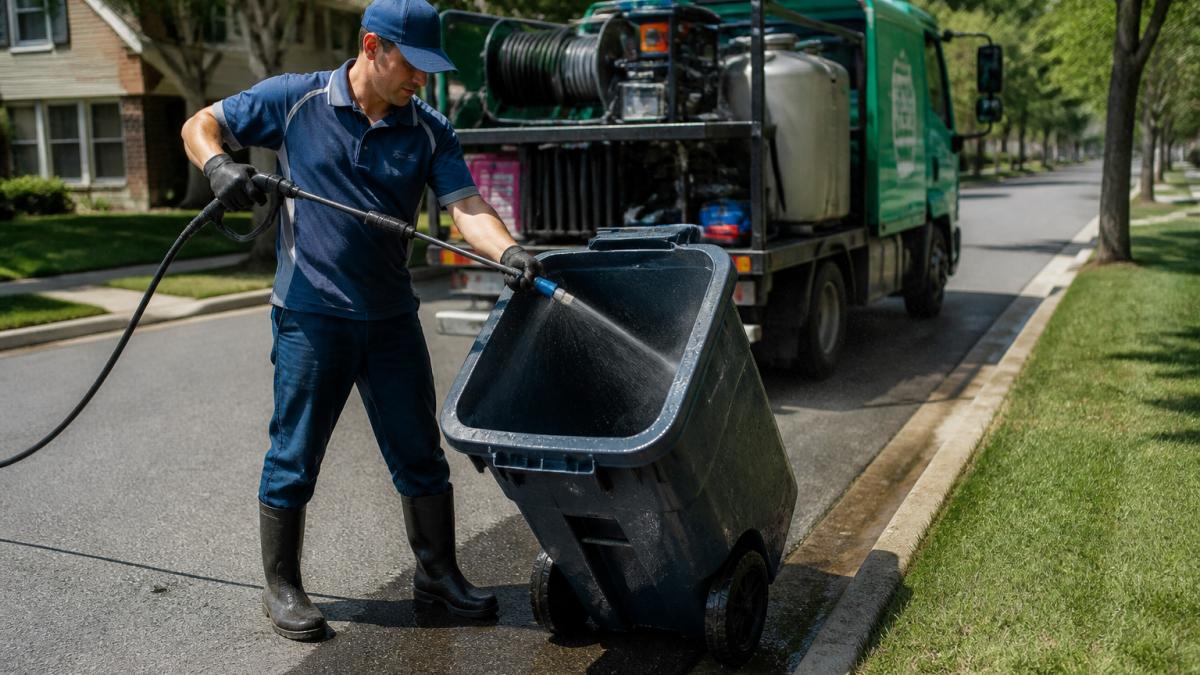
Most homeowners book a single visit for one of three reasons: something went wrong (maggots, a heat wave, a raccoon raid), they’re selling the house and want the garage to stop smelling, or they want to test professional cleaning before committing.
Here’s what happens during that visit, what it costs you in effort, and when one cleaning is enough versus when you’ll want recurring service.
Every Step of a One-Time Cleaning Visit
The visit takes minutes, not hours, and you don’t need to be home for any of it.
Here’s the sequence:
- You leave bins curbside on your normal trash pickup day, or schedule a standalone visit.
- We lift and position each bin onto specialized equipment mounted on our truck.
- A high-pressure wash blasts loose grime, dried residue, and anything stuck to the walls.
- A 200° hot water rinse sanitizes the interior and kills bacteria at the source.
- A deodorizing treatment neutralizes odor rather than masking it.
- Bins are returned to the curb upright, drained, and ready to use.
No water in your yard, no runoff down the storm drain, no scrubbing on your hands and knees, the entire process happens at the truck.
A one-time cleaning removes the grime and odor that have built up over months. It does not prevent them from coming back. That distinction matters when you’re deciding between a single visit and a recurring plan.
How Often to Clean Trash Bins (and When Once Is Enough)
Most households should clean their trash bins every one to three months, depending on climate, what you throw away, and whether you have pets or small children in diapers. In hot summer months, that window shrinks fast.
- You’re moving in or out. New homeowners inherit bins from previous tenants. One deep clean resets them.
- You had a specific incident. Maggots, a spilled bag, a dead animal smell in the garage. One visit solves it.
- You’re hosting an event and want the outdoor space to not smell like garbage.
If none of those apply and your bins sit in the sun all summer, a single cleaning is a temporary fix, odors return within weeks.
The best time to book a one-time cleaning is right after your trash pickup, not before. Bins are empty, so the crew can clean every surface without working around a half-full bag. It also means your bins go back into service clean the same day.
Trash Can Sanitizing Service: 200 Degree Water and No Harsh Chemicals
A trash can sanitizing service uses high-temperature water to kill the bacteria and insect eggs that cause odors and pest problems. Our equipment runs at 200° hot water, hot enough to sanitize without bleach, ammonia, or heavy chemical treatments. Here is what actually happens at the truck, because the method separates a real clean from a rinse.
The equipment, in plain terms
A typical bin-cleaning truck carries three things:
- A lift or winch system that raises each bin and tips it over a wash chamber, so the crew is not scrubbing by hand.
- A high-pressure pump paired with a rotating spray head that reaches the walls, corners, and lid interior. Pressure is what removes caked-on residue; temperature is what kills what is left.
- An onboard water tank and heater that hold the wash water at temperature for the whole route, rather than losing heat between stops.
That is why the visit takes minutes per bin instead of the 20 to 40 minutes a driveway scrub takes.
Water use and where the wastewater goes
This is the question competitors rarely answer, and it matters if you care about your lawn, driveway, or the storm drain at the end of the street.
- Water volume: A single bin cleaning typically uses a few gallons per bin, not the steady hose flow of a DIY wash.
- Capture, not spray: The wash chamber captures the water as it comes off the bin, so it does not sheet across your driveway or soak into your grass.
- Wastewater handling: Captured wash water is held in a tank on the truck and disposed of properly afterward. Storm drains generally flow to waterways without treatment, which is why letting bin runoff run into the street is a real problem.
Why temperature matters more than soap
Bacteria that cause bin odor thrive in warm, moist, organic environments. Cold water rinses move the mess around but leave much of the bacteria behind, while hot water at 200° lifts grease and residue off the plastic and kills the organisms producing the smell. Bins cleaned with cold water and detergent often smell fine for a few days and then revert, because the residue feeding the bacteria was never fully removed.
When you compare one-time cleaning quotes, ask three questions: what temperature, what pressure, and where does the wastewater go. A provider who can answer all three is doing a real clean. A provider who cannot is guessing.
For general guidance on safe handling of household waste and pest prevention, the CDC guidance on reducing rodents and pests around the home is a useful reference.
Trash Bin Deodorizing Service: Removing Odors at the Source
A trash bin deodorizing service treats the source of the smell, not the symptom: remove the organic residue and bacteria first, then apply a deodorizing treatment to the clean surface. Spraying deodorizer into a dirty bin is like air freshener in a room with a full litter box, the smell returns within a day because the bacteria are still there.
The process we use:
- Wash away the physical grime and residue
- Sanitize with 200° water to kill bacteria and eggs
- Apply deodorizing treatment to the now-clean interior
Lasting odor reduction comes from bin hygiene, not covering things up. If your garage smells like garbage even when the bins are empty, the bins are the problem.
Don’t pour bleach into your bin and call it cleaned. Bleach kills surface bacteria but leaves organic residue behind, and that residue feeds the next round of odor. It can also damage some bin plastics over time and is dangerous to mix with other cleaners.
How to Clean a Trash Can Yourself vs. Hiring a One-Time Service
Knowing how to clean a trash can yourself is worth doing once. Here’s the honest comparison.
DIY approach:
- Drag the bin to a flat surface, ideally the driveway or yard
- Hose out loose debris, then scrub walls with a brush and dish soap
- Rinse thoroughly, dump the water somewhere it won’t kill grass
Hiring a one-time service:
- Leave bins curbside
- Crew washes, sanitizes, and deodorizes them
- Bins returned clean, drained, and ready
The DIY route saves money if your time is free and your bins are lightly soiled. Once you’re dealing with maggots, caked-on residue, or a smell that’s crept into the garage, DIY becomes a miserable afternoon, usually the point where people call us.
For more on the health risks of leaving waste containers uncleaned, EPA information on managing household waste covers safe handling practices.
How One-Time and Recurring Bin Cleaning Differ
One-time cleaning is a reset; recurring service is maintenance. Both use the same equipment and process, the difference is frequency.
| Feature | One-Time Cleaning | Recurring Service |
|---|---|---|
| Best for | Incidents, move-ins, test runs | Ongoing odor and pest prevention |
| Frequency | Single visit | Monthly, bi-monthly, quarterly, or annual |
| Scheduling | Booked when you need it | Automatic on your trash pickup day |
| Commitment | None | Cancel anytime |
| Result | Clean bins now | Bins that stay clean |
If you’ve cleaned a bin by hand and watched it get gross again in three weeks, you understand why recurring plans exist. Monthly suits households with kids in diapers, pets, or heavy food waste; quarterly works for smaller households in cooler months; annual is a light-touch seasonal reset.
Households that want to solve a specific problem (a smell, a pest issue, a move) without an ongoing commitment. If the problem keeps coming back, that’s your signal to switch to recurring service.
Booking a Single Cleaning Visit: What to Know Before You Schedule
Booking a single cleaning visit takes a few minutes, and you do not need to be home when the crew arrives: leave your bins out, and we handle everything from there.
What most booking pages skip is how to compare one-time offers like-for-like, and what can go wrong on the day.
How one-time pricing is usually structured
One-time cleaning is almost always priced per bin, and the structure matters more than the headline number. Compare quotes on four line items:
- First-bin rate: the base price for the first container cleaned.
- Additional-bin rate: a lower per-bin price for each container after the first. This is where multi-bin households save.
- Travel or minimum-service fee: some providers charge a trip fee or require a minimum number of bins per visit. A low first-bin rate with a minimum can cost more than a higher rate with no minimum.
A practical way to compare: ask each provider for the total for your exact bin count, one time, with no plan.
What a one-time visit includes (and what it does not)
Before you book, confirm which of these are included:
- Washing the interior and exterior of each bin
- Sanitizing with hot water
- Deodorizing treatment
What it usually does not include: hauling away trash, cleaning the inside of your garage, or removing a bin that is still full. If a bin is more than roughly half full, the crew cannot clean it properly, empty bins are a hard requirement.
Preparation and service limitations
A few things determine whether the visit goes smoothly:
- Access: bins need to be at the curb or the end of the driveway, not behind a locked gate or inside a garage. If they are behind a gate, tell the provider when you book.
- Timing: the easiest scheduling is right after your normal trash pickup, when bins are empty. Standalone visits can usually be arranged, but you will need to leave the bins out.
- Weather: heavy rain or snow can delay or reschedule a visit. Ask about the provider’s weather policy before you book.
What to check before you commit
- Service area: confirm your street is covered, and ask whether coverage changes seasonally.
- Guarantee: ask what happens if you are not satisfied. A local provider with real customer reviews is a safer bet than a directory listing with no history.
- Scheduling window: ask how far out one-time visits are booked. Recurring customers often get priority, which can push single visits out during busy weeks.
Book your one-time cleaning for the day after pickup, not the day before. Empty bins let the crew clean every surface, and your bins go back into service clean the same day.
We are a local provider, and we sponsor the West Chester Henderson Men’s Soccer Team. Select “WC Mens Soccer” at checkout under “How did you hear about us,” and we donate 20% of sales to the team. It is our first sponsorship, and we are glad to support local sports.
For broader guidance on household waste and recycling best practices, EPA recycling guidelines is a solid starting point.
Frequently Asked Questions
What does a one-time trash can cleaning service include?
A single visit typically covers emptying any loose debris, washing the inside and outside of each bin with hot water, applying a sanitizing rinse that kills bacteria and insect eggs, and finishing with a deodorizing treatment. Bins are cleaned at the curb, so you leave them out after pickup and the crew handles the rest. Chester County Clean Cans completes most one-time visits within 24 hours of your trash pickup day.
Is one-time trash can cleaning worth it if I could just hose out the bin myself?
A garden hose rinse removes surface grime but does not kill bacteria or maggot eggs, and it usually pushes dirty water into your yard or driveway. Professional equipment reaches the full interior with 200 degree water and captures the runoff. If your bins smell, attract flies, or came with a new home, one visit often solves the problem without a recurring commitment.
Do I need to be home for a one-time cleaning, or can I just leave my bins out?
You do not need to be home. Leave your trash and recycling bins curbside after your normal pickup, and the crew cleans them on the spot. Most one-time visits finish within 24 hours of pickup day. You come home to dry, sanitized bins with no scheduling hassle and no need to coordinate a time window.
Can a one-time service handle bins with maggots and heavy odor?
Yes. Maggots and strong odors are exactly what a one-time deep clean is built for. Hot water and a sanitizing rinse flush out larvae, eggs, and the residue that feeds them, and a deodorizing treatment neutralizes the smell rather than masking it. For bins in this condition, a single visit restores them to a hygienic state, though recurring service keeps it that way.
Your bins are either working for you or against you, and a one-time cleaning is the fastest way to find out which. Chester County Clean Cans handles the whole job curbside with 200° hot water, eco-friendly methods, and service completed within 24 hours, with no contract required. Whether you want a single visit, monthly service, or quarterly cleaning, we make it easy to start. Get a quote today and see what your bins look like when they’re actually clean.